Telegram Casino Software Development: The Operator's Build Guide for 2026

What exactly is Telegram casino software development and how does it differ from a standard online casino build?
Telegram casino software development means building a real-money or social gambling product that runs as a Telegram Mini App (TMA) — a WebView embedded inside Telegram's client. The core difference from a standard online casino is distribution: users never leave Telegram, authentication is handled by Telegram's own SDK, and the dominant payment rails are TON-based rather than card-first.
A standard online casino is a standalone web or mobile product. A Telegram casino lives inside Telegram's ecosystem as a Mini App, which Telegram introduced at scale in 2023 and has been aggressively expanding since. From a pure technology standpoint, you're still writing HTML, CSS, and JavaScript — but you initialize the Telegram Web App SDK to get the user's Telegram ID, handle the back button, theme parameters, and payment flows through Telegram's own invoice API or directly via TON Connect.
The architectural implication is that your front-end must be optimized for Telegram's WebView, which behaves differently from a standard mobile browser — viewport handling, keyboard behavior, and safe area insets all need explicit attention. Operators who hand a standard casino front-end to a Telegram wrapper without re-engineering the UI end up with a product that looks broken on most devices. That's the first place I see operators waste three to four weeks in QA.
On the back-end, the casino engine itself — RNG, game logic, wallet management, bonus engine — is identical to any online casino. What changes is the integration layer: you're connecting your platform to Telegram's bot API for notifications and deep linking, TON blockchain for payments, and potentially Telegram Stars (Telegram's in-app currency) for social casino mechanics. The game content layer is also constrained — most major studios like Evolution, Pragmatic Play, or Play'n GO don't yet distribute directly into TMA environments, so your game aggregator choices narrow considerably.
What does the technical architecture of a production Telegram casino actually look like?
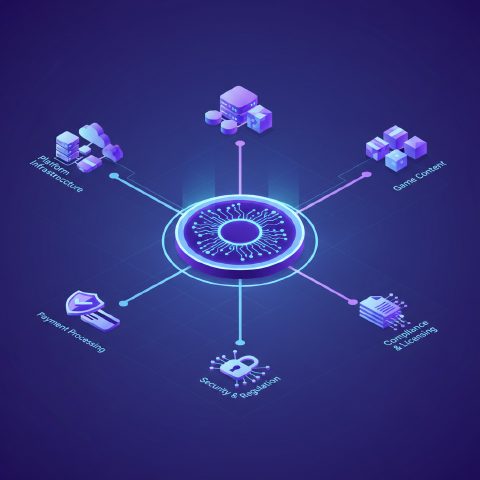
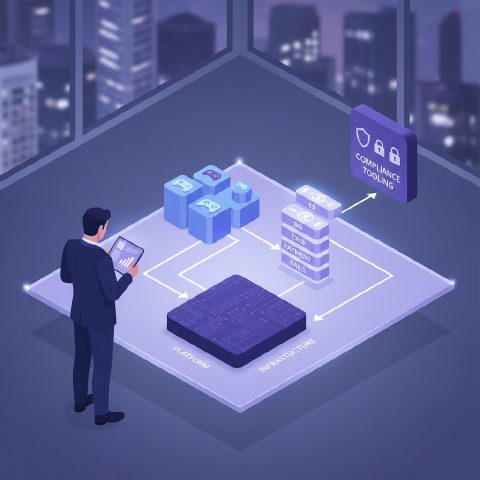
A production Telegram casino has five core layers: the TMA front-end (React or Vue optimized for Telegram's WebView), a casino back-end platform (game aggregation, wallet, bonus engine), a Telegram Bot API integration layer for notifications and user flows, a TON/crypto payment module, and an admin back-office. Each layer has vendor options or can be custom-built.
The front-end is where most teams underestimate scope. You need a responsive casino lobby, game launcher, wallet UI, and bonus pages — all within Telegram's WebView constraints. The Telegram Web App SDK gives you user authentication, theme data, and the MainButton/BackButton controls. React is the dominant choice in 2025-2026 builds because of component reusability, but the bundle size discipline required for fast load times inside Telegram's WebView is stricter than a typical web casino. Lazy loading game thumbnails and deferring non-critical scripts is non-negotiable.
The back-end platform is where you make the most consequential build-versus-buy decision. Building a casino engine from scratch — RNG certification, game aggregation APIs, bonus engine, responsible gambling controls — takes a specialized team 9 to 14 months minimum and costs north of $400,000 before you've integrated a single payment method. Most operators launching in 2026 are better served by a white-label or turnkey platform that already has these components, then building a custom TMA front-end on top. Providers like SoftSwiss, EveryMatrix, and a handful of TMA-native vendors (Pulse, Telegram Casino Kit — though verify their current status before committing) offer platform APIs that a TMA front-end can consume.
The TON payment module deserves its own attention. TON Connect 2.0 is the standard wallet connection protocol — it lets users connect Tonkeeper, MyTonWallet, or other TON wallets with a QR or deep link flow. You'll need a TON smart contract for deposit/withdrawal escrow if you're running non-custodial flows, or a custodial wallet management system if you're holding funds server-side. The custodial model is simpler to build but adds regulatory surface area. For Bitcoin telegram casino software development specifically, you'll typically bridge via TON-wrapped BTC or run a separate Lightning/on-chain BTC module alongside TON.
The Telegram Bot API layer handles the distribution mechanics that make Telegram casinos genuinely sticky: deposit notifications, withdrawal confirmations, bonus alerts, and referral flows. A well-engineered bot integration with inline keyboards and deep links into specific game lobbies can drive 30-40% better re-engagement than email alone, based on operator data I've seen from 2024 launches. Don't treat this as an afterthought — it's one of the actual competitive advantages of the Telegram channel.
| Layer | Build From Scratch | White-Label / API | Typical Cost Range | Timeline |
|---|---|---|---|---|
| TMA Front-End | Custom React/Vue dev | Theme/template from platform vendor | $40k–$120k custom | 8–16 weeks |
| Casino Back-End (RNG, games, bonus) | Full custom build | SoftSwiss, EveryMatrix, Slotegrator | $350k+ custom; $15k–$30k/mo WL | 9–14 months custom; 4–8 weeks WL |
| TON / Crypto Payment Module | Custom smart contracts + wallet mgmt | CoinsPaid, NOWPayments, Plisio | $30k–$80k custom | 6–10 weeks |
| Telegram Bot API Integration | Custom bot dev | Most platform vendors include basics | $8k–$25k custom | 2–4 weeks |
| Admin Back-Office | Custom build | Included with WL platforms | $60k–$150k custom | 3–6 months |
Which game aggregators and studios actually work inside Telegram Mini Apps?
Game content for Telegram casinos is more restricted than a standard web casino. Most Tier-1 studios won't distribute into unlicensed TMA environments. Your realistic options in 2026 are aggregators with flexible distribution policies — Slotegrator, Evoplay, BGaming, and Spribe — plus HTML5 studios that don't enforce strict distribution whitelists. Expect a narrower lobby than a full web casino at launch.
The core issue is that studios like Evolution Gaming, Pragmatic Play, and NetEnt have distribution agreements that require operators to hold specific licenses (MGA, UKGC, or at minimum a Curaçao eGaming sub-license) and often restrict embedding in environments outside a whitelisted domain. A Telegram Mini App URL structure doesn't always satisfy those domain whitelisting requirements without explicit negotiation. I've seen operators spend six weeks in back-and-forth with a major aggregator only to be told their TMA deployment wasn't covered under the existing agreement.
The studios that have been more pragmatic about TMA distribution include BGaming (which has actively courted crypto and Telegram operators), Spribe (whose Aviator game is practically synonymous with Telegram casino launches), Evoplay, and several Eastern European HTML5 studios. Aggregators like Slotegrator and Aviatrix have also been quicker to accommodate TMA-specific integration requirements. If you're building a Telegram-first product, I'd start your game content conversation with these providers before signing any platform deal, because your aggregator choice may constrain your platform choice and vice versa.
For social casino software development on Telegram — the no-real-money variant — the studio restrictions are less severe because you're not operating under a gambling license. You can license social casino game content from providers like SciPlay's B2B arm or build simple HTML5 slots in-house with virtual currency mechanics. The trade-off is that social casino monetization on Telegram (in-app purchases via Telegram Stars or TON micropayments) has a much lower ARPU ceiling than real-money gambling. Operators sometimes use social casino as a soft launch to build a user base before converting to real-money once licensing is in place — that's a legitimate strategy but requires planning the architecture to support the eventual conversion.
What licensing do you need to operate a real-money Telegram casino legally?
There is no 'Telegram casino license' — you need a standard online gambling license and Telegram is simply your distribution channel. In 2026, offshore licenses from Curaçao (under the new GCB framework post-2023 reforms) or Anjouan are the most common choices for Telegram casino operators. Some operators in regulated markets run under MGA or local licenses, but most Telegram-native launches go offshore first.
Curaçao underwent significant licensing reform starting in 2023, moving from the old master-license sublicense model to direct licenses issued by the Gaming Control Board (GCB). As of 2025-2026, a new Curaçao B2C license costs roughly $25,000–$35,000 in initial fees with annual renewal costs in a similar range — figures that have shifted from the old $15,000–$20,000 sublicense era, so verify current GCB fee schedules before budgeting. The process takes 3–6 months if your corporate structure and AML documentation are clean. Curaçao remains the most pragmatic choice for a Telegram-first launch because it doesn't impose the technical audit requirements that slow down MGA applications.
Anjouan (Comoros) has emerged as an alternative for operators who want a faster, cheaper offshore license — application fees are lower and timelines can be 6–10 weeks. The trade-off is that Anjouan licensing carries less credibility with payment processors and B2B suppliers than Curaçao, which matters when you're trying to onboard a crypto payment provider or negotiate a game aggregation deal. I generally recommend Curaçao for operators who plan to scale, and Anjouan only if budget is severely constrained at launch.
If you're targeting regulated markets — say, a US state with legal iGaming like New Jersey, Michigan, or Pennsylvania — a Telegram casino is effectively off the table for real-money play. Those jurisdictions require state-specific licenses, geofencing, and technical compliance that isn't compatible with Telegram's global distribution model. LATAM is more nuanced: Colombia (Coljuegos), Peru (MINCETUR), and Mexico (SEGOB) all have online gambling frameworks, but none have Telegram-specific provisions. An operator with a Coljuegos license could theoretically distribute via Telegram to Colombian users, but the practical compliance overhead makes most operators choose web-first for regulated LATAM markets.
One thing vendors won't always tell you: Telegram itself has Terms of Service restrictions on gambling content. Telegram's bot platform technically prohibits certain gambling bots in some regions, and the App Store / Google Play policies apply to Telegram's own apps — meaning if Telegram ever faces platform pressure over gambling Mini Apps (as it has in some markets), your distribution channel has single-point-of-failure risk. Build a parallel web presence from day one.
How do TON and Bitcoin payments work in Telegram casino software development?
TON (The Open Network) is Telegram's native blockchain and the default payment layer for most Telegram casinos in 2026. TON Connect 2.0 handles wallet authentication, deposits arrive in seconds at near-zero fees, and the UX is genuinely smooth for crypto-native users. Bitcoin integration typically runs alongside TON via Lightning Network or on-chain, handled by a separate crypto payment processor.
TON's technical advantages for casino payments are real: 5-second finality, sub-cent transaction fees, and a wallet ecosystem (Tonkeeper, MyTonWallet) that's deeply integrated into Telegram itself. The Telegram Wallet bot — now available in many markets — lets users hold TON and USDT-TON without a separate wallet app, which dramatically reduces onboarding friction compared to asking a user to set up MetaMask. For a Telegram-native casino, this is a genuine UX advantage over a web casino asking users to connect an Ethereum wallet.
For bitcoin telegram casino software development, the most common architecture in 2026 uses a crypto payment processor — CoinsPaid, NOWPayments, or Plisio — to handle multi-currency deposits including BTC, ETH, and stablecoins, while TON is handled natively via TON Connect. This gives you broad crypto coverage without building individual blockchain integrations. CoinsPaid is the most operator-friendly in terms of back-office tooling and has explicit support for iGaming operators; NOWPayments is cheaper but has less white-glove support. Expect 1–2% processing fees plus blockchain fees on the crypto side.
The missing piece that operators consistently underestimate is fiat on/off-ramp. A meaningful percentage of your users — even in crypto-native Telegram communities — will want to deposit via bank transfer or card. Telegram's Stars currency can serve as a soft fiat bridge for social casino mechanics, but for real-money gambling you need a card processor willing to work with an online casino merchant. That's a harder conversation than the crypto side. High-risk PSPs like Payvision (now ING-owned and largely exited iGaming), Maxpay, or regional processors in Eastern Europe will work with Curaçao-licensed operators, but expect 3–5% processing fees, rolling reserves of 5–10% held for 6 months, and a 4–8 week underwriting process. Budget for this in your launch timeline.
| Payment Type | Provider Examples | Processing Fee | Settlement Speed | Operator Complexity |
|---|---|---|---|---|
| TON (native) | TON Connect + custodial wallet | ~0.01 TON per tx | 5 seconds | Medium — smart contract or custodial build |
| Multi-crypto (BTC, ETH, USDT) | CoinsPaid, NOWPayments, Plisio | 1–2% + blockchain fee | 10 min – 1 hour | Low — API integration |
| Card (Visa/MC) | High-risk PSPs (Maxpay, Paycertify) | 3–5% + chargeback reserve | Instant (auth) | High — underwriting, rolling reserve |
| Telegram Stars | Telegram native | 30% to Telegram | Instant | Low — but real-money conversion unclear |
| Bank Transfer / SEPA | Regional processors | 0.5–1.5% | 1–3 days | High — AML documentation intensive |
What does Telegram casino software development actually cost in 2026?
A white-label Telegram casino built on an existing platform runs $60,000–$150,000 all-in for the first year (platform fees, TMA front-end customization, licensing, and payments setup). A custom build from scratch — your own back-end, game engine, and TMA front-end — starts at $400,000 and realistically runs $600,000–$900,000 before you're live with a stable product. Most first-time operators have no business attempting the custom route.
Let me break down the white-label path because it's where most Telegram casino launches actually happen. A white-label platform fee from a provider like SoftSwiss or Slotegrator runs $15,000–$30,000 per month, which typically includes the casino engine, game aggregation, bonus engine, and basic back-office. On top of that, you're paying a developer team $25,000–$60,000 to build and customize the TMA front-end — this is not optional, because a generic template will look like every other Telegram casino and convert poorly. Add your Curaçao licensing ($25,000–$35,000 upfront), a crypto payment integration ($8,000–$15,000 for a CoinsPaid or NOWPayments setup), and a server infrastructure budget ($1,500–$3,000/month on AWS or equivalent), and you're at roughly $100,000–$150,000 for the first year before marketing spend.
The custom build math is sobering. A senior full-stack developer with iGaming experience costs $80,000–$140,000 per year in Western markets, or $40,000–$70,000 in Eastern Europe/LATAM. A minimum viable custom casino team — back-end engineer, front-end engineer, smart contract developer, QA, and a PM — runs $250,000–$400,000 per year in salaries alone. Add RNG certification ($15,000–$40,000 depending on the lab — BMM, GLI, or eCOGRA), game aggregation integration work, and the inevitable scope creep on the bonus engine, and you're past $600,000 before your first player deposits. I've seen operators start down the custom path with $300,000 budgeted and run out of runway at month seven with a half-built product.
Social casino software development for Telegram is cheaper because you're not building real-money payment infrastructure or pursuing a gambling license. A social casino TMA with virtual currency, leaderboards, and in-app purchases via TON or Telegram Stars can be built for $40,000–$80,000 by a competent team. The monetization ceiling is lower, but the regulatory overhead is minimal and the development timeline is 10–16 weeks versus 6–9 months for a real-money product.
How long does Telegram casino software development take from idea to live product?
A white-label Telegram casino can go live in 8–14 weeks if you start with a licensed platform and have your corporate structure ready. A custom build takes 9–14 months minimum for a production-quality product. The licensing process runs in parallel and is often the critical path — Curaçao applications take 3–6 months, which should start on day one.
The white-label timeline breaks down roughly as follows: weeks 1–3 cover platform selection, contract negotiation, and corporate setup (you need a licensed entity before the platform will onboard you); weeks 4–8 cover TMA front-end development, payment integration, and game content configuration; weeks 9–12 cover QA, soft launch to a test group, and fixing the inevitable WebView rendering issues on specific Android/iOS versions of Telegram. If your licensing is already in place — say you're adding a Telegram channel to an existing licensed operation — you can be live in 6–8 weeks.
The custom build timeline is where optimism kills projects. I've never seen a custom casino back-end built faster than 9 months by a competent team, and that's with a clear spec. The RNG certification process alone — submitting your RNG implementation to a lab like BMM or GLI, receiving findings, remediating, and getting the certificate — takes 8–16 weeks and can't be parallelized with the build itself. Smart contract audits for your TON payment module add another 3–6 weeks if you're using a reputable auditor (Certik, Hacken). Operators who skip the smart contract audit to save time and money discover why that was a mistake when a vulnerability drains the contract.
One timeline trap I see repeatedly: operators start the licensing application late because they're waiting to finalize the platform choice first. Don't do this. Start your Curaçao or Anjouan application on week one, in parallel with everything else. The application requires a corporate structure, AML/KYC policy documentation, and a business plan — none of which depend on your platform being built. A three-month licensing delay because you started the application at month four is three months of lost revenue.
What are the biggest technical risks in Telegram casino software development that operators discover too late?
The top risks are Telegram platform dependency (policy changes can break your product overnight), WebView inconsistencies across Telegram versions, smart contract vulnerabilities in TON payment modules, and game studio distribution restrictions that leave you with a thin lobby. None of these are fatal if you plan for them — all of them are expensive if you don't.
Telegram platform dependency is the structural risk that doesn't get enough attention in vendor sales conversations. Telegram has updated its Mini App API, changed WebView behavior, and modified its bot policies multiple times since 2023. Each update can break your front-end in ways that require immediate patching. More seriously, Telegram has restricted gambling-related bots in certain regions under App Store pressure — if Apple or Google push Telegram to restrict gambling Mini Apps globally, your primary distribution channel disappears. This is why I insist operators build a parallel progressive web app (PWA) or web casino from day one, even if Telegram is the primary channel at launch. The incremental cost is modest; the insurance value is significant.
WebView inconsistencies are a QA nightmare that first-time Telegram casino developers consistently underestimate. Telegram's iOS WebView behaves differently from Android's WebView, and both differ from desktop Telegram. Specific issues I've seen in production: the virtual keyboard pushing the game viewport in ways that break slot game layouts, safe area inset handling on iPhone 15 Pro models causing UI elements to overlap system controls, and TON Connect deep links failing on older Android Telegram versions. Budget at least 15–20% of your front-end development time for cross-platform QA and hotfixes in the first 60 days post-launch.
Smart contract risk on the TON payment module is the one that keeps me up at night for operators. If you're running a non-custodial casino wallet where player funds are held in a TON smart contract, a vulnerability in that contract can be exploited to drain funds. The TON ecosystem is younger than Ethereum, which means the auditing tooling and auditor experience is less mature. Use an established auditor (Hacken has done TON work; CertiK covers TON), budget $15,000–$30,000 for the audit, and don't rush it. The alternative — a custodial model where your platform holds funds server-side — eliminates smart contract risk but adds regulatory and counterparty risk. Neither option is risk-free; pick the one that matches your operational capabilities.
How does social casino software development for Telegram differ from real-money casino development?
Social casino software development for Telegram means building a gambling-style game with virtual currency — no real-money wagering, no gambling license required. The tech stack is simpler (no payment compliance, no RNG certification for most jurisdictions), the timeline is 10–16 weeks, and the cost is $40,000–$80,000. The trade-off is a fundamentally different and lower-ceiling monetization model.
The legal distinction matters enormously. A social casino — where players use virtual chips that can't be redeemed for cash — is not gambling under most legal frameworks, including US federal law and most EU member state definitions. This means you can operate a Telegram social casino without a gambling license, serve US users without state-by-state licensing, and distribute via the App Store and Google Play (where real-money gambling apps face heavy restrictions). For operators who want to build a user base in the US market before regulated real-money iGaming expands further, a social casino Telegram product is a legitimate market-entry strategy.
The monetization mechanics are different and require their own design discipline. Social casino revenue comes from in-app purchases of virtual currency (coin packs), subscription tiers for VIP features, and cosmetic items. Telegram Stars — Telegram's in-app currency — is an increasingly viable purchase mechanism for these, though Telegram takes a 30% cut, which is steep. TON micropayments for virtual currency purchases offer a lower-fee alternative but require users to have a TON wallet, which narrows your addressable market. Successful social casino products on Telegram (and there are several with 100,000+ monthly active users as of 2025) typically combine a free-to-play core loop with aggressive coin-pack upsells triggered at natural friction points in the game.
From a technical standpoint, social casino development for Telegram is meaningfully simpler than real-money. You don't need a certified RNG (though using a provably fair or audited RNG is good practice and builds user trust), you don't need a payment processor willing to work with a gambling merchant, and your KYC requirements are minimal or zero. The game content can be built in-house with HTML5 or sourced from social casino content providers. The back-end is essentially a game server with a virtual wallet — no compliance engine, no responsible gambling controls mandated by regulation. That simplicity is the appeal. The ceiling on ARPU is the limitation.
Which white-label platforms support Telegram Mini App deployment in 2026?
As of 2026, a handful of established platforms have built or are building TMA-compatible front-end layers: SoftSwiss has TMA capabilities in development, EveryMatrix offers API-first architecture that supports custom TMA front-ends, and Slotegrator provides integration support for Telegram deployments. Several TMA-native startups have also emerged, though due diligence on their stability is essential before signing.
SoftSwiss is the most operator-trusted name in white-label casino platforms and has been actively developing Telegram Mini App support. Their platform's API-first architecture means you can consume their casino engine, game aggregation (via SOFTSWISS Game Aggregator), and bonus engine from a custom TMA front-end. The practical limitation is that SoftSwiss is selective about operators they onboard — they want to see a solid licensing position and realistic capitalization before signing. Monthly platform fees are at the higher end of the market (I've seen figures in the $20,000–$35,000/month range for full-service arrangements, though this varies significantly by deal structure), but the back-office tooling and compliance infrastructure justify the premium for operators who plan to scale.
EveryMatrix takes an API-first, modular approach — their CasinoEngine, WalletEngine, and Odds/Sports modules can each be consumed independently. This makes them well-suited for a custom TMA front-end that picks and chooses back-end services. The integration work is heavier than a turnkey white-label, but the flexibility is genuine. For a Telegram casino that needs a custom UX and specific game aggregation, EveryMatrix's approach is worth evaluating seriously.
Slotegrator occupies the mid-market: lower entry costs than SoftSwiss, a broad game aggregation catalog (6,000+ games from 100+ studios), and explicit support for crypto and Telegram-adjacent operators. Their APIgrator product provides a single API for game content that can be consumed from a TMA front-end. The back-office is less sophisticated than SoftSwiss, but for an operator launching a focused Telegram product without complex multi-currency bonus structures, it's a pragmatic choice.
The TMA-native startup space is active but volatile. Several vendors emerged in 2023–2024 specifically targeting Telegram casino operators, and some have built genuinely useful products. The risk is vendor stability — a startup platform that shuts down or pivots takes your operation offline. Before signing with any TMA-native vendor, ask for client references you can actually call, review their financial backing, and ensure your contract includes data portability provisions so you can migrate if they fold.
| Platform | TMA Support | Monthly Cost (est.) | Game Content | Best For |
|---|---|---|---|---|
| SoftSwiss | API-compatible, TMA layer in development | $20k–$35k/mo | SOFTSWISS Game Aggregator (6,000+ games) | Operators with capital, scaling ambitions |
| EveryMatrix | API-first, custom TMA front-end required | $10k–$25k/mo (modular) | GameHub aggregator, 15,000+ games | Operators wanting modular flexibility |
| Slotegrator | Explicit TMA integration support | $5k–$15k/mo | APIgrator, 100+ studios | Mid-market, crypto-focused operators |
| TMA-native startups | Native TMA architecture | $3k–$10k/mo | Varies — verify before signing | Budget-constrained first launches |
| Custom build | Full control | $40k–$80k/mo (team cost) | Direct studio deals required | Well-funded operators with 12+ month runway |
What KYC, AML, and responsible gambling requirements apply to Telegram casino operators?
A Telegram casino operating under a Curaçao or Anjouan license must implement KYC identity verification, AML transaction monitoring, and basic responsible gambling controls as conditions of the license. The practical challenge is that Telegram's pseudonymous user base creates friction with KYC requirements — you need a verification flow that doesn't destroy conversion but satisfies regulatory obligations.
Curaçao's post-2023 GCB framework has tightened KYC requirements compared to the old sublicense era. Operators must verify player identity before allowing withdrawals above a threshold (the specific threshold is set in your license conditions — verify with your licensing agent), maintain AML transaction monitoring, and have a documented responsible gambling policy. The practical implementation for a Telegram casino means integrating a KYC provider — Sumsub, Veriff, or Jumio are the market leaders — into your TMA flow. Sumsub has Telegram-specific integration documentation and is the most commonly used in Telegram casino builds I've seen in 2024–2025.
The conversion impact of KYC is real and operators consistently underestimate it. A hard KYC gate at registration — requiring ID upload before a player can deposit — will kill 60–70% of your registration funnel on a Telegram-native product where users expect instant access. The standard approach is a tiered model: allow small deposits and gameplay with only a Telegram account verification (you already have their Telegram ID and phone number), then trigger full KYC at a deposit threshold or before the first withdrawal. This balances regulatory compliance with conversion reality. Your Curaçao licensing agent should review your specific tiered KYC policy before launch.
Responsible gambling controls required under most offshore licenses include deposit limits, session time limits, self-exclusion, and reality check notifications. These need to be built into your platform — either as features of your white-label platform (SoftSwiss and EveryMatrix both include these) or custom-built if you're on a lighter platform. The Telegram Bot API is actually useful here: automated responsible gambling notifications via bot message are less intrusive than modal popups and have better open rates. One thing I've seen operators skip: a documented player dispute resolution process. Curaçao requires this, and not having it documented is a license compliance failure waiting to happen.



Comments
No comments yet, be the first.