iGaming Software Development in 2026: Real Costs, Timelines and the Decisions That Sink Operators Before Launch

What exactly is iGaming software development — and what does it cover?
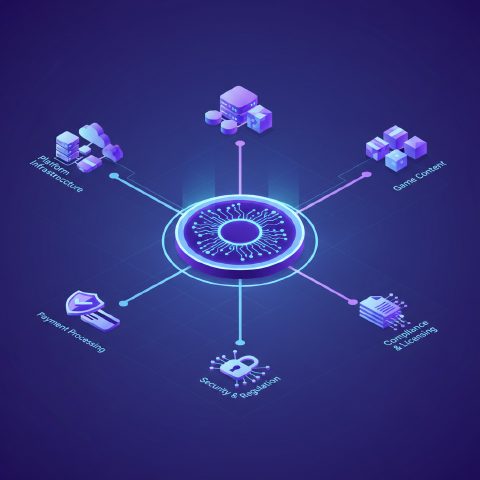
iGaming software development covers every technical layer required to operate an online casino or sportsbook: the platform back-office, game aggregation layer, payment processing stack, player account management, CRM, bonus engine, reporting, RNG certification infrastructure and front-end client. It is not just 'building a website' — it is assembling a regulated financial and gaming system.
Most founders coming from outside the industry dramatically underestimate scope. A casino platform is closer to a fintech product than a typical SaaS build. You need real-time transaction processing, fraud detection, multi-currency wallets, jurisdiction-specific responsible gambling controls, game round logging for regulatory audits, and a CMS that lets your ops team change promotions without a developer on call at 2am. Every one of those components has to work in concert, under load, on launch day.
The development scope also changes materially depending on your license. An MGA-licensed operator in Malta needs certified RNG integration, self-exclusion hooks into national exclusion registers, and documented AML/KYC workflows baked into the platform — not bolted on afterward. A Curaçao or Anjouan operation has lighter technical mandates on paper, but payment processors and game studios increasingly demand equivalent standards regardless of jurisdiction. Build for the lower bar and you'll be retrofitting within 18 months.
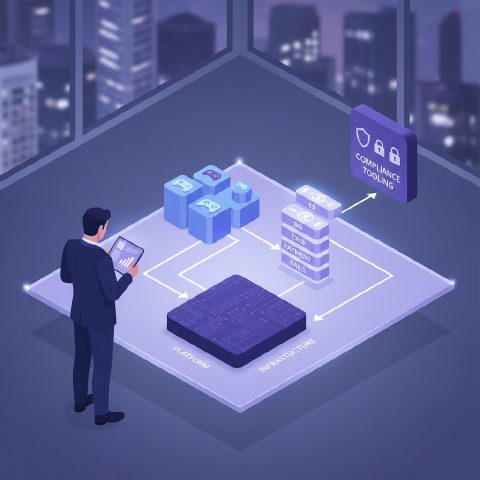
There are roughly four layers to think about: (1) the platform engine — player accounts, sessions, wallet, rules; (2) the game content layer — aggregator APIs or direct studio integrations; (3) the payments layer — PSPs, crypto gateways, KYC/AML middleware; and (4) the front-end — responsive web client, sometimes native mobile apps. Each layer can be sourced separately or bundled. Bundling is faster; separating gives you negotiating leverage and avoids vendor lock-in. Neither answer is universally right.
White-label vs. turnkey vs. custom: which iGaming software development path is right for you?
White-label is fastest and cheapest to launch but most expensive at scale. Custom gives you full control but requires capital, time and an in-house technical team most operators don't have. Turnkey — a pre-built platform you license and configure — is the right default for the majority of operators targeting $1M–$20M GGR annually.
White-label platforms (think Softgamings, Hub88, or the white-label arms of larger aggregators) essentially rent you a pre-built casino under your brand. Setup costs run $15K–$60K, you can be live in 6–12 weeks, and the provider handles hosting, software updates and some compliance tooling. The catch is the revenue share — typically 10–25% of GGR, depending on volume tiers and the contract you negotiate. At $500K monthly GGR, that's $50K–$125K walking out the door every month. The math stops working fast.
Turnkey solutions from providers like SoftSwiss (SOFTSWISS Casino Platform), EveryMatrix (CasinoEngine), Digitain, or Pronet Gaming give you a licensed, configurable platform you deploy under your own infrastructure. You pay a setup fee ($50K–$200K range, highly variable), a monthly license fee, and often a smaller GGR share (3–8%) or flat transaction fee. You get genuine back-office access, can integrate your own payment providers, and own more of the data relationship. Implementation takes 3–6 months for a competent team.
Custom development — building your own platform from scratch using an in-house or outsourced dev team — is a fundamentally different business decision. Budget $400K–$2M+ for the initial build, 12–24 months of development time, and ongoing engineering headcount to maintain it. The operators who do this successfully are typically those who've already proven their model on a turnkey solution, have a clear technical differentiation thesis, and can staff a 10–20 person engineering team. Don't let a dev agency selling you a custom build convince you this is the right first move — I've seen too many operators burn $600K and never launch.
| Criteria | White-Label | Turnkey | Custom Build |
|---|---|---|---|
| Upfront cost | $15K–$60K | $50K–$200K | $400K–$2M+ |
| Ongoing cost | 10–25% GGR rev-share | 3–8% GGR + monthly fee | Engineering payroll + infra |
| Time to launch | 6–12 weeks | 3–6 months | 12–24 months |
| Operator control | Low | Medium–High | Full |
| Compliance tooling | Bundled (limited config) | Configurable | Built to spec |
| Best for | MVP / market test | Serious first launch | Scaled, differentiated operator |
| Vendor lock-in risk | High | Medium | None |
How much does iGaming software development actually cost in 2026?
Total first-year costs for a credible iGaming launch — platform, licensing, integrations and go-live — range from roughly $80K on a lean white-label to $500K–$800K on a turnkey build with a proper payment stack and game aggregator deal. Custom builds start at $400K for the software alone, before licensing or marketing.
The number vendors quote you and the number you actually spend are rarely the same. A turnkey provider might quote $80K setup, but that doesn't include game aggregator integration fees ($10K–$30K setup per aggregator, with ongoing rev-share), payment provider setup and rolling reserves (typically 5–10% of processed volume held for 90–180 days), KYC/AML middleware like Sumsub or Jumio ($0.50–$2.50 per verification), and your own hosting and CDN costs if you're running the platform yourself.
Licensing adds another material line item. A Curaçao eGaming sublicense runs $15K–$30K to set up (including nominee structures) plus $5K–$15K/year in maintenance. An MGA license requires a €25,000 application fee, a compliance officer, and months of technical audits — budget $100K+ in first-year costs before you process a single bet. US state licenses (New Jersey, Pennsylvania, Michigan) are a different category entirely: $100K–$500K in fees, multi-year timelines, and technical standards that require certified RNG and geolocation vendors like GLI or BMM.
Ongoing operational costs are where operators consistently get surprised. Budget for: platform license fees, game content rev-share (typically 10–20% of GGR to the aggregator), payment processing fees (1.5–4% per transaction depending on method), fraud/chargeback reserves, CRM and bonus tooling, and a small tech team or managed service contract for platform maintenance. A realistic ongoing cost structure eats 40–60% of GGR before marketing and customer acquisition. Model this before you sign anything.
| Cost Category | Low Estimate | High Estimate | Notes |
|---|---|---|---|
| Platform setup (turnkey) | $50,000 | $200,000 | SoftSwiss, EveryMatrix, Digitain range |
| Curaçao/Anjouan license | $15,000 | $35,000 | Sublicense; MGA is 3–5x more |
| Game aggregator integration | $10,000 | $40,000 | Setup; ongoing rev-share separate |
| Payment stack setup | $5,000 | $20,000 | PSP onboarding, crypto gateway |
| KYC/AML middleware | $3,000 | $12,000 | Sumsub, Jumio, Shufti Pro |
| Front-end design/dev | $10,000 | $80,000 | Template vs. custom UI |
| Legal/compliance | $10,000 | $50,000 | T&Cs, AML policy, GDPR |
| Total (approx.) | $103,000 | $437,000 | Excludes marketing and working capital |
Which iGaming software development companies should operators actually consider?
SoftSwiss, EveryMatrix, Digitain, Pronet Gaming and Softgamings are the most established turnkey and white-label vendors as of 2026. Each has a different commercial model, geographic strength and integration depth. The right choice depends on your target market, volume projections and how much control you need over the payment layer.
SoftSwiss (rebranded to SOFTSWISS) is one of the most complete turnkey stacks available — their Casino Platform bundles game aggregation (Mancala, their own aggregator), a sportsbook option, and crypto-native payment support. They're particularly strong for crypto-friendly offshore operations and have a track record in LATAM and Eastern Europe. Pricing is not published; expect a meaningful setup fee and a GGR share that's negotiable based on projected volume. Their onboarding is thorough, which means slower — don't expect to go live in 8 weeks.
EveryMatrix is the choice if you want modularity. Their CasinoEngine, MoneyMatrix (payments), and OddsMatrix (sportsbook) products can be licensed individually, which is genuinely useful if you already have a payments relationship or want to run your own sportsbook feed. They're MGA-licensed themselves and have strong EU operator credentials. The trade-off is complexity — integrating multiple EveryMatrix modules requires more technical resource than a single-vendor turnkey.
Digitain and Pronet Gaming both have strong sportsbook DNA and are worth evaluating if sports betting is a meaningful part of your product mix. For pure-play casino, Softgamings and Hub88 are worth a look on the lighter-weight white-label side, particularly if you're testing a market before committing to a full turnkey build. Always ask for a reference operator in your target jurisdiction — any vendor worth talking to will provide one.
How does the iGaming software development process actually work, step by step?
A typical turnkey iGaming development and launch process runs across six phases: scoping and vendor selection, contract and licensing, platform configuration, integrations (games, payments, KYC), QA and compliance testing, and soft launch. Plan for 3–6 months minimum; rushing any phase creates compliance debt you'll pay later.
Phase 1 — Scoping (weeks 1–4): Define your target market, player demographics, game mix, payment methods and licensing jurisdiction before you talk to a single vendor. Without this, you'll get a generic demo and a generic quote. Operators who skip scoping end up renegotiating contracts 90 days in when they realize the platform doesn't support their primary deposit method or the game studios they want aren't in the aggregator's catalog.
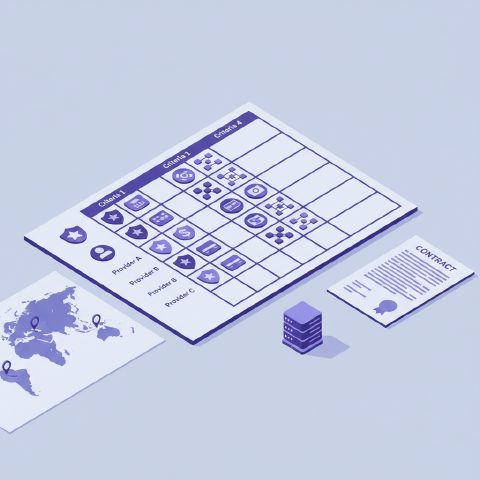
Phase 2 — Vendor selection and contracting (weeks 3–8): Run a structured RFP with at least three platform vendors. Key contract terms to fight for: data portability clauses (can you export your player database if you leave?), SLA uptime guarantees (99.9% is table stakes; get financial penalties for breach), and rev-share caps or volume-based step-downs. Licensing applications should run in parallel — Curaçao sublicenses can move in 4–8 weeks; MGA takes 4–6 months minimum.
Phase 3 — Configuration and integrations (weeks 6–20): This is where most timelines slip. Platform configuration — setting up your bonus engine, loyalty tiers, responsible gambling limits, geo-blocking rules — takes longer than vendors admit. Game aggregator API integration is usually straightforward if the aggregator is on the vendor's certified list; direct studio deals (NetEnt, Pragmatic Play, Evolution) require separate commercial agreements and technical certification. Payment integrations are the most unpredictable — PSP onboarding for a new operator in an offshore jurisdiction can take 4–12 weeks per provider, and you'll want at least 2–3 payment methods at launch.
Phase 4 — QA, compliance testing and soft launch (weeks 18–24): Don't skip structured QA. Test every bonus mechanic, every payment flow, every responsible gambling trigger. If your jurisdiction requires RNG certification (MGA, UKGC, most US states), schedule the GLI or BMM audit early — slots in their calendar fill up. Soft launch to a limited player base before full marketing spend. You will find bugs. Better to find them with 200 players than 20,000.
What technical requirements do regulators impose on iGaming software?
Every serious licensing jurisdiction mandates specific technical standards: certified RNG, documented audit trails for all game rounds, AML/KYC integration, responsible gambling controls (deposit limits, self-exclusion), and data residency rules. The MGA and US state regulators are the most demanding; Curaçao and Anjouan set a lower floor but the gap is narrowing.
RNG certification is non-negotiable for any regulated market. Jurisdictions like the MGA, UKGC, and all US state gaming commissions require your RNG to be tested and certified by an approved testing laboratory — GLI (Gaming Laboratories International), BMM Testlabs, or eCOGRA are the main names. This isn't a one-time checkbox: certification must be renewed when you update game software, and the testing lab needs advance scheduling. Budget $5K–$20K per certification cycle and 4–8 weeks lead time.
AML and KYC requirements have tightened significantly since 2022. The MGA's Player Protection Directive and the EU's AMLD6 framework require operators to verify player identity at registration (or at a low deposit threshold), conduct enhanced due diligence on high-value players, file suspicious transaction reports, and maintain transaction records for 5+ years. Your platform needs to log this data in a format that satisfies regulatory audit requests — not just store it somewhere. Middleware providers like Sumsub, Jumio and Shufti Pro handle the verification workflow; your platform needs clean API hooks to feed them.
US state requirements are in a category of their own. New Jersey (DGE), Pennsylvania (PGCB) and Michigan (MGCB) all require geolocation verification at session start using certified providers like GeoComply. They also mandate integration with statewide self-exclusion registries (New Jersey's iGaming self-exclusion list, for example), detailed game round logging to state servers in some cases, and responsible gambling feature sets that go beyond what offshore operators typically build. If you're targeting the US, your platform architecture decisions on day one need to account for this — retrofitting geolocation and state reporting into a platform not designed for it is expensive and slow.
Should you build in-house or hire an iGaming software development company?
For 95% of operators, hiring a specialist iGaming software development company — or licensing a turnkey platform — is the right call. Building in-house only makes sense if you have existing technical infrastructure, a defined competitive advantage in proprietary software, and the capital to staff a dedicated engineering team for 18+ months.
The appeal of building in-house is real: full control, no rev-share, proprietary features. The reality is that iGaming software has a decade of accumulated complexity — regulatory compliance modules, payment reconciliation, fraud detection, game round integrity logging — that a greenfield team will spend 12–18 months just catching up to before they can build anything differentiated. Meanwhile, your competitors are live and acquiring players.
If you do go the outsourced development route for a custom build (rather than licensing a turnkey), choose a firm with demonstrable iGaming-specific experience. Generic software agencies underestimate the compliance complexity every time. Ask for references from launched, regulated operators — not prototypes or internal tools. Eastern European dev shops (Ukraine, Poland, Serbia) have deep iGaming talent pools and competitive rates ($50–$90/hour versus $150–$250/hour for Western European or North American teams), but you'll need a strong technical project manager on your side to manage the engagement.
A hybrid approach works well for some operators: license a turnkey platform for the core engine, then hire 2–3 in-house developers to build proprietary front-end features, custom bonus mechanics or data analytics tooling on top. You get speed to market from the platform vendor and differentiation from your own team, without the risk of building the regulated core from scratch. This is the model I'd recommend to any operator targeting $5M–$20M GGR annually who wants to compete on product rather than just marketing.
How do game aggregators fit into iGaming software development?
A game aggregator is the technical and commercial layer that connects your platform to hundreds of game studios through a single API integration. Instead of negotiating direct deals with Pragmatic Play, NetEnt, Evolution and 200 others, you integrate once with an aggregator like Relax Gaming, Pariplay, or SoftSwiss's Mancala and get access to their full catalog.
The aggregator model is the default for most operators, and for good reason. A single aggregator integration can give you access to 5,000–10,000 game titles across slots, live casino, table games and crash games. The commercial structure is typically a rev-share on game GGR — usually 10–20% to the aggregator, who then pays the studios their cut. Some aggregators charge a flat monthly fee plus a lower rev-share; the right structure depends on your volume.
The trade-off is margin. At scale, aggregator rev-share is a significant cost. Large operators (think $50M+ GGR annually) negotiate direct deals with the studios that drive most of their volume — typically Evolution for live casino, Pragmatic Play for slots — and use the aggregator only for the long tail. Getting a direct deal with Evolution as a new operator is difficult; they're selective about who they work with directly and require minimum volume guarantees. Pragmatic Play is somewhat more accessible. Budget 12–18 months before you have the leverage to renegotiate aggregator terms meaningfully.
From a development perspective, aggregator integration quality varies. The best aggregators (Relax Gaming, Hub88, Pariplay) provide well-documented REST APIs, sandbox environments and dedicated technical account managers. Some smaller aggregators have legacy XML integrations, inconsistent game metadata and support that disappears after onboarding. Test the sandbox before you sign — a poorly documented API will cost your dev team weeks of integration time that wasn't in the project plan.
What role does the payment stack play in iGaming software development?
Payments are the most underestimated technical component of a casino platform. A weak payment stack — slow processing, limited local methods, high decline rates — kills conversion and retention regardless of how good your game content is. Getting this right requires both technical integration and commercial relationships with PSPs who will actually work with gambling merchants.
The core technical requirement is a multi-currency, multi-method wallet that handles deposits, withdrawals, bonus funds and jackpot payouts with real-time balance updates and full transaction logging. Most turnkey platforms include a wallet engine; the question is how well it integrates with the payment providers you actually need. Platforms like EveryMatrix's MoneyMatrix or SoftSwiss's payment module have pre-built integrations with 200+ PSPs — a genuine advantage over building custom payment integrations from scratch.
The commercial problem is harder than the technical one. Most mainstream payment processors (Stripe, Braintree, Adyen) won't touch online gambling merchants without a regulated license in a jurisdiction they recognize. For offshore operators, you're typically working with specialist iGaming PSPs — Payvision, Nuvei, Paysafe, Skrill/Neteller (Paysafe group), or crypto gateways like CoinsPaid or B2BinPay. Onboarding a new gambling merchant takes 4–12 weeks per PSP, requires your license documentation, business plan, and sometimes a rolling reserve of 5–10% of processed volume held for 90–180 days. Plan your payment stack early and run onboarding in parallel with platform development.
Crypto payment integration has become a genuine competitive differentiator in offshore and LATAM markets. Operators with seamless Bitcoin, Ethereum and stablecoin deposit flows see meaningfully higher conversion from crypto-native player segments. CoinsPaid and B2BinPay are the two most operator-focused crypto payment processors in the space; both have pre-built integrations with major iGaming platforms. The compliance consideration: even Curaçao and Anjouan now expect crypto transaction monitoring, and some PSPs require it contractually.
What are the biggest mistakes operators make during iGaming software development?
The most costly mistakes are: choosing a platform before defining the target market, underbudgeting post-launch technical costs, signing contracts without data portability clauses, and treating compliance tooling as optional. Each of these is fixable before launch and very expensive to fix after.
Platform-market mismatch is the silent killer. I've seen operators sign a six-figure turnkey contract, then discover the platform's payment module doesn't support the primary local payment method in their target country — Pix in Brazil, UPI in India, SPEI in Mexico. By that point, renegotiating or switching platforms means months of delay and sunk costs. The fix is simple: define your target market and required payment methods before you evaluate a single vendor.
Data portability is a contract clause most operators don't think about until they want to leave their platform provider — at which point they discover their player database, transaction history and bonus liability records are effectively held hostage. Any platform contract worth signing should include explicit provisions for data export in a standard format (CSV, JSON, SQL dump) within 30 days of contract termination. If a vendor pushes back on this, that tells you something important about how they view the relationship.
Underbudgeting post-launch is nearly universal among first-time operators. The platform is live, the games are running, and then the real work starts: integrating the third PSP you couldn't get approved before launch, updating your responsible gambling module to meet a new regulatory requirement, fixing the bonus engine edge case that your VIP players found on day three. Budget a minimum of 20–30% of your initial development cost as an annual technical maintenance and improvement reserve. Operators who don't do this end up with technical debt that compounds and eventually forces a costly platform migration.
How do iGaming software development costs and timelines differ by target market?
Target market is one of the biggest variables in both cost and timeline. US-regulated states require the most expensive and time-consuming technical build. EU-regulated markets (MGA, UKGC) sit in the middle. Offshore (Curaçao, Anjouan) is fastest and cheapest to launch technically, but payment stack complexity in specific regions can offset that advantage.
US-regulated iGaming is the most technically demanding and expensive market to enter. Beyond the platform, you need certified geolocation (GeoComply is effectively the standard; budget $30K–$100K/year depending on volume), integration with state self-exclusion registries, detailed game round reporting to state servers in some jurisdictions, and responsible gambling features that meet state-specific mandates. New Jersey's DGE, Pennsylvania's PGCB and Michigan's MGCB each have their own technical submission requirements. Getting technical approval from a US gaming commission adds 6–12 months to your timeline and $100K–$300K in compliance costs on top of your platform build.
EU-regulated markets via the MGA or UKGC are demanding but more predictable. The MGA's technical standards are well-documented, testing labs have established workflows, and the ecosystem of compliant platform vendors is mature. Budget an extra $50K–$150K in compliance-related technical work compared to an offshore build, and 3–6 months of additional timeline for certification and license approval. The upside is access to reputable payment processors, major game studios, and a player base that trusts regulated brands.
Offshore markets (Curaçao, Anjouan) have the lowest technical compliance bar and fastest path to launch — 8–16 weeks is achievable on a white-label. The complication is market-specific: if you're targeting Brazil, you need Pix integration and Portuguese-language support; Mexico requires SPEI and OXXO cash deposit options; LATAM broadly has high mobile penetration and requires a genuinely performant mobile experience. These market-specific requirements add development time and cost that aren't reflected in the platform vendor's base quote.



Comments
No comments yet, be the first.