Best iGaming Software Providers 2026: A Cost-and-ROI Analysis for Operators and Investors

What should operators actually budget for iGaming software in 2026?
Expect $30,000–$80,000 to get a white-label casino live, and $200,000–$600,000 for a full turnkey or custom build. Those headline numbers exclude licensing, payment processing setup, and the marketing budget that actually drives revenue. Most operators who run out of runway do so because they budgeted for the platform but not the six months of negative cash flow before the site scales.
The platform fee is only one line item. When I review operator budgets, I typically see four cost buckets that matter before month one: platform setup (one-time), licensing (one-time plus annual), payment integration (setup plus rolling transaction fees), and working capital to fund bonuses and cover negative variance. Operators who only price the first bucket are the ones calling me in month four asking why they're underwater.
On the white-label side, SoftSwiss charges a setup fee in the $25,000–$50,000 range depending on scope, with a revenue share that typically runs 15–20% of GGR for the platform and an additional aggregator cut on top of that. EveryMatrix's CasinoEngine quotes are in a similar band, though their modular architecture means you can sometimes negotiate down by licensing only the modules you need. Softgamings targets newer operators with lower entry points — sometimes sub-$15,000 setup — but their revenue share can run higher as a result.
Turnkey providers like Digitain or BetConstruct bundle sportsbook, casino, and back-office into one contract, which looks efficient on paper. In practice, bundling means you're paying for functionality you won't use at launch, and the exit clause if you want to migrate later is brutal. I've reviewed contracts where the data portability terms alone would cost an operator $80,000–$120,000 to leave. Always model the exit cost before you sign.
My rule of thumb: budget 40% of your Year-1 projection for customer acquisition, 25% for platform and licensing, 20% for payment infrastructure and fraud tooling, and keep 15% as a liquidity reserve. Operators who invert that ratio — spending heavily on platform features before they have traffic — almost always stall.
| Launch Model | Platform Setup | Licensing | Monthly Platform Cost | Year-1 Total (est.) |
|---|---|---|---|---|
| White-Label (e.g., SoftSwiss, EveryMatrix) | $20,000–$60,000 | $5,000–$35,000 | 15–25% of GGR | $80,000–$200,000+ |
| Turnkey Casino Software | $80,000–$200,000 | $25,000–$80,000 | 5–15% of GGR or flat SLA | $200,000–$500,000+ |
| Custom Build (proprietary) | $300,000–$1M+ | $50,000–$150,000 | Internal ops cost | $600,000–$2M+ |
| Crypto/Offshore Minimal Setup | $10,000–$30,000 | $3,000–$15,000 | 20–35% of GGR | $50,000–$120,000 |
Which iGaming software providers lead the market in 2026?
SoftSwiss, EveryMatrix, Softgamings, Digitain, BetConstruct, and GR8 Tech are the operators most commonly shortlisted for white-label and turnkey builds. For pure game aggregation, Pariplay (Aristocrat), Relax Gaming, and SoftSwiss Standalone are the dominant pipes. The right answer depends entirely on your target market, licensing jurisdiction, and whether you want revenue share or a flat fee model.
SoftSwiss remains the most referenced white-label platform in the offshore and crypto casino space. Their SOFTSWISS Casino Platform covers back-office, KYC orchestration, bonus engine, and multi-currency crypto support out of the box. The trade-off is that their revenue share model means your platform cost scales with your success — once you're generating $500,000+ GGR monthly, you should be renegotiating or planning a migration to a licensed turnkey or proprietary stack.
EveryMatrix is the platform I recommend most often for operators targeting regulated EU markets. Their modular CasinoEngine, WalletEngine, and GameHub products integrate cleanly with MGA and UKGC compliance requirements, and their API documentation is genuinely good — something that matters when you're paying developers by the hour. Their pricing is not the cheapest, but the compliance tooling saves you from building it yourself at significant cost later.
GR8 Tech (formerly Parimatch Tech's B2B arm) is worth watching for operators entering LATAM and Eastern European markets. They bring sportsbook-first architecture that suits operators where sports betting drives 60–70% of revenue, with casino as a secondary vertical. Digitain and BetConstruct compete in a similar space, often with more aggressive pricing for operators in Tier 2 and Tier 3 markets.
For LATAM specifically — Brazil's regulated market opening in 2025, Colombia under Coljuegos, Peru under MINCETUR — the platform choice is increasingly driven by local payment method support. A provider that can't natively handle PIX, PSE, or PagoEfectivo is a liability regardless of how good their game library is. I'd weight payment coverage at least as heavily as game count when evaluating providers for this region.
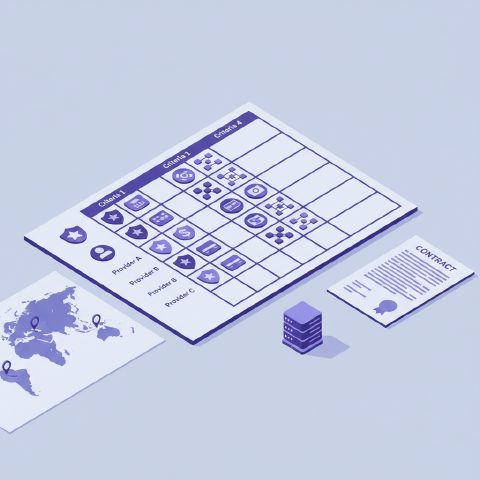
| Provider | Best For | Pricing Model | Notable Strength | Watch Out For |
|---|---|---|---|---|
| SoftSwiss | Crypto/offshore, mid-market | Revenue share (15–20% GGR) | Crypto-native, fast launch | Scales costly at high GGR |
| EveryMatrix | Regulated EU, MGA/UKGC | Revenue share + module fees | Compliance tooling, API quality | Higher entry cost |
| Softgamings | Entry-level, offshore | Revenue share (18–30% GGR) | Low setup barrier | Limited compliance depth |
| Digitain | LATAM, Tier 2 markets | License fee + rev share | Sportsbook + casino bundle | Bundled cost, exit terms |
| BetConstruct | CIS, LATAM, Africa | Custom per contract | Wide market coverage | Support quality variability |
| GR8 Tech | Sports-led operators | Enterprise contract | Scalable sportsbook infra | Minimum volume requirements |
| Pariplay (Aristocrat) | Game aggregation | 2–4% GGR per aggregated game | 800+ game titles, certified | Stacks on top of platform rev share |
How does casino platform revenue share actually affect your margins?
Revenue share is the single biggest margin killer in online casino operations and most operators underestimate it at launch. A 20% GGR revenue share sounds manageable until you layer in payment processing (2–4%), game aggregator fees (2–5%), bonus costs (8–15% of GGR), and affiliate commissions (20–40% of NGR). At scale, your effective take-home can drop below 20% of GGR before a single salary is paid.
Here's the math that surprises operators who've never run a P&L on a casino business. Take $100 in GGR. Your platform takes $20 (20% rev share). Your aggregator takes $3 (3% GGR). Payment processing nets another $3. Bonuses cost you $10. Affiliate commission on the net revenue: $12. You're left with $52 before staff, hosting, compliance, and marketing. That's a 52% gross margin before opex — which sounds fine until you realize your CAC on that player was $180 and their LTV is $300.
The rev share model favors platforms, not operators. That's not a criticism — it's just the economic structure. Platforms take risk by onboarding you before you generate revenue, so they price for that. The problem is operators sign rev share agreements at launch when they have no leverage, then never renegotiate when volume grows. I've seen operators paying 22% rev share on $800,000 monthly GGR when the same platform would do 12% for that volume if asked.
Flat-fee or hybrid models exist and are worth pursuing once you have volume data. Some platforms — particularly in the turnkey space — will offer a flat monthly SLA fee of $15,000–$40,000 in lieu of revenue share once you cross certain GGR thresholds. That structure becomes dramatically more favorable above $300,000–$400,000 monthly GGR. Model both scenarios before you hit that threshold so you can negotiate from a position of knowledge rather than urgency.
What does a Curaçao gaming license cost versus an MGA license in 2026?
A Curaçao sub-license through a master license holder costs $5,000–$15,000 upfront and $3,000–$8,000 annually — the cheapest credible entry point for offshore operators. An MGA license runs $25,000–$35,000 in application and compliance fees, takes 4–9 months, and requires a Malta-based presence. The cost gap is real, but so is the difference in banking access, payment processor acceptance, and eventual exit valuation.
Curaçao's licensing regime changed significantly in 2023–2024 with the introduction of the National Ordinance on Offshore Games of Hazard (NOOGH), which replaced the old master license sub-license structure with a new direct licensing framework. As of 2025, new applicants apply directly to the Curaçao Gaming Control Board (GCB) rather than through a master license holder like Antillephone or Cyberluck. The new license fee structure is still settling — budget $15,000–$30,000 for the new direct license plus compliance setup, and factor in that processing times have extended to 3–6 months under the new regime.
The MGA (Malta Gaming Authority) license is the gold standard for EU-facing operators. It unlocks tier-one payment processors, better banking relationships, and a higher acquisition multiple if you ever sell the business. The compliance burden is real though — you'll need a Malta-based key function holder, AML/CFT policies, responsible gambling tooling, and ongoing reporting. Budget $60,000–$100,000 in Year 1 when you include legal fees, compliance officer costs, and the MGA's own fees. It's not a license for operators who want to be live in 90 days.
For US operators, the picture is entirely different. There's no federal online casino license — you need a state-by-state approval. New Jersey (NJDGE), Pennsylvania (PGCB), Michigan (MGCB), and Connecticut (CTDCP) are the live regulated markets. Platform providers must hold their own supplier licenses in each state, which is why only a handful of B2B providers are actually approved: Scientific Games (now Light & Wonder), IGT, Kambi on the sportsbook side, and a growing list including GAN and Everi. Operators entering the US market through a regulated state should budget $500,000–$2M+ for licensing, compliance infrastructure, and the minimum capitalization requirements that vary by state.
Anjouan (Comoros) has emerged as an alternative offshore jurisdiction with lower fees than Curaçao — sometimes sub-$10,000 — but payment processor acceptance is materially worse and the regulatory credibility is lower. I'd use it only for crypto-primary operations where traditional banking is not the priority.
| Jurisdiction | Application/Setup Fee | Annual Fee | Timeline | Key Benefit | Key Limitation |
|---|---|---|---|---|---|
| Curaçao (new GCB direct) | $15,000–$30,000 | $10,000–$20,000 | 3–6 months | Fastest credible offshore entry | Limited tier-1 processor access |
| MGA (Malta) | $25,000–$35,000 | $25,000+ | 4–9 months | EU market access, banking | High compliance burden |
| UKGC | $50,000–$100,000+ | $40,000–$100,000+ | 6–12 months | UK market, premium valuation | Strictest compliance regime |
| Coljuegos (Colombia) | $500,000+ (bond) | Variable | 12–24 months | Regulated LATAM access | High capital requirements |
| MINCETUR (Peru) | Variable | Variable | 12–18 months | Growing LATAM market | Bureaucratic process |
| Anjouan (Comoros) | $5,000–$10,000 | $3,000–$6,000 | 4–8 weeks | Lowest cost entry | Poor processor acceptance |
| US State (e.g., NJ, PA) | $500,000–$2M+ | Ongoing | 12–36 months | Largest regulated market | Extremely high barrier |
What is the real difference between a white-label casino platform and turnkey casino software?
White-label gives you a pre-built, co-branded casino running on a shared infrastructure — fast and cheap to launch, but you share the license, the platform, and often the game library with dozens of other operators. Turnkey software is fully yours: your license, your brand, your data. The cost gap is $50,000–$400,000+ in Year 1, and the strategic gap is even larger if you plan to raise capital or sell.
White-label is essentially renting a casino business. You get a front end, a back-office login, a game lobby populated by the platform's aggregator deals, and a sub-license under the platform provider's Curaçao or MGA master license. The advantages are real: you can be live in 4–12 weeks, you don't need to hire a compliance team, and the platform handles most payment integrations. The disadvantages are equally real: you don't own the player data in any portable sense, your bonus engine is constrained by the platform's rules, and your revenue share never goes to zero.
Turnkey casino software — from providers like Digitain, BetConstruct, or a custom build on top of a game aggregator like SoftSwiss Standalone — means you hold your own license, run your own database, and negotiate your own game deals. Your cost basis is higher upfront but your unit economics improve dramatically at scale. More importantly, when an acquirer values your business, they're valuing a proprietary asset with real player data and a transferable license, not a white-label skin that terminates when you stop paying the platform.
The decision tree I use with clients: if you have less than $150,000 in launch capital and no iGaming operational experience, start white-label. If you have $300,000+, a clear market thesis, and a 3–5 year horizon, go turnkey from day one. The operators who try to save money by launching white-label and then migrating to turnkey 18 months later almost always lose 20–30% of their player base in the migration and spend more in total than if they'd gone turnkey originally.
How do casino game aggregators affect your cost structure and game library?
Game aggregators like Pariplay, SoftSwiss Standalone, and Relax Gaming charge 2–5% of GGR on every spin played through their pipe, on top of whatever you're paying your casino platform. For a $300,000 GGR/month operation, that's $6,000–$15,000 per month in aggregator fees alone. The benefit is instant access to 3,000–10,000+ titles from 100+ studios without negotiating 100 separate direct deals.
Direct studio deals make financial sense only above a certain volume threshold — typically $1M+ GGR/month per studio — because studios set minimum guarantees that smaller operators can't justify. Below that, aggregators are the only practical route. The key is understanding what you're actually paying for: aggregators bundle certification costs, technical integration maintenance, and content licensing into their rev share. That's genuinely valuable, but it means every dollar of GGR you generate is running through at least two rev share layers before it reaches you.
Pariplay (owned by Aristocrat) is the aggregator I see most often in regulated market deployments — their certification footprint across MGA, UKGC, and multiple US states is hard to match. Relax Gaming has a strong content-plus-aggregation model where their own titles (Money Train series, etc.) drive player engagement while their Silver Bullet and Powered By programs give you access to third-party studios. SoftSwiss Standalone is the obvious choice if you're already on the SoftSwiss casino platform, since the integration is native and the commercial terms are bundled.
One cost operators consistently miss: certification fees for new markets. When you expand from Curaçao to MGA or into a US state, your existing game library needs to be re-certified for that jurisdiction. Aggregators handle this for titles already in their certified portfolio, but titles outside that portfolio — or direct studio deals you've negotiated — need independent GLI or BMM certification, which runs $2,000–$8,000 per game title. If you're planning multi-jurisdiction expansion, the aggregator's certified game count in your target markets matters more than their total title count.
What iGaming payment software do operators need, and what does it cost?
You need at minimum a payment gateway, a PSP (payment service provider) stack covering your target markets, a fraud and chargeback management layer, and KYC/AML verification. Budget $5,000–$20,000 for initial integration and 2–5% of transaction volume in ongoing processing fees. In regulated markets, compliant payment infrastructure is often harder to assemble than the gaming platform itself.
The payment stack is where operators consistently underinvest and then wonder why their conversion rate is 40% below projections. Players abandon deposit flows for three reasons: the payment method they want isn't available, the friction is too high (too many verification steps), or the transaction fails silently. All three are payment infrastructure problems, not marketing problems. I've audited casino payment stacks where 35% of deposit attempts were failing due to misconfigured 3DS flows — that's revenue walking out the door every hour.
For offshore and crypto operations, providers like Coinspaid (crypto), Paydoo, and Praxis Tech (payment orchestration) are the workhorses. Praxis in particular has become the de facto payment orchestration layer for mid-market casino operators — their cascading logic routes transactions through multiple PSPs to maximize approval rates, which directly impacts revenue. For LATAM, you need local method coverage: PIX for Brazil, PSE and Efecty for Colombia, PagoEfectivo for Peru. No single PSP covers all of these natively; you'll need 2–3 PSP relationships minimum.
KYC and AML tooling adds another layer of cost. Sumsub, Jumio, and Onfido are the common providers for identity verification — budget $1–$3 per verification at volume, with setup fees of $2,000–$10,000. In MGA and UKGC jurisdictions, you'll also need ongoing transaction monitoring (Napier, ComplyAdvantage, or similar) at $500–$3,000/month depending on volume. These aren't optional line items in regulated markets; they're license conditions.
One thing vendors don't advertise: chargeback rates above 1% will get your merchant account terminated. Casino operators are already in a high-risk MCC category, which means your acquiring bank is watching your chargeback ratio closely. Budget for a dedicated chargeback management tool (Chargebacks911, Ethoca) from day one — the cost is $500–$2,000/month and it's far cheaper than losing your payment processing relationship mid-operation.
What does a realistic break-even analysis look like for a new online casino?
A white-label casino with a $100,000 launch investment and $20,000/month in marketing spend typically needs 12–20 months to break even, assuming a 3–5% player conversion rate from traffic and an average player LTV of $400–$800. Turnkey operators with stronger margins can hit break-even in 9–15 months if traffic acquisition is efficient. Most operators who fail do so in months 6–10, before the player base has compounded.
Break-even math for an online casino is straightforward once you have your unit economics. The variables that matter most: CAC (customer acquisition cost), average player LTV, and your net margin per GGR dollar after all platform, aggregator, and payment costs. If your CAC is $200 and your LTV is $600, you need to acquire 500 active players to generate $300,000 in net LTV — but that $300,000 is spread over 12–18 months, not received upfront. Your cash flow is negative until the cohort matures.
Typical unit economics I see in offshore white-label operations: CAC $150–$350 (SEO-driven acquisition at the low end, paid media at the high end), player LTV $300–$900 (highly variable by market and vertical mix), net margin per GGR dollar 25–40% after platform rev share, aggregator fees, and payment costs. With those ranges, a site generating $150,000 GGR/month nets $37,500–$60,000 — enough to cover a lean operation but not enough to service a $300,000 launch investment quickly.
The operators who break even fastest share three characteristics: they launch in a market where they have an existing traffic or affiliate advantage (SEO asset, existing player database, affiliate network relationship), they control CAC by starting with organic and affiliate traffic before scaling paid, and they launch with a focused game vertical rather than trying to offer everything on day one. A focused slots-plus-live-casino product with 500 titles converts better than an unfocused 5,000-title lobby, and it costs less to maintain compliance certifications for a smaller library.
One honest note on ROI projections: every platform vendor will show you a hockey-stick GGR forecast in their sales deck. I've never seen one of those forecasts prove accurate. Build your own model bottom-up from CAC, conversion rate, and LTV assumptions, then stress-test it at 50% of projected traffic. If the business survives that scenario, the fundamentals are sound.
How do US iGaming platform requirements differ from offshore deployments?
US regulated iGaming is a completely different business from offshore casino operations — different technology requirements, different compliance infrastructure, and different commercial structures. Platform providers need state-specific supplier licenses, games must be GLI-certified for each state, and the revenue share model is often replaced by flat licensing fees due to state regulatory requirements. Budget at least 10x the compliance cost of an offshore launch.
The US market is the largest regulated iGaming opportunity in the world, but the barrier to entry is deliberately high. In New Jersey, Pennsylvania, Michigan, and Connecticut — the four states with live regulated online casino markets as of 2025 — platform providers must hold a transactional waiver or supplier license in each state. That process involves background checks on all principals, financial disclosures, and technology audits. The approved supplier lists in each state are short, which is why operators launching in the US almost always partner with an already-approved platform rather than trying to get their preferred offshore provider approved.
Scientific Games (Light & Wonder), IGT, GAN, and Everi are among the approved B2B suppliers with multi-state footprints. On the sportsbook side, Kambi and Sportech power several regulated operators. The commercial terms in US regulated markets are generally more favorable to operators than offshore rev share deals — many US B2B contracts are structured as flat monthly license fees or per-active-player fees rather than GGR percentage — but the compliance overhead more than offsets that advantage for smaller operators.
State-by-state expansion is the other reality operators underestimate. Getting approved in New Jersey doesn't mean you can operate in Pennsylvania. Each state application is a separate process, a separate fee, and a separate timeline. Operators targeting multi-state US expansion should budget $200,000–$500,000 per state in legal, compliance, and application costs before generating a dollar of revenue. That's not a deterrent — the US market justifies it — but it's a capital planning reality that operators coming from offshore backgrounds routinely miscalculate.
What hidden fees do iGaming software contracts typically contain?
The fees that surprise operators most are data migration costs on exit, minimum monthly GGR guarantees, per-market certification fees, dedicated account manager charges, and custom development rates that can hit $150–$250/hour. Read every contract clause about minimums, exclusivity, and exit terms before signing — the savings you think you're getting in the headline rev share often disappear in the footnotes.
Minimum monthly guarantees are the most common contract trap. A platform charges 18% of GGR but includes a minimum monthly fee of $8,000 — meaning if your site generates $30,000 GGR in month three, you pay $8,000 (the minimum) rather than $5,400 (18%). For operators in the ramp-up phase, minimums can double their effective platform cost. Always model your minimum payment scenario across the first 12 months and negotiate a minimum-free period or a reduced minimum for the first six months.
Custom development is another silent cost center. Every platform has a standard feature set, and anything outside that — custom bonus mechanics, bespoke reporting, specific payment method integrations — goes to a development queue billed at $150–$250/hour. I've seen operators accumulate $40,000–$80,000 in custom development fees in Year 1 because they didn't fully audit the platform's native feature set before signing. Do a detailed feature gap analysis against your product requirements before you commit.
Exit and data portability terms deserve their own legal review. Some white-label contracts give the platform ownership of your player data for purposes of re-marketing — meaning if you leave, they can continue to market to players who came to your brand. Others charge $5,000–$20,000 for a data export in a usable format. These clauses are buried in the data processing addendum, not the main commercial agreement. Pay a gaming lawyer $2,000–$3,000 to review the full contract stack before you sign. It's the best ROI in the entire launch process.
How should operators evaluate iGaming software providers for LATAM markets in 2026?
LATAM iGaming software selection in 2026 is driven by three factors that differ from EU or offshore deployments: local payment method coverage (PIX, PSE, PagoEfectivo, Oxxo), Spanish and Portuguese language localization quality, and regulatory compliance with Coljuegos (Colombia), MINCETUR (Peru), SEGOB (Mexico), and Brazil's new regulatory framework. A platform that excels in Europe but lacks PIX integration is a liability in Brazil regardless of its game count.
Brazil's market formalization under the Ministry of Finance's new regulatory framework (in force from January 2025) has made it the most watched LATAM opportunity since Colombia opened in 2016. The Brazilian license requires local entity establishment, a R$30 million (~$6M) minimum capital requirement, and compliance with COAF AML standards. That's not a market for white-label operators — it's a market for capitalized operators with a long-term horizon. Platform providers with existing Brazilian payment infrastructure and Portuguese localization — including SoftSwiss with their recent LATAM push, and EveryMatrix's expanding regional footprint — are better positioned than pure EU-focused providers.
Colombia remains the most accessible regulated LATAM market for operators who can meet Coljuegos requirements. The license structure involves a concession fee based on projected GGR and a performance bond, but the regulatory framework is mature and payment processing in COP is well-established. Operators already live in Colombia consistently report that local payment method conversion rates are 15–25% higher than international card processing — which makes PSE and Efecty integration table stakes, not a nice-to-have.
Mexico under SEGOB is a different beast — the licensing regime is complex, enforcement is inconsistent, and the market is dominated by a handful of large operators. Peru under MINCETUR is growing but the licensing timeline is long. For operators new to LATAM, I recommend starting with an offshore license (Curaçao) targeting the unregulated segments of these markets while preparing a Colombia or Brazil application in parallel — a two-track strategy that generates revenue while the regulated license matures.
- SoftSwiss Casino Platform — Best for crypto-native and offshore operators. Covers back-office, multi-currency crypto wallets, KYC orchestration, and bonus engine. Revenue share typically 15–20% GGR. Fast launch timeline of 4–10 weeks. Scales costly at high GGR — renegotiate or plan migration above $500K/month.
- EveryMatrix CasinoEngine — Best for regulated EU market operators targeting MGA or UKGC compliance. Modular architecture lets you license only what you need. Strong API documentation and compliance tooling. Higher entry cost than offshore alternatives but saves significant compliance build cost in regulated markets.
- Softgamings — Entry-level white-label platform suited to first-time operators with limited capital. Setup fees can be sub-$15,000, but revenue share runs 18–30% GGR. Limited compliance depth makes it unsuitable for regulated EU or US markets. Best for offshore or crypto launches where speed and low entry cost are the priority.
- Digitain — Turnkey casino and sportsbook provider with strong presence in LATAM and Tier 2 markets. Bundles sportsbook, casino, and back-office in one contract — efficient for sports-led operators but watch the exit terms and bundled cost for verticals you won't use at launch.
- GR8 Tech — Enterprise-grade platform formerly operated as Parimatch Tech's B2B arm. Designed for sportsbook-first operators where casino is a secondary vertical. Strong scalable infrastructure and LATAM/Eastern Europe market coverage. Requires minimum volume commitments — not suited for early-stage operators.
- Pariplay (Aristocrat) — Leading casino game aggregator with 800+ certified titles and a strong multi-jurisdiction certification footprint including MGA, UKGC, and US states. Charges 2–4% GGR on aggregated content. Best aggregator choice for operators planning regulated market expansion due to pre-certified game library.
- BetConstruct — Full-stack iGaming platform with broad geographic coverage across CIS, LATAM, and Africa. Competitive pricing for Tier 2 and Tier 3 markets. Support quality can be variable — verify SLA terms carefully before signing. Good option for operators entering markets where larger providers lack local payment or language coverage.





Comments
No comments yet, be the first.