Best iGaming Software Providers 2026: The Operator's Shortlist (No Fluff)
What should operators actually evaluate when comparing iGaming software providers?
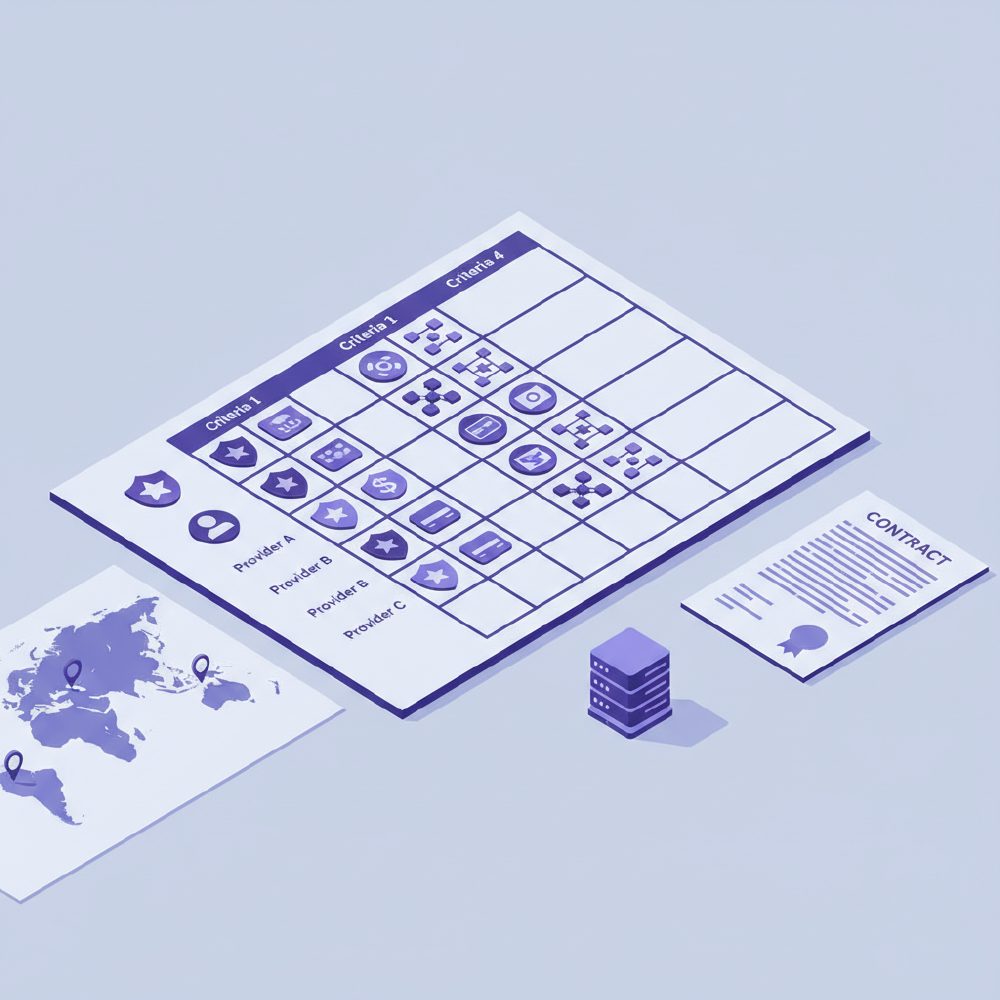
Skip the demo reel. The real evaluation criteria are: licensing sub-license availability and jurisdiction fit, game aggregation depth versus cost, payment PSP integrations for your target market, back-office reporting granularity, and the revenue-share or flat-fee model's break-even point at your projected GGR. Everything else is packaging.
Most operators walk into a platform demo focused on front-end themes and slot counts. That's the wrong frame. By the time you're six months post-launch, you'll care far more about whether your provider's PAM (Player Account Management) system supports the bonus mechanics your retention team needs, whether the reporting suite exports to your BI tool without a custom build, and whether the payment gateway covers the local bank transfer methods your players actually use. A flashy lobby template costs nothing to replicate; a broken payment reconciliation system costs you every single week.
Licensing is the other area where operators get burned quietly. In 2024, Curaçao's Gaming Control Board replaced the old OGL framework with a new master license structure. Providers who previously sub-licensed operators under the old system had to re-certify — and some didn't make it through. If your provider can't demonstrate a current GCB master license, you're operating in a legal grey zone that will surface the moment you try to open a merchant account or partner with a tier-one payment processor. Ask for the license number and verify it directly on the GCB public register.
Cost modeling is the third pillar. White-label providers typically charge a setup fee (commonly €15,000–€50,000 depending on scope), a monthly platform fee (€3,000–€10,000 is a reasonable range for mid-tier providers), and a revenue share on GGR that sits somewhere between 10% and 25%. That revenue share compounds painfully once you scale. A provider taking 15% of GGR at €500K monthly GGR is costing you €75,000 per month — more than most operators' entire initial setup budget. Model the break-even against a turnkey or licensed-software-only approach before you commit.
Finally, evaluate technical documentation and API quality as a first-class criterion. Providers like EveryMatrix publish genuinely detailed integration docs; others hand you a PDF and a Skype contact. If you're building any custom front-end or integrating third-party tools — affiliate platforms, CRM, fraud detection — you'll be living inside that API for years. A two-hour technical call with the provider's integration team before signing tells you more than a six-hour sales presentation.
Which iGaming software providers are the strongest picks for 2026?
For white-label speed-to-market, SoftSwiss and EveryMatrix are the two most operator-proven platforms globally. For modular or headless builds, Promatic and BetConstruct offer more flexibility. For pure game aggregation, Relax Gaming's Silver Bullet and GameHub by Pariplay lead on content breadth. The right pick depends entirely on your jurisdiction, GGR projections, and how much of the stack you want to own.
SoftSwiss has built a strong reputation specifically because it bundles the platform, the game aggregator (BGaming and 20,000+ third-party titles), and a Curaçao sub-license option into a single commercial relationship. For an operator launching offshore with limited technical resources, that consolidation is genuinely valuable — you're dealing with one contract, one integration, one support escalation path. The trade-off is that SoftSwiss's revenue-share model becomes expensive at scale, and operators who grow quickly often find themselves renegotiating terms from a weaker position than they'd like.
EveryMatrix is the platform I'd recommend for operators who anticipate needing MGA or UKGC compliance down the road, or who are building in regulated EU markets from day one. Their CasinoEngine and OddsMatrix products are genuinely modular — you can deploy the casino layer without the sportsbook, integrate your own front-end via their API, and add regulated market certifications incrementally. Their documentation is among the best in the industry, and their compliance team has real experience with MINCETUR in Peru and Coljuegos in Colombia, which matters if LATAM is on your roadmap.
BetConstruct deserves mention for operators who want a combined casino-and-sportsbook product with strong coverage in emerging CIS and MENA markets. Their platform is less polished than EveryMatrix on the front-end, but their odds feed and live betting engine are competitive, and their licensing support team has navigated some genuinely complex jurisdictions. Altenar is worth considering if you want a sportsbook-first build with casino as a secondary vertical — their B2B model is cleaner and their pricing more transparent than most.
For pure aggregation — if you already have a platform and just need game content — Pariplay's GameHub and Relax Gaming's Silver Bullet program both offer 6,000+ titles with a single integration. The difference: Relax Gaming's Silver Bullet includes their own proprietary titles (which perform well in Scandinavian and UK markets) alongside third-party content, while Pariplay's strength is breadth across less common studios. Neither is cheap — aggregator fees typically run 3–8% of GGR on top of studio royalties — but the alternative of managing 30+ direct studio contracts is operationally brutal for a team under 15 people.
| Provider | Best For | Model | Licensing Support | Approx. Setup Cost | Rev Share Range |
|---|---|---|---|---|---|
| SoftSwiss | Offshore white-label, crypto casinos | White-label + aggregator | Curaçao sub-license available | €20,000–€45,000 | 12–20% GGR |
| EveryMatrix | EU regulated, modular builds | Modular SaaS / API-first | MGA, UKGC, LATAM experience | €25,000–€60,000 | 10–18% GGR |
| BetConstruct | Casino + sportsbook, CIS/MENA | Full-stack turnkey | Multiple jurisdictions | €15,000–€40,000 | 10–20% GGR |
| Altenar | Sportsbook-first operators | White-label sportsbook | MGA, Curaçao | €10,000–€30,000 | Flat fee + rev share |
| Pariplay (GameHub) | Game aggregation only | Aggregator | Certified in 25+ markets | Integration fee varies | 3–8% GGR on content |
| Relax Gaming (Silver Bullet) | Aggregation + proprietary content | Aggregator + studio | MGA, UKGC certified | Integration fee varies | 4–9% GGR on content |
| Promatic | Custom/headless builds | Licensed software | Operator holds own license | Custom quoted | License fee model |
How do white-label, turnkey, and licensed-software models actually differ in 2026?
White-label gives you a branded front-end on someone else's infrastructure — fastest to launch, highest long-term cost. Turnkey hands you a fully built product you can customize more deeply but still rely on the provider's core stack. Licensed software means you buy or lease the platform code and run it yourself — lowest ongoing cost, highest upfront investment and technical overhead.
The white-label model is genuinely the right choice for operators launching their first property with under €200,000 in initial capital and no in-house technical team. You get to market in eight to sixteen weeks, you're not managing server infrastructure, and your compliance obligations are partially shared with the platform provider. The cost is that you're locked into their game library, their payment integrations, their bonus engine mechanics, and their revenue-share terms. When you hit €300K monthly GGR and want to negotiate, you'll find you have limited leverage — switching platforms at that point means re-integrating everything and risking player disruption.
Turnkey is a middle ground that gets underused because the marketing is muddier. Providers like SBTech (now part of DraftKings' tech stack) or GAN have historically offered turnkey products where the operator takes on more operational responsibility but gets deeper customization access. In practice, the line between white-label and turnkey has blurred — most 'turnkey' offerings in 2025–2026 are really white-label with a higher setup fee and an API access tier. Read the contract carefully: 'turnkey' in a vendor's pitch deck and 'turnkey' in the MSA can mean very different things.
Licensed software — buying a perpetual or annual license to run the platform code on your own infrastructure — is the model used by large operators and land-based casino groups entering online. The upfront cost is substantial (think €150,000–€500,000+ for a full-stack platform license from providers like Kambi for sportsbook or OpenBet), and you'll need a technical team capable of managing the deployment. The payoff is that your marginal cost per GGR dollar drops dramatically at scale, and you own the player data relationship completely. For most operators reading this, it's not the right starting point — but it's worth knowing the exit ramp exists.
| Model | Time to Launch | Upfront Cost | Ongoing Cost | Customization | Best For |
|---|---|---|---|---|---|
| White-Label | 8–16 weeks | €15,000–€50,000 | High (rev share 10–25%) | Limited | First-time operators, offshore launches |
| Turnkey | 12–24 weeks | €30,000–€100,000 | Medium (lower rev share) | Moderate | Operators with some tech capacity |
| Licensed Software | 6–18 months | €150,000–€500,000+ | Low (flat license fee) | Full | Scaled operators, land-based groups going online |
Which jurisdictions do top iGaming software providers actually support in 2026?
The major platforms — SoftSwiss, EveryMatrix, BetConstruct — cover Curaçao, MGA, and UKGC as standard. LATAM regulated markets (Coljuegos in Colombia, MINCETUR in Peru, SEGOB in Mexico) require market-specific certifications that not all providers hold. US state-by-state iGaming (New Jersey, Pennsylvania, Michigan) is a separate certification track that very few offshore-focused platforms have completed.
Jurisdiction support is where vendor sales decks are most misleading. A provider saying they 'support' a market often means they have a client operating there — not that their platform is certified by the local regulator. In Colombia, Coljuegos requires the platform software itself to be certified, not just the operator. EveryMatrix and SBTech have gone through that process; many smaller providers haven't. If you're targeting Colombia, ask for the certification documentation, not a reference client list.
The US market is its own universe. New Jersey's DGE, Pennsylvania's PGCB, and Michigan's MGCB each have distinct technical certification requirements, and the platforms that have navigated them — GAN, Everi, Scientific Games (now Light & Wonder) — are largely enterprise-grade providers not accessible to startup operators. If you're targeting the US, the realistic path in 2026 is a market-access deal with an existing state licensee, not a direct platform build. That's changing slowly as more B2B providers pursue state certifications, but don't let a vendor tell you they can have you live in New Jersey in six months without asking for their DGE approval documentation.
Curaçao deserves a specific note after the 2023–2024 GCB overhaul. The new framework requires platform providers who sub-license operators to hold a B2B master license from the GCB. Several providers who operated under the old OGL system were slow to re-certify, creating a period where operators were technically unlicensed. By mid-2025, the dust had mostly settled, but the lesson is clear: always verify your provider's current license status directly with the GCB's public register, not from a PDF they email you.
Anjouan (Comoros) has emerged as an alternative offshore jurisdiction for operators who can't qualify for Curaçao's new framework. Licensing fees are lower (roughly €15,000–€25,000 for initial licensing versus Curaçao's €35,000+), and the process is faster. The trade-off is that Anjouan has less payment processor recognition than Curaçao — you'll find it harder to open merchant accounts with tier-one PSPs. For crypto-primary operations, this matters less; for fiat-heavy operators, it's a real constraint.
What does payment stack coverage look like across the leading iGaming platforms?
Payment integration depth varies enormously between providers and is consistently the most underdue-diligenced item in platform evaluations. SoftSwiss integrates 80+ PSPs including crypto rails. EveryMatrix's PaymentIQ is arguably the most mature payment orchestration layer in the industry. Smaller platforms often have 15–20 integrations, which sounds fine until your target market requires a local APM they don't support.
PaymentIQ, EveryMatrix's payment orchestration product, deserves its own paragraph because it's genuinely best-in-class for operators who need payment flexibility. It supports 200+ payment methods, handles routing logic, manages PSP failover, and provides unified reconciliation reporting. Operators who use it as a standalone product (it's available separately from the EveryMatrix casino platform) consistently report conversion improvements of 8–15% simply from better routing and fewer declined transactions. That's not a marketing claim — it's a function of having the right local payment method available at checkout and a fallback when a PSP is down.
For LATAM specifically, local APM coverage is make-or-break. In Brazil, Pix is now the dominant payment method — any platform you're considering for a Brazilian-facing operation needs native Pix support, not a workaround. In Mexico, SPEI bank transfers and OXXO cash vouchers are essential. In Peru, Yape and BCP integrations matter. Platforms built primarily for European markets often have thin LATAM coverage — one or two aggregated PSP connections that technically work but have higher decline rates and slower settlement than native integrations.
Crypto payment rails are increasingly a baseline expectation for offshore operators, not a differentiator. SoftSwiss has the deepest crypto integration heritage — they built CoinsPaid, which handles crypto processing for a significant share of the offshore market. If crypto is central to your acquisition strategy, evaluate whether your platform's crypto integration is native or just a third-party gateway bolted on. Native integrations handle currency conversion, wallet management, and bonus calculations in crypto natively; bolt-on solutions create reconciliation headaches and bonus abuse vectors.
How much does iGaming software actually cost — what are the real numbers?
Budget €50,000–€150,000 for a credible white-label launch including setup, licensing, initial marketing, and three months of operating capital. Platform setup fees run €15,000–€50,000; licensing adds €15,000–€50,000 depending on jurisdiction; payment setup and compliance costs add another €10,000–€30,000. Ongoing platform revenue share of 10–20% GGR is the cost that compounds and surprises operators most.
The figure vendors quote in the first call is always the setup fee, because it's the smallest number in the relationship. What they don't lead with is the revenue share, which is where the real cost lives. At 15% GGR revenue share, an operator doing €200,000 monthly GGR is paying €30,000 per month to their platform provider — €360,000 per year. That's more than most operators spend on their entire initial launch. Model this out to month 18 before you sign, and negotiate the revenue share percentage as hard as you negotiate the setup fee.
Licensing costs vary by jurisdiction and are often underestimated because operators focus on the application fee and miss the ongoing compliance costs. Curaçao's new GCB framework costs roughly €35,000–€50,000 for initial licensing (application fee plus required bank guarantee and compliance setup), plus €10,000–€15,000 annually in renewal and compliance costs. MGA licensing is more expensive — budget €25,000+ in application fees alone, plus significant legal costs for the compliance documentation. US state licenses range from manageable (Michigan's initial fee is around $50,000) to substantial (New Jersey requires a full business entity investigation that can cost $100,000+ in legal and consulting fees).
Don't underestimate payment setup costs. Getting a merchant account as a gambling operator is harder than it was three years ago. You'll likely need to work through a specialist gambling PSP — Payvision, Safecharge (now Nuvei), or similar — and they'll require a compliance package, a reserve account (typically 10–15% of monthly volume held for 90–180 days), and fees that run 3–6% on card transactions. Budget for the reserve requirement as working capital you won't see for six months.
The total cost of a credible launch — platform, license, payment setup, initial game content fees, compliance, legal, and three months of marketing — realistically sits between €100,000 and €250,000 for a white-label offshore operation. Anyone quoting you €30,000 all-in is either excluding the license, the marketing, or both. I've seen operators launch on shoestring budgets and survive; I've also seen the majority of them fold within 12 months because they ran out of working capital before reaching break-even GGR.
What game aggregation options do the best iGaming software providers offer?
The strongest aggregation layers — Pariplay GameHub, Relax Silver Bullet, and SoftSwiss's built-in aggregator — each offer 5,000–20,000 titles via a single integration. The critical evaluation points are studio coverage in your target market, RTP certification for regulated jurisdictions, and whether the aggregator fee stacks on top of or replaces individual studio royalties.
Game aggregation is genuinely one of the better value propositions in iGaming B2B — managing 30+ direct studio integrations is operationally brutal, and the aggregator margin (3–8% of GGR on content) is often worth paying for the operational simplification alone. The question is which aggregator to use, and that answer depends heavily on your target market. Relax Gaming's Silver Bullet program is strong for Northern European and UK player bases — their proprietary titles like Money Train and Templar Tumble perform well there, and their third-party content selection skews toward studios that resonate with those markets.
For LATAM and LatAm-adjacent markets, Pariplay's GameHub has broader coverage of studios that are popular in those regions, and their compliance certifications for Colombia and Peru are more mature. For Asian-facing operations (where they're legally permissible), aggregators like BetSolutions or Asia Gaming have content libraries that Western-focused platforms simply don't carry. This is a common oversight — operators assume the top aggregator in Europe is the top aggregator everywhere, and then wonder why their lobby doesn't convert in their actual target market.
One thing aggregators don't advertise clearly: the RTP certification situation varies by game and jurisdiction. In MGA-regulated markets, every game must be certified at the stated RTP. Some aggregators serve games that are certified in one jurisdiction but not another, and the operator is responsible for ensuring only certified games are available in regulated markets. This is an audit finding waiting to happen. Ask your aggregator for a per-game certification matrix before you go live in any regulated market.
How do iGaming software providers handle responsible gambling and compliance tooling?
MGA and UKGC-compliant platforms must include deposit limits, session limits, self-exclusion, and reality checks as non-negotiable back-office features. Curaçao's new GCB framework also mandates responsible gambling tools as of 2024. The quality of these tools varies significantly — some platforms offer genuine behavioral analytics; others provide checkbox compliance that won't survive a regulator audit.
Responsible gambling tooling has moved from a nice-to-have to a hard compliance requirement in every credible jurisdiction. The UKGC's 2023 white paper pushed operators toward affordability checks and enhanced due diligence at lower thresholds than before. MGA's updated Player Protection Directive requires operators to implement GAMSTOP-equivalent national exclusion scheme connectivity. If your platform provider can't demonstrate these integrations, you cannot operate in those markets — full stop.
The practical quality gap between providers is significant. EveryMatrix's compliance tooling is genuinely robust — their back-office includes behavioral trigger systems that can flag unusual deposit patterns, automated limit enforcement, and audit-ready reporting that satisfies MGA inspection requirements. Some smaller white-label providers offer a deposit limit field and a self-exclusion button and call it done. That passes a basic checklist review but fails the moment a regulator does a deeper audit or a problem gambling incident becomes a media story.
For US-regulated markets, responsible gambling requirements are state-specific and often more prescriptive than EU equivalents. New Jersey requires integration with the state's self-exclusion list (NJSEP), real-time transaction monitoring, and specific responsible gambling messaging placements. Michigan has similar requirements under the MGCB framework. If you're building toward US market entry, evaluate whether your platform provider has actually completed these integrations or is just claiming they can build them when needed — there's a meaningful difference.
What are the biggest mistakes operators make when selecting an iGaming software provider?
The three most common and costly mistakes: choosing on demo aesthetics rather than API quality and payment coverage; not modeling the revenue-share cost at scale before signing; and failing to verify that the provider's licensing support is current and jurisdiction-specific rather than generic. All three are avoidable with two weeks of proper due diligence.
The demo problem is real. Platform sales teams are good at building impressive demo environments — polished front-ends, smooth lobby animations, a live chat widget that responds instantly. None of that tells you how the back-office reporting handles 50,000 concurrent sessions, whether the bonus engine supports the mechanics your CRM team needs, or whether the payment routing logic will work in your target market. Ask to see the back-office live, not a demo environment. Ask for API documentation before the contract is signed. Ask for a reference call with an operator in a similar market — not a name-drop, an actual 30-minute call.
Revenue share modeling is the mistake I see most often from operators who've done their homework on everything else. They've verified the license, they've checked the payment integrations, and then they sign a 15% GGR revenue share without modeling what that looks like at month 18 if things go well. The answer is usually 'more than your entire marketing budget.' Negotiate the revenue share tier structure — most providers will accept a sliding scale where the percentage drops at defined GGR thresholds. Get that in the contract, not as a verbal promise.
The licensing verification failure is the one that creates genuine legal exposure. I've spoken with operators who were six months into their launch before discovering their platform provider's Curaçao sub-license had lapsed during the GCB transition period. They were operating, processing payments, and building a player base on an unlicensed basis. The fix required a rushed re-licensing process, a period of payment processing disruption, and legal costs they hadn't budgeted for. Thirty minutes on the GCB public register before signing the MSA would have caught it.
How are the best iGaming software providers evolving for 2026 and beyond?
The clearest trends shaping provider roadmaps in 2026 are AI-driven personalization in the casino lobby, deeper crypto and stablecoin payment integration, headless/composable architecture replacing monolithic platforms, and accelerating US state-by-state certification as more states legalize iGaming. Providers who aren't investing in these areas are falling behind on product roadmap.
Headless and composable architecture is the most significant technical shift in iGaming platforms right now. The old model — a monolithic platform where the front-end, game engine, PAM, and payment layer are all tightly coupled — is giving way to API-first systems where operators can swap components independently. EveryMatrix has been ahead of this curve; their modular product structure lets operators use CasinoEngine without OddsMatrix, or PaymentIQ without the casino layer. Expect more providers to move this direction as operators demand more control over their stack without the cost of a full custom build.
AI personalization is moving from marketing language to actual product features. SoftSwiss has been testing ML-driven lobby personalization that adjusts game ordering based on individual player behavior — not just segment-level recommendations but session-level adaptation. The early data on conversion and session length improvements is compelling, though I'd want to see 12+ months of A/B test data before treating vendor claims as gospel. What's clear is that static lobby templates are a competitive disadvantage in markets with sophisticated operators, and providers who don't invest in personalization tooling will lose clients to those who do.
The US market expansion is the wildcard that could reshape the entire B2B landscape over the next three to five years. As more states legalize online casino gaming — Connecticut, Rhode Island, and Delaware already have frameworks; Illinois and New York are perennial 'almost' candidates — the providers who have done the work to get state-certified will have a significant first-mover advantage. Watch which B2B providers are investing in US compliance teams and state certification processes now; that's the signal of where the serious market share is going to be contested.
- SoftSwiss — Best for offshore white-label and crypto casino launches. Bundles platform, aggregator (20,000+ titles), and Curaçao sub-licensing. Strong crypto payment heritage via CoinsPaid. Revenue share model becomes expensive at scale.
- EveryMatrix — Best for EU-regulated and LATAM-regulated markets. Modular API-first architecture, best-in-class PaymentIQ payment orchestration, strong compliance documentation. Higher setup cost but lower long-term friction for regulated operations.
- BetConstruct — Best for combined casino and sportsbook operators targeting CIS, MENA, and emerging markets. Full-stack turnkey with competitive live betting engine. Front-end less polished than EveryMatrix but strong operational depth.
- Pariplay (GameHub) — Best standalone game aggregation option for operators with an existing platform. 6,000+ titles, strong LATAM and regulated market certifications, transparent commercial model. Not a full platform — aggregation only.
- Relax Gaming (Silver Bullet) — Best aggregation choice for operators targeting Northern European and UK markets. Proprietary high-performing titles (Money Train series) plus third-party content. MGA and UKGC certified. Premium pricing reflects content quality.
- Altenar — Best for sportsbook-first operators who want casino as a secondary vertical. Clean B2B model, transparent pricing, MGA and Curaçao support. Less suitable for casino-primary operations.
- Light & Wonder (formerly Scientific Games) — Best for US state-regulated and land-based groups entering online. Enterprise-grade platform with actual state certifications in NJ, PA, MI. Not accessible to startup operators — minimum viable client profile is a funded, licensed entity.






Comments
No comments yet, be the first.