How to Choose an iGaming Software Provider in 2026: The Operator's Real-World Framework

Why does choosing the right casino software provider make or break your launch?
The software provider you pick sets your technical ceiling, your compliance posture and your cost structure for years. Migrating platforms mid-operation costs six figures in dev time, player disruption and potential license suspension. Getting this decision right before you go live is cheaper than fixing it at scale — often by an order of magnitude.
I've watched operators sign with a provider because the demo looked slick, only to discover three months later that the back-office doesn't support the reporting format their regulator mandates, or that the RGS (Remote Gaming Server) isn't certified in the jurisdiction they're targeting. At that point you're either paying for a custom compliance build or starting over. Neither is cheap.
The provider landscape in 2026 breaks into roughly three tiers: full turnkey platforms like SoftSwiss, EveryMatrix and Digitain that bundle platform, games, payments and sometimes licensing support; aggregator-first builds where you take a white-label shell and plug in aggregators like Relax Gaming, Pariplay or Hub88 for content; and fully custom builds where you license a back-office engine and own the stack. Each has a different cost profile, time-to-market and risk surface. The right choice depends on your budget, your target market and your appetite for technical debt.
What most vendor sales decks gloss over is that the platform decision is inseparable from the licensing decision. Curaçao eGaming (now operating under the new 2023 framework) has specific technical standards; MGA requires certified RNG audits from eCOGRA or BMM; individual US states like New Jersey and Michigan require platform certification from the state regulator itself, which can take 12–18 months. If your chosen provider hasn't been through that certification process, you're funding it — and waiting for it.
What should be your first filter when evaluating iGaming software providers?
Jurisdiction fit is the first filter, full stop. Before you evaluate game libraries, bonus engines or UI themes, confirm that the provider's RGS and platform are technically certified — or certifiable within your timeline — in the market you're entering. Skipping this step is how operators end up with a beautiful product they can't legally operate.
Different regulators impose meaningfully different technical requirements. The MGA (Malta Gaming Authority) mandates specific responsible gambling tools, player fund segregation reporting and game math certification. Coljuegos in Colombia requires local server hosting or approved cloud configurations and real-time data feeds to the regulator's system. SEGOB in Mexico has its own technical standards under the LFJA framework. US states like Pennsylvania and Michigan require the platform software itself to be independently tested and approved by the state — GLI (Gaming Laboratories International) and BMM Testlabs are the dominant test houses here.
Ask every prospective provider for a list of jurisdictions where their RGS is currently certified and a list of certifications in progress. Then ask for the name of the test house and the date of the last audit. Vague answers — 'we're working on it' or 'our platform is compliant' — are red flags. Compliant with what, exactly? A Curaçao sub-license under the old OGL framework is not equivalent to MGA certification, and neither is equivalent to a New Jersey Division of Gaming Enforcement technical approval.
If you're targeting multiple markets simultaneously, this filter gets more complex. SoftSwiss, for example, has invested heavily in multi-jurisdictional certifications and is a reasonable starting point for operators who want flexibility. EveryMatrix has strong EU credentials. For US-facing operators, IGT, Scientific Games (now Light & Wonder) and Everi have the deepest state-level certification footprints, though their commercial terms are built for larger operators. Knowing this upfront saves you from building on a foundation that can't scale into your target markets.
How do white-label, turnkey and custom builds actually compare on cost and timeline?
White-label is fastest and cheapest to launch but most restrictive long-term. Turnkey gives you more control with moderate setup cost. Custom builds offer maximum flexibility but require $500K+ and 18+ months before you're live. Most first-time operators underestimate turnkey's hidden variable costs and overestimate their ability to manage a custom build.
The numbers below are ranges based on real operator conversations — treat them as directional, not contractual. Setup fees, rev-share rates and timelines shift depending on your volume commitments and negotiating leverage.
| Model | Typical Setup Cost | Monthly Platform Fee | Rev-Share to Provider | Time to Launch | Best For |
|---|---|---|---|---|---|
| White-Label | $15K–$50K | $3K–$8K | 15–25% GGR | 4–10 weeks | First-time operators, low capital, fast market test |
| Turnkey | $50K–$200K | $8K–$25K | 5–15% GGR | 3–6 months | Operators wanting brand control with managed infrastructure |
| Custom Build | $300K–$1M+ | Infra costs only | 0% (own stack) | 12–24 months | Scaled operators, proprietary product vision, M&A targets |
What questions should you ask about a provider's game content and aggregation model?
Don't be impressed by raw game counts. Ask which titles are RTP-certified in your target jurisdiction, which studios have direct integration versus pass-through aggregation, and what the effective revenue share looks like after aggregator margins. A library of 10,000 games where 300 are certified and every title carries an aggregator fee is a cost problem dressed up as a feature.
The aggregation model matters enormously for your P&L. When a platform bundles game content through an aggregator like Pariplay, Hub88 or Relax Gaming, you're paying the platform's margin plus the aggregator's margin plus the studio's royalty — sometimes stacked. On a slot title from a mid-tier studio, that can mean 8–14% of GGR leaving before you see a dollar. On a Pragmatic Play title with a direct deal, you might negotiate 12–15% total. The difference compounds fast at any meaningful volume.
Direct studio deals are worth pursuing once you have volume. Pragmatic Play, Evolution (for live casino), Play'n GO and Hacksaw Gaming will negotiate direct agreements if you can demonstrate credible player numbers or a strong brand in a target market. Below that threshold, aggregators are the practical path — but push your platform provider to disclose the full fee stack per studio, not just the headline aggregator rate.
Certification compliance is the other dimension operators miss. In regulated EU markets, every game must have its math model independently certified. In US states, this is even more rigorous — a slot certified in New Jersey needs a separate approval process in Michigan or Pennsylvania. Ask your provider for the certification status of their top 50 titles in your target state or country. If they can't produce that list quickly, that's a gap you'll be managing.
Live casino is a separate conversation. Evolution Gaming holds a dominant position and has pricing power to match — expect 15–20%+ GGR for their premium tables. Pragmatic Play Live and Ezugi offer more negotiable terms and are worth evaluating for cost-sensitive operators, particularly in LATAM markets where Evolution's brand premium matters less to players.
How should you evaluate a provider's payment infrastructure and PSP integrations?
Payment stack depth is often the difference between a 60% deposit conversion rate and a 30% one. Evaluate providers not just on how many PSPs they list, but on which local payment methods are live and tested in your specific target market. In Brazil, Pix integration quality is existential. In Mexico, SPEI and OXXO matter more than Visa.
Most platform providers will show you a slide with 200+ payment method logos. Dig deeper. Ask which of those are natively integrated versus requiring a third-party payment orchestration layer like Paydoo, Nuvei or Praxis Tech. Ask for live conversion data on deposits and withdrawals in your target market — any credible provider operating in that region should have this. If they don't, they're not actually operating there at scale.
Crypto payment support has become table stakes for offshore operators in 2025–2026. Curaçao and Anjouan-licensed operators increasingly rely on USDT, BTC and ETH for both deposits and withdrawals. Providers like SoftSwiss have built native crypto wallet infrastructure; others rely on third-party processors like CoinsPaid or B2BinPay. The distinction matters for transaction speed, chargeback exposure and KYC flow design.
For US-facing operators, the payment picture is dramatically more complex. ACH, VIP Preferred (e-check), Play+ prepaid cards and PayNearMe for cash are the dominant rails — credit card acceptance is restricted or prohibited in most states. Your platform provider needs deep relationships with approved payment processors in each state you're targeting. This is an area where established US-market platforms have a genuine moat over offshore-first providers trying to expand stateside.
What back-office and CRM capabilities actually matter for operator growth?
A back-office that can't segment players, trigger bonuses by behavior, and produce regulator-ready reports is a growth ceiling and a compliance risk. Prioritize real-time reporting, configurable bonus engine flexibility, and open API access for your CRM or data warehouse — these three capabilities separate platforms built for operators from platforms built to demo well.
The bonus engine is where I see the most painful gaps. Some white-label platforms give you a fixed menu of bonus types — welcome match, free spins, cashback — with limited configurability. That's fine for month one. By month six, when you want to run a deposit-based reload with wagering requirements that vary by game category and expire on a rolling 7-day basis, you'll hit a wall. Ask for a live demo of the bonus engine with a complex scenario, not a feature list.
Real-time player data access is non-negotiable if you're running any kind of performance marketing. You need to know which acquisition channels are producing players who actually deposit and retain, not just register. Platforms that batch-report overnight or restrict raw data exports are actively limiting your ability to optimize. EveryMatrix's CasinoEngine and SoftSwiss's back-office both offer reasonable API access; some cheaper white-label solutions do not.
Responsible gambling tooling has moved from a nice-to-have to a hard regulatory requirement across virtually every licensed jurisdiction. MGA, UKGC, and now Curaçao's new 2023 framework all mandate specific RG features: deposit limits, loss limits, session limits, self-exclusion with third-party integration (GAMSTOP in the UK, national self-exclusion registers in EU markets). Your platform needs to support these natively, not as a bolt-on. Retrofitting RG tools post-launch under regulatory scrutiny is expensive and stressful.
How do you compare the major iGaming platform providers head-to-head?
SoftSwiss, EveryMatrix, Digitain and Softgamings each serve different operator profiles. SoftSwiss is the strongest all-in-one for crypto-friendly offshore launches. EveryMatrix excels in modular EU-regulated builds. Digitain has competitive pricing for sportsbook-first operators. Softgamings suits budget-conscious first-timers. None is universally 'best' — the right choice depends on your market, model and volume.
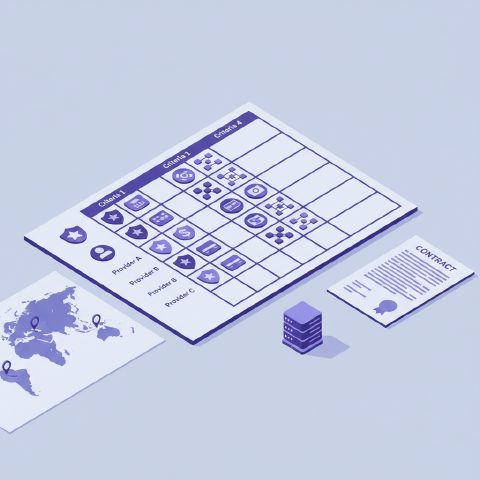
Here's a practical comparison across the dimensions that actually affect your launch and your P&L. Note that commercial terms are negotiable and shift with market conditions — these are representative ranges, not quotes.
| Provider | Best Market Fit | Crypto Support | US State Certs | Sportsbook Included | Typical Rev-Share |
|---|---|---|---|---|---|
| SoftSwiss | Offshore, Curaçao, crypto-native | Native (CoinsPaid) | No | Via Betby (separate) | ~10–15% GGR |
| EveryMatrix | MGA, EU regulated, modular | Limited | No | OddsMatrix available | ~8–14% GGR |
| Digitain | LATAM, CIS, sportsbook-first | Partial | No | Yes (native) | ~8–12% GGR |
| Softgamings | Budget white-label, offshore | Partial | No | No | ~15–25% GGR |
| IGT (PlayDigital) | US regulated states | No | Yes (multiple states) | Separate product | Custom enterprise |
What contract terms do operators most often regret not negotiating upfront?
Data portability, exit clauses and minimum revenue guarantees are the three terms operators most consistently fail to negotiate — and most consistently regret. A provider who owns your player data and charges you to export it has enormous leverage at renewal. Negotiate these points before you sign, when you have maximum leverage.
Data portability is the one I push hardest on. Your player database — registration data, transaction history, game history, bonus history — is your core asset. Some white-label contracts treat that data as belonging to the platform, or impose fees and notice periods on export. Insist on a clause that gives you full, fee-free export of your player data in a standard format (CSV, JSON) with 30 days' notice. If a provider won't agree to this, that tells you something about how they view the relationship.
Minimum monthly revenue guarantees (sometimes called 'minimum fees' or 'platform minimums') are how providers protect themselves from low-volume operators. A $10K/month minimum sounds manageable when your projections show $50K GGR by month three. If those projections slip — and they often do — you're paying $10K for a platform generating $3K in revenue. Model your break-even against the minimum, not the optimistic case.
Exit clauses and notice periods deserve the same attention as entry terms. Some contracts require 6–12 months' notice to terminate, with continued fee obligations during the notice period. Others include penalties for early termination. A 3-month notice period with no penalty after the initial term is a reasonable ask. Anything longer than 6 months should trigger a hard negotiation or a walk-away.
Finally, SLA (Service Level Agreement) teeth matter. An uptime guarantee of 99.9% sounds good until you ask what the remedy is for breach — and discover it's a credit against future invoices rather than actual cash compensation. Negotiate meaningful remedies for downtime during peak periods, and define 'uptime' precisely to exclude scheduled maintenance windows that happen to fall on Friday nights.
How do technical integration quality and API documentation affect your real launch timeline?
Poor API documentation and inconsistent sandbox environments are the most common reasons operator launches slip by 4–8 weeks. A provider with clean, versioned REST APIs and a responsive integration team will get you live faster than a technically superior platform with a chaotic developer portal and a support ticket queue measured in weeks.
I've been on the platform PM side of this, and I've seen it from the operator side too. The integration experience is a direct proxy for how the ongoing relationship will feel. If the sandbox environment goes down unexpectedly, if the API docs are 18 months out of date, or if your technical queries get routed through a sales rep rather than a solutions engineer, that friction doesn't disappear after launch — it just changes shape.
Ask for access to the sandbox and the developer documentation before you sign. Spend a day with a developer actually testing the key integration flows: player registration, deposit, game launch, withdrawal, bonus trigger. Document what breaks or isn't documented. This is not a hostile act — any serious provider will welcome it. Providers who resist pre-contract sandbox access are protecting something.
Webhook reliability and real-time event streaming matter more than operators realize at the evaluation stage. If you're building any kind of real-time CRM automation — triggered emails, push notifications, bonus activations on deposit — you need reliable, low-latency webhooks. Ask about webhook retry logic, failure alerting and delivery guarantees. Some platforms batch events; some drop them under load. These details don't appear in sales decks.
What are the most common mistakes operators make when choosing an iGaming software provider?
The three most expensive mistakes are: choosing on price without modeling total cost of ownership, skipping jurisdiction fit validation, and failing to check provider financial stability. A cheap platform that goes under or gets acquired 18 months into your operation is not cheap. These mistakes are avoidable with two weeks of due diligence.
Price anchoring is the most common trap. A provider quoting 10% rev-share looks better than one quoting 15% — until you account for the fact that the cheaper provider charges per-game certification fees, has a $15K/month minimum, and bills separately for every payment integration. Model total cost of ownership over 24 months across realistic, conservative and optimistic GGR scenarios. The answer often surprises operators who went into the comparison focused on headline rev-share.
Provider financial stability is genuinely underweighted in due diligence. The iGaming B2B space has seen significant consolidation and some notable failures — operators who built on platforms that were acquired, pivoted or shut down have faced forced migrations at the worst possible times. Ask for audited financials or at minimum a reference from a long-standing client who's been through a platform crisis. Check Companies House or equivalent registries for the provider's corporate structure. If it's a shell with no disclosed ownership, that's a risk to price in.
Ignoring mobile-first performance is another mistake that bites operators in markets where 80%+ of sessions are mobile. Ask for real performance data — load times, crash rates, session length — on the mobile web product, not just the native app. Some platforms have excellent desktop back-offices and mediocre mobile player experiences. In LATAM markets especially, where Android on mid-range hardware dominates, mobile performance is a retention variable, not a UX nicety.





Comments
No comments yet, be the first.