How Much Does It Cost to Start an Online Casino in 2026: Real Numbers, Hidden Fees & ROI Timelines
Starting an online casino in 2026 costs anywhere from $30,000 for a lean white-label to well over $2 million for a fully licensed, custom-built operation — and the gap between those numbers comes down to jurisdiction, platform choice, and how many vendor fees you didn't see coming.

The honest range is $30,000 to $2,000,000+, depending on jurisdiction, platform model, and market. A white-label casino targeting Curaçao-licensed markets sits at the low end. A regulated EU or US-state operation with a custom platform, compliance infrastructure, and a real marketing budget sits at the high end. Most serious mid-market launches land between $150,000 and $500,000.
Licensing costs range from roughly $15,000 for a Curaçao sub-license to over $1,000,000 for a US state permit. The right jurisdiction depends on your target player geography, your budget, and how much compliance infrastructure you can realistically maintain. Offshore licenses are cheaper and faster; regulated market licenses are harder to get but unlock premium payment rails and Google ad spend.
Platform software is rarely a flat fee — it's a combination of a setup charge, a monthly SaaS fee or rev-share, and per-game content costs. A white-label platform like SoftSwiss charges a setup fee of roughly $15,000–$30,000 plus a revenue share of 15–20% of GGR. Game content via aggregators like Relax Gaming or Everi adds another 10–15% of GGR on top. At scale, software costs alone consume 25–35% of your gross revenue.
Payment processing is the most underestimated cost center in iGaming. Combined fees — card processing, e-wallets, crypto conversions, chargebacks, and fraud losses — typically run 3–8% of deposit volume. On a casino doing $1,000,000 in monthly deposits, that's $30,000–$80,000 per month leaving your P&L before you've paid a single game provider.
Customer acquisition cost (CAC) for a depositing online casino player runs $200–$600 in competitive markets, and $100–$250 in emerging markets with less affiliate saturation. These numbers include affiliate commissions, bonus costs, and the marketing overhead to generate the traffic. CAC is consistently the number that blows up first-year budgets — and the number most business plans get wrong.
The hidden costs that kill casino P&Ls are compliance overhead, chargeback management, fraud losses, responsible gambling tools, and the operational staff you didn't budget for. Together, these can add $100,000–$300,000 per year to a mid-size operation's cost base — costs that appear nowhere in a vendor's setup quote.
A realistically run offshore casino targeting a focused geography breaks even in 12–24 months. Regulated EU operations typically take 24–36 months given higher upfront costs and slower license timelines. Operators who launch without a defined acquisition strategy — relying on SEO alone or a handful of affiliates — frequently never reach break-even. The math only works with disciplined player acquisition from month one.
White-label is the fastest and cheapest entry point but caps your margin and flexibility. Turnkey gives you more control at moderate cost and is the right choice for most serious operators. Custom builds are for operators with $500,000+ budgets, a technical team, and a specific product vision that existing platforms can't serve. The wrong choice here costs more than any other single decision.
Monthly operational costs for a functioning mid-tier online casino run $30,000–$120,000, depending on scale and jurisdiction. The major line items are platform fees, game content costs, payment processing, affiliate commissions, customer support, and compliance. These costs are largely fixed or semi-fixed, which means they don't decrease when GGR dips — building a buffer of 3–6 months of operating costs is non-negotiable.
Online casino taxation varies dramatically by jurisdiction — from 0–2% in Curaçao and Anjouan to 18–25% GGR tax in Sweden and the UK, to complex state-level rates in the US. Jurisdiction selection is fundamentally a tax decision as much as a licensing decision, and the difference between a 2% and 20% GGR tax rate on a $5,000,000 annual GGR business is $900,000 per year.
Explore the launch guides
 tool
tool
iGaming ROI and Payback Period Calculator
Before you commit six figures to a casino launch, you need a financial model grounded in real operator benchmarks, not vendor pitch decks. This guide walks through every input that drives ROI, from platform costs to player LTV, so you can calculate a defensible payback period for your specific market.
 comparison
Casino Pricing Models Setup vs Monthly vs Revenue Share
Casino platform vendors sell three pricing structures, and each one transfers risk differently between you and the supplier. This breakdown shows what operators actually pay in 2026 and which model makes financial sense at each stage of growth.
 spoke
spoke
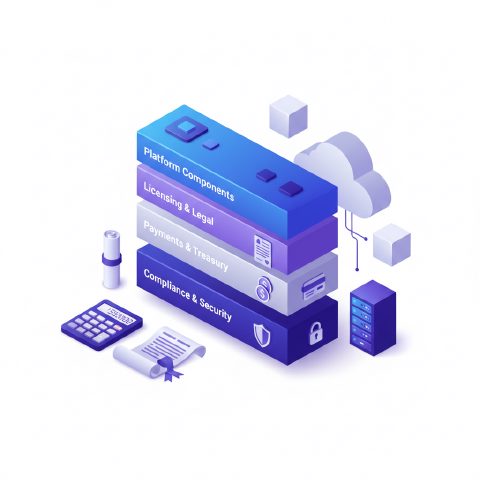
The Real Hidden Costs of Running an Online Casino Year-One TCO
Most operator budgets blow up in year one not because the headline platform fee was wrong, but because a dozen secondary costs nobody quoted them land all at once. This breakdown covers the real total cost of ownership, from licensing deposits to chargeback reserves, so you can build a budget that survives contact with reality.
 spoke
spoke
White Label Crypto Casino Cost Breakdown
Launching a white label crypto casino looks affordable on a vendor slide deck, but the real number is rarely what you see on page one. This breakdown covers every cost layer operators hit from contract signing through month six of live operations.
 spoke
spoke
Hidden Costs of Starting an Online Casino
Most online casino launch budgets blow up not on the obvious line items but on the costs buried in platform contracts, payment integrations, and compliance obligations. This breakdown exposes what vendors don't put in their pitch decks.
 spoke
spoke
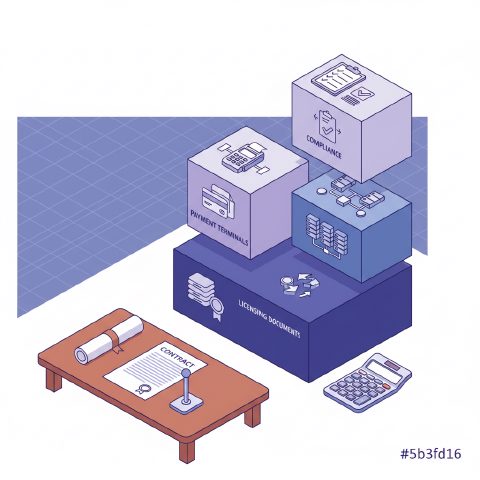
Online Casino Software Price What You Really Pay
Online casino software pricing looks simple on a vendor slide deck and brutal on your actual invoice. This breakdown covers every cost layer — platform, games, payments, compliance and infrastructure — so you can build a realistic launch budget before signing anything.
 spoke
spoke
White Label Casino Cost Full Pricing Breakdown
White label casino cost runs far deeper than the headline setup fee. This breakdown covers every layer — platform, licensing, games, payments, and the ongoing charges that quietly erode your margin.
 pillar
How Much Does It Cost to Start an Online Casino 2026
Starting an online casino in 2026 costs anywhere from $30,000 for a lean offshore white-label to well over $2 million for a licensed, regulated build in a tier-1 market. This breakdown covers every line item operators routinely underestimate.
 pillar
How Much Does It Cost to Start an Online Casino
Starting an online casino in 2026 costs anywhere from $30,000 for a bare-bones white-label to well over $2 million for a licensed, custom-built operation — and the gap between those numbers is where most founders get burned. This breakdown gives you the real budget, not the vendor sales deck.
Get our 2026 cost & licensing breakdown by email.