Online Casino Software Open Source: The 2026 Reality Check Every Operator Needs Before They Commit

What exactly is open source online casino software, and what does it actually include?
Open source casino software is code released under a public licence (MIT, GPL, Apache, etc.) that gives you the right to view, modify and redistribute it. In practice, the available projects cover back-office skeletons, basic game logic engines and wallet modules. None of them ship a certified RNG, a licensed game library or a compliant payment stack out of the box.
The most cited open source casino projects, things like Betaflight-derived slot engines, PHP-based casino management skeletons on GitHub, or older poker room frameworks, are exactly that: frameworks. They give you database schemas, user authentication flows and sometimes a rudimentary lobby UI. What they do not give you is anything a regulator or payment processor will accept without significant additional work. The distinction matters enormously when you are planning a budget.
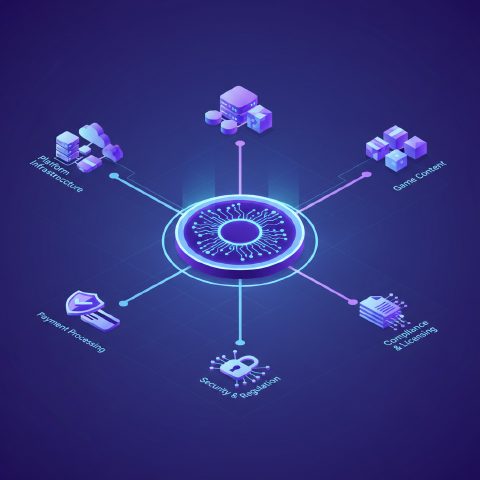
A real casino platform has several distinct layers: the game engine or aggregator integration, the back-office (player management, KYC workflow, bonus engine, reporting), the payment gateway layer, the RNG and its certification artefacts, and the regulatory compliance module (responsible gambling controls, AML transaction monitoring, self-exclusion hooks). Commercial platforms like SoftSwiss's SOFTSWISS Casino Platform, EveryMatrix's CasinoEngine or Pronet Gaming's turnkey suite bundle all of these. Open source projects typically cover one or two layers, loosely, and leave the rest as an exercise for your dev team.
There is also a category confusion worth naming: some vendors market their platform as 'open source' when they really mean 'white-label with API access' or 'source-code escrow available on enterprise contracts.' That is not open source in the GNU sense. Read the licence carefully before you build a roadmap around it. True GPL-licensed casino code means any derivative work you distribute must also be open sourced, which creates its own legal headaches if you are building a proprietary operator product on top of it.
Is there a production-ready open source casino platform operators are actually using in 2026?
Honestly, no. There is no open source casino platform in 2026 that ships production-ready with certified RNG, a compliant game aggregator integration and a working KYC/AML module. What exists are partial frameworks, proof-of-concept repositories and crypto-casino smart contract templates, none of which meet the technical standards required by any serious regulator.
I have reviewed the most-starred casino-related repositories on GitHub and the picture has not changed materially in several years. You will find slot math engines written in JavaScript, roulette wheel simulators, poker hand evaluators and a handful of PHP back-office skeletons with varying levels of maintenance. The most complete projects tend to be crypto casino smart contract suites designed for Ethereum or Solana, provably fair dice and crash games that work on-chain. These have a narrow legitimate use case in the unregulated crypto space, but they are not a platform you can take to the MGA or to a US state regulator and expect approval.
The closest thing to a maintained, serious open source iGaming project is OpenBet's legacy codebase, portions of which have leaked or been released over the years, but that is sports-betting oriented and carries its own legal ambiguity around intellectual property. For casino specifically, there is simply no equivalent of what WordPress is to content management or what WooCommerce is to e-commerce. The iGaming industry's regulatory complexity and the liability attached to real-money gambling have kept serious engineering investment firmly in the proprietary camp.
Crypto-native operators sometimes point to projects like Edgeless (now defunct) or various open source provably fair implementations as evidence the space is maturing. It is not, at least not for operators who need to process fiat payments, onboard players through a KYC provider and report to a licensing authority. If your business model is a fully anonymous crypto casino operating outside any licensed jurisdiction, open source smart contracts are a viable technical foundation, but that is a very specific and legally precarious niche, not a general-purpose answer.
How does open source compare to white-label and turnkey casino platforms on real operator metrics?
White-label and turnkey platforms win on time-to-market, compliance readiness and predictable cost. Open source wins on theoretical flexibility and zero licence fees. In practice, the flexibility advantage disappears fast once you start pricing the developer hours needed to reach feature parity with a commercial platform, and the compliance work is identical regardless of what you build on.
The table below maps the three approaches across the metrics that actually drive operator decisions. The figures are realistic ranges based on projects I have seen, not vendor marketing materials.
| Metric | Open Source Build | White-Label (e.g. SoftSwiss, EveryMatrix) | Turnkey / Custom Build |
|---|---|---|---|
| Upfront software cost | $0 licence fee | $15,000-$50,000 setup + rev share | $100,000-$500,000+ |
| Time to soft launch | 12-24+ months | 4-12 weeks | 6-18 months |
| Certified RNG included | No, you source and fund separately | Yes | Yes (if built by licensed vendor) |
| Game library on day one | No, aggregator deals needed | Yes (SoftSwiss aggregates 20,000+ titles) | Yes |
| Regulatory compliance module | Build from scratch | Included, jurisdiction-specific | Included or custom-built |
| Ongoing maintenance burden | Full in-house responsibility | Vendor-managed core; operator manages brand layer | Shared or vendor-managed |
| Payment integrations | Build each one | Pre-integrated (Nuvei, Skrill, crypto, etc.) | Pre-integrated or custom |
| Estimated year-1 total cost | $250,000-$800,000+ (with team) | $80,000-$200,000 all-in | $200,000-$600,000+ |
What are the real security risks of running an open source casino back-end?
Public codebases are public attack surfaces. Any vulnerability in an open source casino project is visible to every threat actor who can read GitHub. Without a dedicated security team running continuous penetration testing, dependency audits and patch management, an open source casino back-end is a liability that grows with every month it stays unpatched.
This is the risk I see operators underestimate most badly. The assumption is that 'more eyes on the code' means better security, which is true for well-maintained projects with large contributor communities (think Linux kernel or OpenSSL). It is not true for a casino back-office repository with twelve stars and a last commit from 2022. In that scenario, you get all the exposure of a public codebase with none of the community security response.
Casino platforms are high-value targets. Player funds, payment credentials, KYC documents and session tokens are all in play. A SQL injection vulnerability in your player management module or a broken authentication flow in your bonus engine can cost you far more than the licence fee you saved. I have spoken to operators who discovered their open source-derived platform had been silently compromised for weeks before they noticed anomalous withdrawal patterns. The forensics and player remediation costs were significant.
Commercial platforms like those from EveryMatrix or SoftSwiss run dedicated security operations, hold ISO 27001 certifications (or equivalent) and push patches centrally. You benefit from their security investment across hundreds of operator clients. When you build on open source, you are a security team of one (or however many developers you can afford), responsible for a codebase that your adversaries can read in full. That asymmetry is serious and worth pricing into any open source business case.
At a minimum, an operator running open source-derived casino software should budget for quarterly penetration testing by a specialist iGaming security firm, a web application firewall, a bug bounty programme and at least one dedicated security-focused developer. That alone adds $80,000-$150,000 per year to your cost base before you have written a single line of feature code.
Do regulators like Curaçao, MGA or US state bodies accept open source casino platforms?
Regulators do not approve or reject platforms based on whether the code is open or proprietary. They audit outputs: certified RNG test reports, AML policy documentation, responsible gambling controls and technical compliance with their specific standards. Open source does not help or hurt your application directly, but it makes the compliance evidence trail harder and more expensive to assemble.
The Curaçao Gaming Control Board (GCB), which overhauled its licensing framework in 2023 and 2024, requires operators to submit a technical compliance dossier that includes RNG certification from an approved testing lab (BMM, GLI, eCOGRA), evidence of a functioning self-exclusion system and documented AML procedures. None of that documentation comes with an open source platform. You will need to commission the RNG certification yourself, which runs $15,000-$40,000 depending on the lab and scope, and you will need to build and document the compliance controls from scratch.
The MGA (Malta Gaming Authority) goes further. Its technical standards under the Gaming Authorisations and Compliance Directive require detailed system architecture documentation, disaster recovery plans and evidence of data segregation. An open source back-end makes this documentation harder, not easier, because you are responsible for every dependency and every configuration choice. Commercial platform vendors typically provide a pre-approved technical compliance package for MGA applications, which can shave months off your timeline.
US state regulators (Pennsylvania Gaming Control Board, New Jersey DGE, Michigan Gaming Control Board, etc.) are the most demanding of all. They require source code escrow, detailed change management procedures and in some cases on-site technical audits. Several state regulators have explicitly asked during the application process whether the platform software is proprietary or open source and have requested additional documentation when the answer is the latter. That does not make open source disqualifying, but it does make the application process longer and more expensive.
| Jurisdiction | RNG Certification Required | Technical Compliance Dossier | Source Code Escrow | Open Source Complication Level |
|---|---|---|---|---|
| Curaçao GCB (post-2024) | Yes, GLI, BMM or eCOGRA | Yes, AML, RG controls | Recommended | Medium |
| Anjouan (OJSC) | Yes | Basic, lighter touch | Not mandated | Low-Medium |
| MGA (Malta) | Yes, full tech standards | Detailed architecture docs required | Yes | High |
| UKGC | Yes, UKGC-approved labs | Full technical audit | Yes | High |
| New Jersey DGE | Yes, GLI or BMM | Extensive, on-site audit possible | Yes, mandated | Very High |
| Pennsylvania PGCB | Yes | Detailed, change management required | Yes, mandated | Very High |
What does open source casino software actually cost when you add up all the hidden work?
The software is free. Everything else is not. A realistic open source casino build targeting a Curaçao or Anjouan licence will cost $250,000 to $600,000 in year one once you account for developer salaries, RNG certification, game aggregator integration, payment processing setup, security infrastructure and compliance work. That is before marketing or player acquisition.
Here is how the cost breakdown typically looks for an operator who takes the open source route seriously rather than cutting corners. Developer costs dominate: you need a back-end engineer (PHP or Node.js, ideally with prior iGaming experience), a front-end developer, a DevOps engineer for infrastructure and ideally a QA engineer. In Eastern Europe or Southeast Asia, where many iGaming dev shops operate, that team costs $120,000-$200,000 per year in salaries or contractor fees. In Western Europe or North America, double it.
On top of that, you have RNG certification ($15,000-$40,000 one-time, plus ongoing re-certification costs when you make significant changes), game aggregator setup fees (Relax Gaming, Pariplay, Slotegrator and similar aggregators charge $5,000-$20,000 setup plus revenue share), payment gateway integration (each provider charges setup fees and the integration work itself takes developer time), KYC/AML provider fees (Sumsub, Shufti Pro and similar charge per verification plus monthly platform fees), and hosting infrastructure (a properly redundant iGaming setup on AWS or GCP runs $3,000-$8,000 per month at launch scale).
The comparison that matters: SoftSwiss's white-label casino platform charges a setup fee in the $20,000-$50,000 range (figures vary by deal structure and are not publicly listed, so treat these as directional) plus a revenue share on GGR. For that, you get a certified platform, a game library of 20,000+ titles, integrated payments, a bonus engine, a CRM and a compliance module that already has Curaçao approval. The open source route needs to deliver substantial strategic value, proprietary game mechanics, a unique market position, full data ownership, to justify the cost and timeline gap.
Are there legitimate use cases where open source components make sense for casino operators?
Yes, but they are narrower than most people pitching open source will admit. The strongest cases are augmenting a licensed commercial platform with open source tooling in non-regulated layers: analytics dashboards, internal CRM workflows, affiliate tracking systems and A/B testing frameworks. Using open source as the core regulated platform is a much harder case to make.
The most defensible open source use case I have seen in practice is operators running a SoftSwiss or EveryMatrix core platform and building their proprietary player intelligence layer on top of it using open source data tools (Apache Superset for BI, Metabase for dashboards, dbt for data transformation). This gives you the data ownership and customisation benefits of open source without touching the regulated game engine or payment layer. You get the best of both worlds and you do not have to explain your RNG certification strategy to a regulator from scratch.
Crypto-native operators targeting markets where no formal licence is required (and accepting the legal and reputational risks that come with that) have a more legitimate case for open source smart contract platforms. Projects built on Ethereum or Solana can provide provably fair game verification that is actually more transparent than a black-box commercial RNG. But this is a specific product category with a specific customer base, not a general-purpose casino launch strategy.
A third use case: operators who have already licensed a commercial platform and want to build proprietary bonus engine logic or a custom affiliate management system on top of it. If the commercial platform exposes a well-documented API (EveryMatrix and SoftSwiss both do), you can build open source tooling that integrates cleanly without touching the certified core. This is the model I recommend to operators who have engineering resources and want to differentiate without taking on the full compliance risk of a ground-up open source build.
What should operators evaluate when assessing an open source casino codebase before committing?
Before you commit a development team to an open source casino codebase, you need to audit five things: the licence type and its commercial implications, the last meaningful commit date and contributor activity, the test coverage and documentation quality, the dependency tree for known vulnerabilities, and whether any prior operator has actually run it in production under a real licence.
Start with the licence. GPL v2 or v3 means any derivative work you distribute must be open sourced under the same terms. For an operator building a proprietary casino product, that is usually a dealbreaker. MIT and Apache 2.0 licences are more permissive and allow proprietary derivative works. AGPL is particularly aggressive, it requires you to open source your application even if you are running it as a network service, which covers a casino website. Many operators discover this too late, after their legal team reviews the licence during a due diligence process.
Next, look at the commit history honestly. A repository with its last substantive commit in 2021 and three contributors is not a platform, it is an abandoned project. iGaming technology moves fast: payment APIs change, game aggregator protocols update, regulatory requirements evolve. A codebase that is not actively maintained will accumulate technical debt and security vulnerabilities faster than your team can patch them.
Test coverage is a proxy for code quality and maintainability. A serious platform codebase should have unit tests covering at minimum the game logic, wallet transactions, bonus calculations and user authentication flows. If the repository has no test suite or a coverage percentage below 40%, you are inheriting a codebase that will be very expensive to modify safely. Every change you make risks breaking something else, and you will not know until it breaks in production.
Finally, ask directly: has any operator run this in production under a real gambling licence? Not a demo, not a proof of concept, an actual licensed casino processing real player money. If the answer is no, or if the answer is 'yes but we cannot disclose who,' treat the platform as unproven infrastructure and price your build accordingly.
How do open source casino platforms handle payments and KYC, and why does this matter so much?
Most open source casino codebases have placeholder payment modules or generic e-commerce payment hooks that are nowhere near production-ready for iGaming. KYC is usually absent entirely. These are not minor gaps, payments and KYC are the two areas where regulators look hardest, where fraud concentrates and where operators lose their licences.
Payment processing for an online casino is not the same as processing payments for an e-commerce store. You need to handle recurring deposits and withdrawals, manage player wallets with real-time balance updates, flag suspicious transaction patterns for AML reporting, support a range of methods (cards, bank transfer, e-wallets, crypto) each with their own API quirks, and do all of this while staying inside the chargeback thresholds that payment processors impose on gambling merchants. Generic open source payment modules do not handle any of this correctly out of the box.
Commercial casino platforms integrate with specialist iGaming payment orchestration providers: Nuvei (which acquired SafeCharge), Payvision, Paysafe, and increasingly crypto-native processors like CoinsPaid or Utorg. These integrations are pre-built, tested and maintained. Building them from scratch on an open source platform means writing and maintaining API integrations for each provider, handling their respective webhook formats, managing retry logic for failed transactions and building reconciliation tooling to keep your wallet in sync with processor records. That is months of engineering work per payment method.
KYC is similarly non-trivial. Integrating with Sumsub, Onfido or Shufti Pro requires more than a simple API call, you need to build a case management workflow, store and retrieve identity documents securely (with encryption at rest and in transit), implement automated risk scoring, handle manual review queues and generate the audit trail that regulators expect. None of the open source casino projects I have reviewed include a working KYC module. You are building this from scratch, and you are building it in a domain where mistakes have direct regulatory consequences.
What is the honest verdict: should operators use open source casino software in 2026?
For most operators launching a real-money casino in 2026, the answer is no, not as the core platform. The compliance requirements, security demands and integration complexity make open source a cost and risk amplifier, not a cost saver. The exceptions are narrow: engineering-heavy teams building proprietary crypto products, or operators augmenting licensed commercial platforms with open source tooling at the edges.
I have seen the open source casino pitch land convincingly with founders who have a software background and underestimate how different iGaming compliance is from building a regular SaaS product. The logic sounds right: avoid vendor lock-in, own your data, save on licence fees, differentiate on technology. All of those goals are legitimate. The problem is that open source is not the most efficient path to any of them in the casino context. Vendor lock-in is manageable with a well-structured API contract and data export rights negotiated upfront. Data ownership is achievable on commercial platforms with the right SLA terms. Licence fees are real but modest relative to the total cost of a casino launch. And technology differentiation in a market where players care about game selection, bonus value and payment speed rarely comes from the back-end platform.
The operators I have seen succeed with elements of open source are the ones who were very specific about what they were building and why. One operator I worked with built their entire responsible gambling tooling on open source components (OpenRMGS-derived logic, custom-built on top of an EveryMatrix integration), which gave them a genuinely differentiated compliance story in a Nordic market that valued it. Another built a proprietary affiliate attribution system on open source analytics infrastructure, saving meaningful money on third-party affiliate platform fees. Both of these worked because the open source components were in non-regulated, non-payment layers where the risk profile was manageable.
If you are reading this because a developer or a vendor has pitched you on building your casino on an open source platform to 'save money,' run the full cost model before you commit. Add up the developer hours, the certification costs, the security infrastructure, the compliance work and the extended timeline before your first dollar of GGR. In most cases, a white-label from SoftSwiss, EveryMatrix, Pronet or a comparable provider will get you to market faster, cheaper and with a more defensible compliance position. That is not a vendor endorsement, it is the math.





Comments
No comments yet, be the first.