White Label Casino Cost: The Full 2026 Pricing Breakdown Operators Need Before Signing Anything
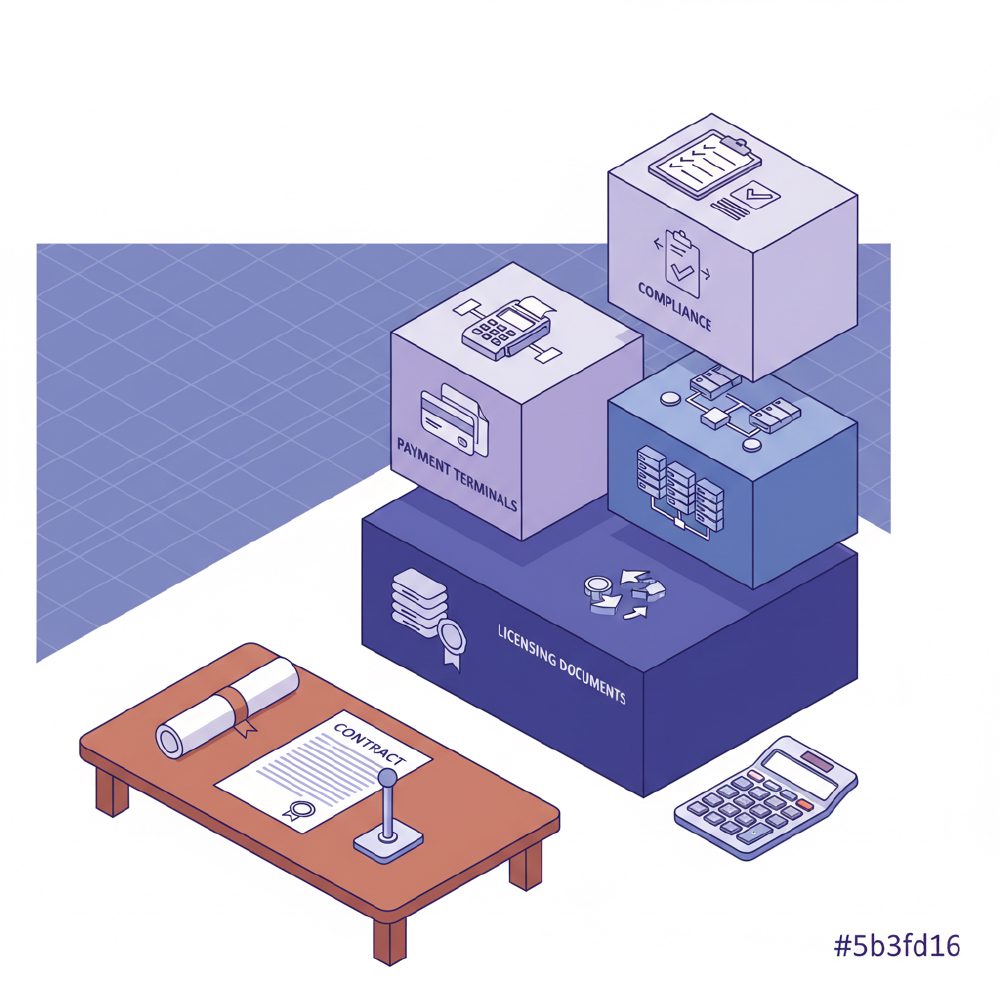
What does a white label casino actually cost to launch in 2026?
Realistically, launching a white label casino in 2026 costs between $80,000 and $250,000 in year one when you stack setup fees, licensing, payment integration, compliance, and marketing. The $15K–$30K headline number vendors quote is the platform setup fee only — a fraction of total spend.
Every white label vendor deck I've reviewed over the past few years leads with the same number: a one-time setup fee somewhere between $10,000 and $30,000. SoftSwiss, EveryMatrix's WhiteLabelCasino product, Turnkey Casino Solutions, and a dozen smaller providers all follow this playbook. That number is real — it's just not the budget. It's the deposit on the budget.
Layer in a Curaçao sub-license (realistic all-in cost: $15,000–$25,000 for year one including the master license holder's fees and compliance setup), a payment processing stack with at least two PSPs, a KYC/AML provider, a responsible gambling tool, and a basic affiliate system, and you're already past $60,000 before you've acquired a single player. Add a modest marketing budget — even a lean $30,000–$50,000 for SEO, affiliates, and paid social — and year-one spend crosses $100,000 comfortably for most operators.
The upper end of that $80K–$250K range applies to operators targeting regulated EU markets (Malta MGA, Swedish Spelinspektionen, or UKGC), where compliance infrastructure, responsible gambling tooling, and local payment methods each carry meaningful price tags. An MGA license alone costs €25,000 in application fees plus ongoing compliance costs that routinely hit €50,000–€100,000 annually once you factor in a local compliance officer, audit fees, and technical certification.
The honest framing: treat the vendor's setup fee as a line item, not a budget. Build your financial model from the full cost stack below, and stress-test it against a 15-month runway before you see breakeven. Operators who go in undercapitalized — and plenty do — typically run out of cash around month eight, right before the affiliate pipeline starts converting.
What are the main cost components of a white label casino platform?
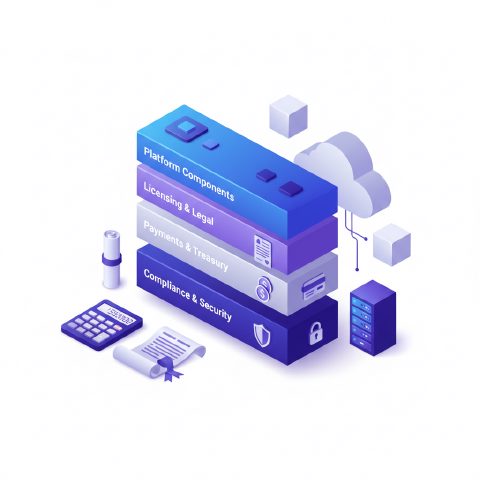
White label casino costs break into six layers: setup fee, monthly platform fee, revenue share on GGR, licensing fees, payment processing costs, and third-party tool subscriptions (KYC, CRM, responsible gambling). Most operators only budget for the first two. The last four are where the real money goes.
Let me walk through each layer with real numbers where I have them, and flag where figures vary enough that you need to get quotes rather than trust a blog post.
The setup fee is a one-time charge covering platform configuration, front-end skin customization, game integration, and basic back-office setup. Mid-tier providers charge $15,000–$30,000. Premium providers like SoftSwiss's white label product or EveryMatrix's turnkey stack can run $40,000–$80,000 setup, but they're delivering more out of the box. Cheaper providers exist below $10,000 — I'd be cautious. You often get a template skin, limited game aggregator access, and a support team that disappears after go-live.
The monthly platform fee is either a flat retainer ($1,500–$5,000/month is common at the lower end) or, more often, rolled into the revenue share model. Some providers charge both: a lower monthly fee plus a lower rev-share percentage. Do the math on your projected GGR before choosing — at $200,000/month GGR, a 25% rev-share costs $50,000/month, while a $4,000 flat fee plus 15% rev-share costs $34,000/month. That $16,000 monthly difference compounds fast.
The revenue share deserves its own section (see below), but the short version: 15%–35% of gross gaming revenue going to your white label provider is the norm. This is the structural cost that makes white label economics deteriorate as you scale — and it's why every successful white label operator eventually looks at migration.
Third-party tools add up faster than operators expect. A KYC/AML provider like Jumio, Onfido, or Sum&Substance typically costs $1.50–$5.00 per verification, plus a monthly minimum. A CRM platform, a responsible gambling tool (mandatory in MGA/UKGC markets), fraud detection, and an affiliate tracking system can collectively add $3,000–$8,000/month in SaaS fees before you've processed a single deposit.
| Cost Component | One-Time Cost | Monthly / Ongoing Cost | Notes |
|---|---|---|---|
| Platform setup fee | $10,000–$80,000 | — | Higher for premium providers with more customization |
| Monthly platform / SaaS fee | — | $1,500–$5,000 | Often waived if rev-share is high |
| Revenue share (GGR) | — | 15%–35% of GGR | Biggest long-term cost; negotiable at scale |
| Curaçao sub-license | $15,000–$25,000 (yr 1) | $5,000–$10,000/yr renewal | Via master license holder; fastest route |
| MGA license | $25,000+ application | $50,000–$100,000/yr compliance | Includes officer, audits, technical cert |
| KYC / AML tooling | — | $1,500–$4,000/mo | Per-verification fees add up fast |
| Payment processing | $2,000–$10,000 setup | 2%–5% per transaction + chargebacks | Varies widely by PSP and player geography |
| CRM + Responsible Gambling | — | $1,000–$3,000/mo | Mandatory in MGA/UKGC; optional offshore |
| Affiliate platform | $500–$3,000 setup | $300–$1,500/mo | Or % of affiliate-referred GGR |
How does white label casino revenue share work and why does it matter so much?
Revenue share is the percentage of your gross gaming revenue (GGR) your white label provider takes as their ongoing fee. At 20%–30%, it's typically your single largest operating cost — often larger than staff, marketing, and payment fees combined. It's also the cost that grows proportionally with your success.
Here's the math that kills operator margins at scale: say you're running a Curaçao-licensed white label casino generating $500,000 GGR per month — a solid, profitable operation. At a 25% rev-share, you're paying your platform provider $125,000 every month. Annually, that's $1.5 million going to a vendor for infrastructure you could theoretically own. At that point, a custom platform build at $400,000–$600,000 pays back in under six months.
Most providers structure rev-share on a tiered basis — lower percentage at higher GGR volumes. A typical SoftSwiss-style arrangement might look like: 30% below $50K GGR/month, 25% at $50K–$200K, 20% above $200K. These tiers are negotiable, especially if you're coming in with a credible business plan and a realistic traffic projection. Don't accept the standard rate card without pushing back.
What counts as GGR in the rev-share calculation also varies by contract. Some providers calculate on net GGR (after bonuses), others on gross GGR (before bonuses). On a casino with a 30% bonus cost ratio, that distinction is worth several percentage points of real margin. Read the contract definition carefully — this is where operators get surprised at their first reconciliation.
There's a philosophical point worth making: white label rev-share is essentially a tax on your own growth. It's the right trade-off early on when you're validating a market and don't want to carry the fixed cost of platform ownership. But build your financial model with an explicit 'migration trigger' — a GGR threshold at which you evaluate moving to a turnkey or proprietary build. Most operators I work with set that trigger around $150,000–$250,000 GGR per month.
What does white label casino licensing cost across different jurisdictions?
Licensing cost ranges from roughly $15,000 all-in for a Curaçao sub-license to $500,000+ for a US state license. The jurisdiction you choose determines not just licensing cost but your total compliance infrastructure spend, which often dwarfs the license fee itself.
Curaçao remains the entry-level offshore option in 2026, though the regulator (Gaming Control Board of Curaçao, which replaced the old sublicensing model after the 2023 reforms) has tightened requirements. Expect $15,000–$25,000 in year-one costs including the application fee, compliance documentation, and the master license holder's onboarding fee if you're going the sub-license route. Annual renewal runs $5,000–$10,000. Anjouan (Comoros) has emerged as an alternative at similar price points, but bank account access and payment processor acceptance are more limited — factor that into your payment stack planning.
The Malta Gaming Authority (MGA) is the gold standard for EU-facing operators. Application fee is €25,000 (non-refundable), and the process takes 4–6 months if your documentation is clean. Ongoing compliance — a local compliance officer at €40,000–€70,000/year salary, mandatory responsible gambling tools, quarterly reporting, and technical audits — means annual operating cost of the license easily hits €100,000+. The MGA B2C license also requires €100,000 in player fund protection. Budget $300,000–$500,000 for year-one MGA compliance if you're building from scratch.
US state licenses are a different category entirely. New Jersey's iGaming market requires a transactional waiver or a full license tied to a land-based partner — costs vary but six-figure application fees and multi-year timelines are standard. Michigan, Pennsylvania, and Connecticut follow similar frameworks. No white label provider can give you a US state license; you need a local partner or a direct application. If you're targeting the US market, the white label cost conversation is secondary to the regulatory strategy conversation.
| Jurisdiction | Application / Setup Cost | Annual Compliance Cost | Time to License | Market Access |
|---|---|---|---|---|
| Curaçao (GCB) | $8,000–$15,000 | $5,000–$10,000 | 6–12 weeks | Most markets except US/UK/AU |
| Anjouan (Comoros) | $5,000–$12,000 | $4,000–$8,000 | 4–8 weeks | Offshore, limited PSP acceptance |
| Malta (MGA) | €25,000 application | €80,000–€150,000 | 4–6 months | EU, broad PSP/bank access |
| Gibraltar | £35,000 application | £50,000–£100,000 | 4–6 months | UK, EU (post-Brexit limitations) |
| Isle of Man (GSC) | £5,000 application | £25,000–£60,000 | 3–5 months | UK, global (no UKGC) |
| UK (UKGC) | £25,000–£50,000 | £100,000–£200,000+ | 6–12 months | UK only |
| US State (e.g. NJ, MI) | $100,000–$500,000+ | $100,000–$300,000+ | 12–36 months | Single state only |
What payment processing costs should white label casino operators budget for?
Payment processing for a white label casino typically costs 2%–5% per transaction plus setup fees of $2,000–$10,000 per PSP integration. Chargeback reserves (5%–10% of volume held for 90–180 days) and monthly minimums are the hidden costs that most operators don't model until they're staring at a cash flow gap.
Your white label provider will usually have pre-integrated PSPs — that's one of the core value propositions. But 'pre-integrated' doesn't mean 'pre-approved.' You still need to go through each PSP's merchant onboarding, which for gambling merchants involves submitting your license, AML policy, terms and conditions, and often a business plan. Rejection rates are high. Budget time for 2–3 PSP applications to get 1–2 live accounts.
Transaction fees for gambling merchants are higher than general e-commerce — 2.5%–4.5% on card processing is realistic in 2026, and some PSPs add a monthly minimum fee of $500–$2,000 regardless of volume. Crypto payment processors (BitPay, CoinsPaid, B2BinPay) are cheaper on a per-transaction basis (often 0.5%–1%) and easier to get approved, which is why so many offshore operators lead with crypto. If your target market is crypto-native, this meaningfully changes your payment cost model.
The chargeback reserve is the cash flow killer nobody warns you about clearly enough. PSPs for gambling merchants routinely hold 5%–10% of monthly processing volume in reserve for 90–180 days. On $200,000/month in deposits, that's $10,000–$20,000 per month tied up in reserve — capital you can't use for marketing or operations. In month three of your launch, that reserve balance could be $40,000–$60,000 sitting idle. Model this in your working capital calculation or you'll hit a liquidity crunch at exactly the moment you're trying to grow.
Alternative payment methods — e-wallets like Skrill and Neteller, local bank transfer solutions like Trustly or iDEAL for EU markets, and PIX for Brazil — each carry their own integration and per-transaction costs. In LATAM markets, local payment method coverage is often the difference between a converting player base and a site that looks great but can't process deposits. Budget $5,000–$15,000 for LATAM payment method integration if that's your target geography.
How do game content costs factor into the white label casino price?
Game content is usually bundled into the white label platform via a game aggregator — you pay for it through the revenue share, not a separate line item. But the quality and breadth of that game library varies dramatically between providers, and upgrading to premium studios can add $2,000–$8,000/month in direct licensing fees.
Most white label providers source game content through aggregator relationships — SoftSwiss uses its own aggregator (BGaming, plus hundreds of third-party studios), EveryMatrix has its own GameHub aggregator, and smaller providers typically resell through Slotegrator, Digitain, or similar. This means you're getting access to 3,000–10,000+ games as part of your platform package, which sounds great until you realize the most popular studios — Pragmatic Play, Evolution Gaming, NetEnt/Red Tiger — often require direct licensing agreements for regulated markets.
Evolution Gaming (live dealer) is the clearest example of a cost that surprises operators. Evolution doesn't typically allow white label operators to access their live tables through aggregator deals in regulated jurisdictions — you need a direct commercial agreement, which involves a minimum monthly guarantee (often $5,000–$15,000/month for smaller operators) plus a revenue share on live casino GGR. For any casino serious about live dealer — and you should be serious about it, since live casino drives disproportionate GGR — this is a real budget line item.
In offshore/Curaçao markets, aggregator access is broader and direct studio requirements are less common. You can launch with a full game library through your white label provider's aggregator without separate studio deals. The trade-off is that your game library may overlap significantly with competitors using the same platform, making differentiation harder. Some operators solve this by commissioning exclusive game variants — budget $20,000–$50,000 if you want a branded exclusive slot from a mid-tier studio.
What are the hidden costs of white label casinos that vendors don't mention upfront?
The hidden costs that consistently blindside operators include: responsible gambling tool mandates, technical audit fees, bank account setup costs, legal review of T&Cs, and ongoing platform update fees. Together these typically add $20,000–$50,000 to year-one costs that don't appear in any vendor proposal.
Responsible gambling (RG) tooling is mandatory in MGA, UKGC, and increasingly Curaçao-licensed operations. Tools like GamCare integration, deposit limit systems, self-exclusion databases (GAMSTOP in the UK, national databases in Sweden and Germany), and session time limits are either built into your platform or require third-party SaaS. If they're 'built in,' ask specifically which features are included and what version they're on — outdated RG tools are a compliance risk, not just a feature gap.
Technical audits for regulated markets are a recurring cost operators routinely forget. MGA requires a technical audit by an approved testing lab (BMM, eCOGRA, GLI) before you go live and at major platform updates. A full technical audit runs $5,000–$15,000 per engagement. If your platform provider pushes a major update — which they will, because they're serving multiple operators — you may be required to re-audit. Clarify in your contract who bears this cost.
Legal fees for T&C review, privacy policy compliance (GDPR if you're targeting EU players), and jurisdiction-specific regulatory filings add up to $10,000–$25,000 in year one for operators who do it properly. Don't use the template T&Cs your white label provider gives you without having a gambling-specialist lawyer review them for your target market. The liability exposure from inadequate T&Cs is not theoretical — regulators fine operators for this.
Finally: banking. Opening a business bank account as a gambling operator is genuinely hard. EMIs (electronic money institutions) like Payvision, Genome, or Intergiro are often the realistic option, and they charge monthly fees ($500–$2,000/month) plus transaction fees. Some operators spend three to six months and $5,000–$10,000 in legal and consultant fees just getting a functional banking arrangement in place. This is not in any vendor's proposal. It should be in your budget.
How does white label casino cost compare to turnkey and custom builds?
White label has the lowest upfront cost ($15K–$80K setup) but the highest long-term cost due to revenue share. Turnkey platforms cost more upfront ($100K–$300K) but you own the license and eliminate rev-share. Custom builds cost $500K–$2M+ but are the only option that gives you full control and the best unit economics at scale.
The build-vs-buy decision is fundamentally a question of where you are in your operator lifecycle. White label is the right answer when you're validating a market, don't have deep technical resources, and want to be live in 8–16 weeks. It's the wrong answer when you're generating $300,000+ GGR/month and paying $75,000+ of that to a vendor for infrastructure you could own.
Turnkey casino solutions — where you own the platform license and operate independently, but buy a pre-built system rather than building from scratch — sit in the middle. SoftSwiss's Turnkey Casino, EveryMatrix's full stack, and Digitain's casino platform are examples. Expect $100,000–$300,000 in initial investment, a 3–6 month setup timeline, and ongoing platform fees of $10,000–$30,000/month with no GGR rev-share to the platform vendor. At $200,000+ GGR/month, turnkey economics are clearly superior to white label.
Custom builds are for operators with either deep pockets, a specific technical differentiation strategy, or a regulated market where no existing platform is certified. The cost range is wide — $500,000 on the very low end for a lean custom build using open-source components, up to $2,000,000+ for a full-featured proprietary platform with in-house game aggregation. Timeline is 12–24 months minimum. Very few operators at launch should be considering this path; it's a Series B or post-profitability decision.
| Factor | White Label | Turnkey | Custom Build |
|---|---|---|---|
| Setup cost | $15,000–$80,000 | $100,000–$300,000 | $500,000–$2,000,000+ |
| Time to launch | 8–16 weeks | 3–6 months | 12–24 months |
| Ongoing platform cost | 15%–35% GGR rev-share | $10,000–$30,000/mo flat | Staff + hosting (~$20,000–$60,000/mo) |
| Platform ownership | None | Full | Full |
| Customization | Limited (skin only) | Moderate | Unlimited |
| Break-even GGR/month | $30,000–$80,000 | $100,000–$200,000 | $300,000+ |
| Best for | Market validation, first launch | Scaling operators | Established operators, differentiated products |
What ongoing monthly costs should a white label casino operator budget for?
After launch, a white label casino's monthly operating cost — excluding marketing — typically runs $15,000–$60,000 depending on GGR volume and jurisdiction. That covers platform rev-share, payment processing, licensing compliance, KYC tooling, CRM, and staff. Marketing is usually the largest additional line item.
Let me build a realistic monthly cost model for a mid-tier offshore white label casino generating $100,000 GGR/month. Platform rev-share at 25%: $25,000. Payment processing at 3.5% of $120,000 deposits: $4,200. KYC/AML tooling at roughly 500 verifications/month at $3 each: $1,500. CRM and email platform: $800. Responsible gambling tool: $500. Affiliate platform: $600. Accounting and legal retainer: $2,000. Total: approximately $34,600/month in operational costs before marketing and staff.
Add a small team — a customer support agent ($1,500–$3,000/month depending on geography), a part-time compliance officer or outsourced compliance service ($2,000–$4,000/month), and a marketing manager ($3,000–$6,000/month) — and you're at $41,000–$48,000/month in total operating costs before any paid marketing spend. On $100,000 GGR, that leaves $52,000–$59,000 in gross margin before marketing. That's not a bad business — but it only works if your customer acquisition cost is disciplined.
The cost profile changes dramatically at lower GGR. Below $30,000 GGR/month, the fixed cost components (KYC minimums, SaaS fees, staff, compliance retainer) start eating into margin in a way that makes the business fragile. This is why undercapitalized launches fail — they hit $15,000–$20,000 GGR/month, think they're making progress, but the fixed cost floor means they're still burning cash. You need enough runway to get past $50,000 GGR/month before the economics start working in your favor.
How can operators negotiate better white label casino pricing?
White label casino pricing is more negotiable than vendors imply. Setup fees, rev-share tiers, and minimum monthly fees all have flex — especially if you bring a credible business plan, a realistic traffic source, and a willingness to commit to a longer contract term. The operators who pay rack rates are usually the ones who didn't ask.
The most valuable negotiation lever is the revenue share tier structure. Standard rate cards have tiers that kick in at $50K or $100K GGR — push to have those tiers start lower, or to have a fixed blended rate rather than tiered. If you can demonstrate a credible marketing plan (existing affiliate relationships, SEO assets, or a funded paid acquisition strategy), providers will negotiate. They want operators who will actually generate GGR, not just pay a setup fee and go quiet.
Setup fee discounts are common for operators who agree to a 24-month minimum contract term rather than the standard 12 months. If you're confident in your market and your platform choice, this is often worth it — a $10,000 setup fee discount against a $240,000 commitment is trivial, but it signals you've done your homework. More importantly, longer terms sometimes unlock better rev-share rates.
Push for contract provisions around platform update fees, technical audit cost allocation, and the definition of GGR in the rev-share calculation. These aren't exotic requests — any operator with legal counsel reviewing the contract should be asking for them. If a vendor refuses to negotiate the GGR definition or insists on gross-of-bonuses calculation, that's a red flag about how the commercial relationship will play out.
Finally: get competing quotes. The white label market is competitive. SoftSwiss, EveryMatrix, Slotegrator, Digitain, and a dozen smaller providers are all actively pitching operators. A competing proposal from a credible alternative provider is the single most effective negotiating tool you have. Use it.





Comments
No comments yet, be the first.