Cheapest White Label Casino Options in 2026: The Hype vs. What Operators Actually Pay
What does 'cheapest white label casino' actually mean — and who is selling it?
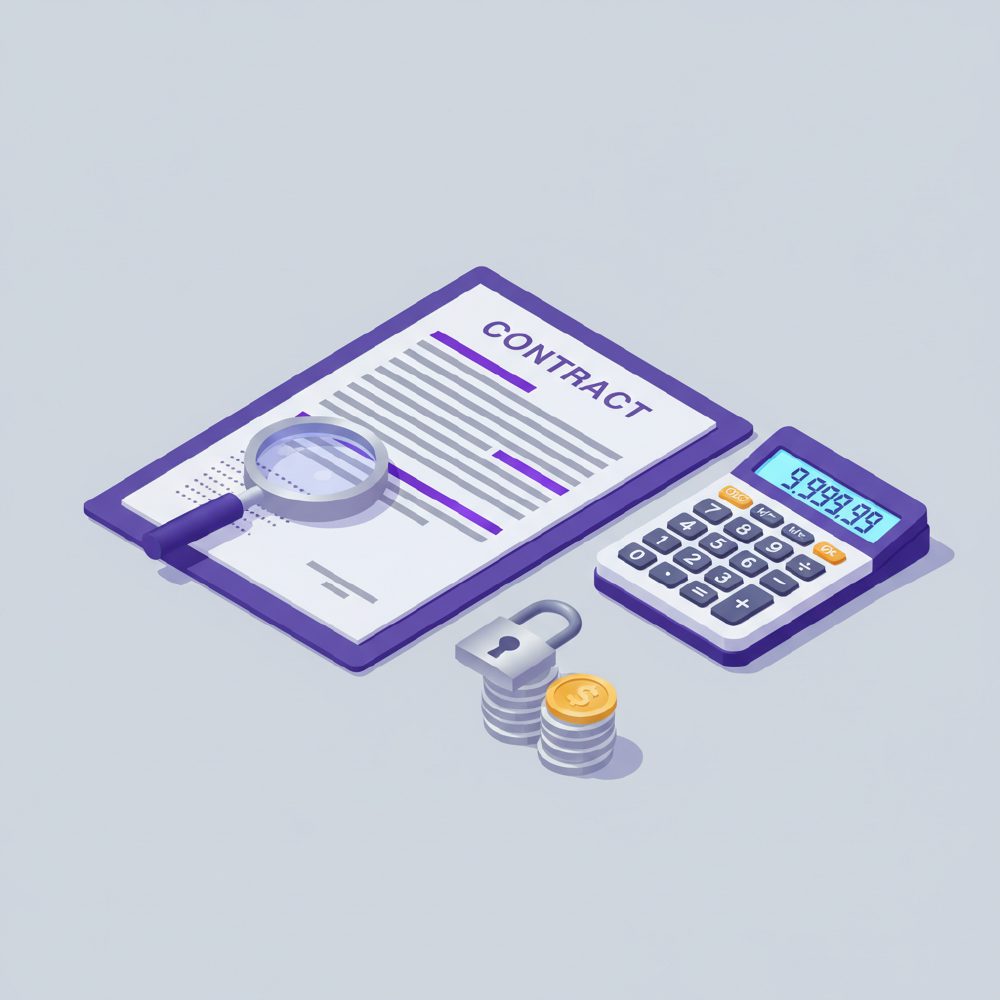
The phrase 'cheapest white label casino' is doing a lot of work. Vendors use it to describe anything from a $0-setup revenue-share arrangement to a $10,000 flat-fee package. What they rarely clarify upfront is that the setup fee is only one of six or seven cost buckets an operator needs to fund before taking a single bet.
When a B2B supplier advertises a cheap or free white label casino, they are almost always front-loading their margin somewhere else — usually in the ongoing revenue share, the payment processing spread, or the game aggregator fee structure baked into the platform. I have reviewed contracts from at least a dozen mid-tier suppliers over the past three years, and the pattern is consistent: the lower the setup fee, the higher the long-term extraction. A supplier charging zero setup but taking 45% GGR will outpace a $25,000 flat-fee deal within six to eight months of a modestly performing operation.
The vendors selling in this space range from established aggregator-backed platforms like SoftSwiss (whose white label arm, now rebranded as SOFTSWISS White Label, has a defined fee structure) and EveryMatrix's white label offering, down to smaller offshore resellers who are essentially sub-licensing a Curaçao master license and reselling access to a shared back-office. The latter category is where most 'cheapest' claims originate — and where most operators run into trouble.
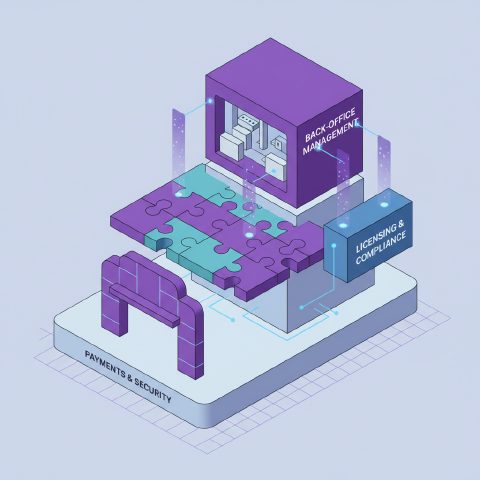
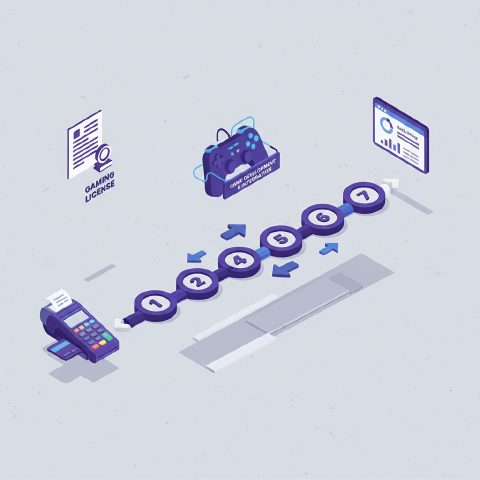
Before evaluating any 'cheap' deal, operators need to map all cost buckets: (1) platform setup fee, (2) monthly platform SaaS fee, (3) licensing cost and annual renewal, (4) game aggregator rev-share or flat fee, (5) payment processing fees per transaction, (6) KYC/AML tooling, and (7) customer support infrastructure. A vendor quoting only item one is not being transparent about total cost of ownership.
Are there genuinely free white label casino platforms in 2026?
No. Every 'free' white label casino offer in 2026 is a deferred-cost model. The supplier waives the setup fee in exchange for a higher revenue share, a locked payment processor with elevated margins, or both. Operators who sign these deals without modeling 12-month GGR projections consistently discover they are paying more than a paid setup would have cost.
The 'free white label casino' pitch is most common among smaller offshore suppliers and a handful of LATAM-focused resellers. The mechanics are straightforward: the supplier absorbs your $10,000–$20,000 setup cost and recoups it by taking 40–50% of gross gaming revenue instead of the industry-standard 15–30%. If your casino generates $50,000 GGR per month, a 40% rev-share costs you $20,000 monthly. A platform that charged $20,000 upfront and took 20% costs you $10,000 monthly. The math is not subtle.
There is a second mechanism worth understanding: locked payment processors. Several cheap and free white label suppliers maintain exclusive arrangements with specific PSPs — often lesser-known processors operating in gray jurisdictions. The supplier takes a silent cut of every transaction, sometimes 1–3% on top of the processor's standard fee. Operators don't see this in the platform contract; it shows up as an unusually high effective processing cost. I have seen operators paying an effective 6–8% on card transactions when the market rate is 2.5–4% for comparable risk profiles.
A third cost that 'free' deals hide is migration. When you outgrow a cheap platform — or when the supplier raises their rev-share, changes payment terms, or loses their sublicense — moving your player database, game history, and wallet balances to a new platform is expensive and technically painful. Suppliers know this, which is why their contracts often include data portability restrictions or charge a substantial exit fee. Read that clause before you sign anything.
What is the realistic cost floor for a white label casino launch in 2026?
A compliant white label casino launch in 2026 realistically costs $30,000–$80,000 in year one when you include licensing, platform fees, payment setup, and minimum operational spend. The $15,000 'all-in' packages advertised by some suppliers exclude licensing, banking, and any meaningful marketing budget — which are the three things that actually determine whether you survive.
Let me break down a realistic year-one budget for a Curaçao-licensed white label launch, which is the cheapest compliant route most offshore operators pursue. Platform setup fees from reputable mid-tier suppliers (think Slotegrator, BetConstruct's white label arm, or smaller certified resellers) run $8,000–$20,000. Monthly SaaS fees add $1,500–$5,000 per month, so $18,000–$60,000 annually. A Curaçao Gaming Control Board (GCB) license under the new 2023 framework costs roughly $17,000–$22,000 for the initial application plus ongoing compliance costs. Anjouan (ACGC) is cheaper at around $10,000–$15,000 total year-one cost but carries more reputational risk with payment processors.
Payment setup is where operators consistently underestimate. Getting a merchant account as a new gambling operator — even under a legitimate Curaçao license — requires either a dedicated gambling PSP (Payvision, Safecharge/Nuvei, Praxis as an aggregator layer) or crypto-first processing. Expect $2,000–$5,000 in setup fees across your initial processor relationships, plus ongoing processing fees. KYC/AML tooling through providers like Sumsub or Veriff adds $500–$2,000 per month depending on verification volume.
The numbers above don't include a marketing budget, which is the real determinant of whether a new casino survives its first year. Affiliate commissions, SEO investment, and bonus funding are operating costs, not startup costs — but operators who don't budget $10,000–$30,000 for player acquisition in months one through six rarely make it to month twelve. The cheapest white label deal in the world doesn't solve a zero-player problem.
| Cost Bucket | Cheap/Free WL Deal | Mid-Tier WL Deal |
|---|---|---|
| Platform setup fee | $0–$5,000 | $10,000–$20,000 |
| Monthly platform SaaS (×12) | $18,000–$36,000 | $18,000–$60,000 |
| Curaçao GCB license (year 1) | $17,000–$22,000 | $17,000–$22,000 |
| Payment processor setup | $2,000–$5,000 | $2,000–$5,000 |
| KYC/AML tooling (×12) | $6,000–$24,000 | $6,000–$12,000 |
| GGR revenue share (est. $30K/mo GGR) | $162,000–$216,000 | $54,000–$108,000 |
| Estimated year-one total | $205,000–$308,000 | $107,000–$227,000 |
What licensing options are cheapest for a white label casino operator?
Curaçao and Anjouan are the two cheapest licensing jurisdictions accessible to white label operators in 2026. Both allow sublicensing arrangements where your white label supplier holds the master license and you operate under it — which cuts your direct licensing cost but also limits your control and exposes you to the supplier's compliance failures.
Curaçao underwent a significant regulatory overhaul in 2023, replacing the old master license system with direct operator licenses under the Gaming Control Board (GCB). As of 2026, new operators applying for a Curaçao license must apply directly rather than sublicensing under a master holder. The application fee is around $17,000–$22,000, with annual renewal costs in a similar range. This is still significantly cheaper than an MGA (Malta Gaming Authority) license, which runs $25,000+ in application fees alone and carries substantially higher compliance infrastructure requirements.
Anjouan (issued by the Anjouan Council of Gaming Control, or ACGC) remains cheaper — roughly $10,000–$15,000 year one — but I want to be honest about the trade-off: Anjouan-licensed operations face more friction with tier-one payment processors and are increasingly blocked by major affiliate networks. If your acquisition strategy relies on mainstream affiliates or card processing, Anjouan may cost you more in indirect revenue loss than you save on the license fee.
For operators targeting specific regulated markets, the math changes completely. A New Jersey iGaming license requires partnership with an Atlantic City land-based casino and carries compliance costs well north of $500,000 in year one. Ontario's iGaming market (regulated by iGO since 2022) requires a Registrar's license and local entity, with costs in the $50,000–$150,000 range. LATAM jurisdictions like Colombia (Coljuegos) and Peru (MINCETUR) have their own fee structures and local entity requirements that make them unsuitable for operators looking for the cheapest possible entry point.
| Jurisdiction | Regulator | Year-1 License Cost (Est.) | Sublicense Available? | Processor Friendliness |
|---|---|---|---|---|
| Curaçao | GCB (Gaming Control Board) | $17,000–$22,000 | No (post-2023 reform) | Moderate |
| Anjouan | ACGC | $10,000–$15,000 | Yes (some suppliers) | Low–Moderate |
| Malta (MGA) | Malta Gaming Authority | $25,000+ application only | No | High |
| Isle of Man | GSC | $30,000–$50,000 | No | High |
| Ontario, Canada | iGO / AGCO | $50,000–$150,000 est. | No | High |
| New Jersey, USA | DGE | $500,000+ year 1 | No | Very High |
What do 'white label casino for sale' listings actually include — and what do they leave out?
Listings advertising a 'white label casino for sale' typically bundle a domain, a themed front-end skin, access to a game library, and sometimes a payment gateway integration. What they almost never include is a transferable license, a clean payment processing relationship, a player database with any value, or the operational knowledge to run compliance — the things that actually make a casino worth buying.
The 'white label casino for sale' market on platforms like Flippa or through broker intermediaries has grown noticeably since 2021. Most listings fall into two categories: distressed operations that failed to acquire players and are selling the technical shell, or supplier-originated listings where the 'sale' is really a repackaged white label setup deal with a higher price tag. Neither is inherently bad, but operators need to understand what they are buying.
A technical shell — domain, skin, back-office access, and game integrations — has real but limited value. If the back-office is built on a platform you'd choose anyway (say, a SoftSwiss or EveryMatrix instance), you're essentially buying a head start on customization. If it's built on a proprietary system with no documented API, you're buying a liability. Always request a full technical specification, a list of integrated game providers, and the payment processing agreements before any offer.
The license situation is the most critical and most frequently misrepresented element. In most jurisdictions, a gaming license is not transferable with a business sale — it is issued to a specific legal entity and must be re-applied for. Curaçao's post-2023 framework is explicit about this. A seller claiming their Curaçao license transfers with the business is either mistaken or deliberately misleading you. Budget for a fresh license application regardless of what the listing says.
Player databases are the one asset that can have genuine value in a casino acquisition — recurring depositors are worth real money. But verify the data independently. Request audited GGR reports for at least 12 months, cross-reference with payment processor statements, and have a lawyer review whether the player data can legally be transferred under GDPR or the applicable data protection regime. I've seen deals collapse at due diligence because the seller's player data was stored in a way that made legal transfer impossible.
How do cheap white label casino revenue share models actually stack up against flat-fee deals?
At low GGR volumes, a zero-setup revenue share deal looks attractive. Past roughly $20,000–$30,000 monthly GGR, a flat-fee or lower-rev-share arrangement almost always wins on total cost. The crossover point depends on the specific rev-share percentage — and most cheap deals sit at 40–50%, which makes the crossover happen faster than operators expect.
Here is the arithmetic that every operator should run before signing a cheap white label deal. Take a supplier offering zero setup and 45% GGR revenue share versus a supplier charging $20,000 setup and 20% GGR revenue share. At $15,000 monthly GGR, the zero-setup deal costs $6,750/month versus the flat-fee deal's $3,000/month — but the flat-fee operator has already paid $20,000 upfront, so they're behind until month 12. At $30,000 monthly GGR, the zero-setup deal costs $13,500/month versus $6,000/month for the flat-fee deal. The flat-fee operator recovers their setup cost in under four months at that volume and saves $90,000 annually thereafter.
The problem is that most new operators launching on a cheap white label platform never reach $30,000 monthly GGR in year one — which is precisely why the zero-setup model exists. Suppliers know the majority of new operators will churn before the rev-share becomes punishing. For the minority that succeed, the supplier extracts significantly more value than a flat-fee model would have generated. It's a rational business model for the supplier. It's a bad deal for any operator who builds a real player base.
There's also a negotiation dynamic worth understanding. Flat-fee deals with established suppliers like BetConstruct, Slotegrator, or EveryMatrix are negotiable at volume. If you can demonstrate a credible acquisition plan and a funded marketing budget, suppliers will move on both setup fees and rev-share percentages. Showing up with a business plan and a $50,000 marketing budget gets you a meaningfully better contract than showing up asking for the cheapest option. Cheap positioning signals low-conviction operators, and suppliers price accordingly.
Which white label casino suppliers are worth considering at the lower end of the market?
At the lower end of the legitimate market, Slotegrator, BetConstruct's white label tier, and Soft2Bet's operator solutions offer reasonably transparent pricing with established game libraries and compliance tooling. Below that tier, the market gets murky quickly — many 'cheap' suppliers are reselling access to shared platforms with limited customization, weak KYC tooling, and revenue share structures that punish success.
Slotegrator is probably the most frequently cited entry-level white label supplier for new operators. Their APIgrator aggregation product and white label packages are accessible in terms of setup cost, and they have documented integrations with several hundred game providers. The trade-off is that their platform is not as technically sophisticated as SoftSwiss or EveryMatrix, and customization depth is limited. For an operator testing a market before committing to a full turnkey build, Slotegrator is a reasonable starting point — not a long-term home.
BetConstruct offers a white label tier that sits between entry-level and mid-market. Their Spring platform has solid sports betting integration alongside casino, which matters if you want to offer both verticals from day one. Setup costs are higher than Slotegrator — expect $15,000–$25,000 depending on scope — but the platform infrastructure is more robust and the compliance tooling is better suited to operators targeting regulated markets. They also have a genuine presence in multiple licensed jurisdictions, which helps when you're trying to establish payment relationships.
Below these names, the market fragments into dozens of smaller resellers, many of whom are operating as sub-sublicensees of Curaçao or Anjouan master licenses. Some are legitimate and deliver what they promise. Others are selling access to shared back-offices with minimal customization, no dedicated support, and contracts that give the supplier broad rights to change terms unilaterally. The tell is always in the contract: look for unilateral amendment clauses, payment processing exclusivity requirements, and data portability restrictions. If a supplier won't share their full contract before you pay a deposit, walk away.
I'd also flag a category of suppliers that has grown since 2022: crypto-native white label platforms targeting operators who want to avoid traditional payment processing entirely. Platforms like Sportsbet.io's B2B arm and various smaller crypto casino builders offer genuinely lower payment infrastructure costs by running on blockchain-based wallets. The trade-off is a narrower addressable player market and ongoing regulatory uncertainty — crypto gambling licensing is evolving fast and what's compliant today in Curaçao may not be in 18 months.
What are the hidden costs that cheap white label deals consistently fail to disclose?
The five costs that cheap white label suppliers most consistently bury are: game aggregator rev-share stacking on top of platform rev-share, payment processing margin taken silently by the supplier, KYC/AML tooling either missing or charged as an add-on, bonus and jackpot contribution fees, and exit or migration fees when you try to leave. Together these can double the effective cost of a 'cheap' deal.
Game aggregator rev-share stacking is the most financially significant hidden cost I encounter in operator contracts. A platform that integrates games through an aggregator like Relax Gaming, Pariplay, or their own proprietary aggregator layer typically takes a cut of the aggregator's fee on top of their platform rev-share. So if the aggregator charges 15% of game GGR and the platform takes 35% of total GGR, the operator's effective take-home is much lower than the headline rev-share implies. Always ask for a waterfall diagram showing exactly how GGR is split between the studio, the aggregator, and the platform — before any money changes hands.
Payment processing margin is the second major hidden cost. Several cheap white label suppliers have exclusive or preferred arrangements with specific PSPs and take a referral fee or margin share on every transaction processed through their platform. This is legal and common, but it should be disclosed. Ask the supplier directly: 'Do you receive any compensation from payment processors connected to this platform?' If they hesitate or deflect, that's your answer. Benchmark the processing rates they offer against market rates for your risk profile — if the spread is more than 1.5–2%, you're funding someone's undisclosed margin.
KYC/AML tooling is increasingly non-negotiable under the post-2023 Curaçao framework and under any MGA-adjacent compliance standard. Some cheap platforms include only basic identity verification with no ongoing transaction monitoring or PEP/sanctions screening. Adding a proper AML solution (Sumsub, Veriff, Ondato, or similar) costs $500–$3,000 per month depending on volume and feature set. If the platform doesn't include this, budget for it separately — or face regulatory consequences that cost far more.
Exit fees are the cost operators discover last and regret most. I have reviewed contracts with migration fees of $10,000–$50,000 for player data export, plus clauses requiring 90–180 days notice before termination, during which the supplier continues collecting their rev-share. If you build a successful player base on a cheap platform and then want to move to a better one, you may be paying the cheap platform's rev-share for six more months while simultaneously paying setup costs on the new one. Read the exit clause before you sign the entry clause.
How does a cheap white label casino compare to a turnkey build on total cost of ownership?
For operators projecting under $20,000 monthly GGR in year one, a white label is almost always cheaper in absolute terms than a custom turnkey build. Above $50,000 monthly GGR, the math often flips — a turnkey build with a lower rev-share or flat licensing fee structure outperforms a high-rev-share white label deal within 18–24 months.
A turnkey casino build — where you own the platform or license the software on a flat-fee basis rather than a rev-share — typically costs $80,000–$250,000 upfront depending on scope, provider, and feature set. That's a significant capital requirement that most new operators can't or won't commit to before proving market fit. The white label model exists precisely to lower that barrier, and for early-stage operators, it serves that purpose well.
The inflection point comes with scale. At $100,000 monthly GGR, a 40% rev-share white label deal costs $40,000/month in platform fees alone — $480,000 annually. A turnkey platform licensed at $150,000 upfront with a 10% technical fee would cost $10,000/month — $120,000 annually plus the upfront cost. The turnkey operator recovers the difference in roughly 14 months and saves $360,000 per year thereafter. These are illustrative figures, but the directional math is reliable.
The practical recommendation I give operators is this: use a white label to validate your market and player acquisition model, with a clear decision point at 12–18 months. If you've reached $30,000+ monthly GGR and have a stable player base, start evaluating a migration to a turnkey or licensed platform. Build that migration cost into your initial financial model so it doesn't catch you off guard. The operators who get stuck on cheap white label platforms forever are the ones who didn't plan for the exit from day one.
| Monthly GGR | Cheap WL (40% rev-share, $0 setup) | Mid WL (25% rev-share, $15K setup) | Turnkey ($150K upfront, 10% tech fee) |
|---|---|---|---|
| $10,000/mo | $4,000/mo ($48K yr1) | $2,500/mo + $15K = $45K yr1 | $1,000/mo + $150K = $162K yr1 |
| $30,000/mo | $12,000/mo ($144K yr1) | $7,500/mo + $15K = $105K yr1 | $3,000/mo + $150K = $186K yr1 |
| $75,000/mo | $30,000/mo ($360K yr1) | $18,750/mo + $15K = $240K yr1 | $7,500/mo + $150K = $240K yr1 |
| $150,000/mo | $60,000/mo ($720K yr1) | $37,500/mo + $15K = $465K yr1 | $15,000/mo + $150K = $330K yr1 |
What should operators demand in a white label contract before signing?
Before signing any white label casino contract, operators must get written clarity on six things: the complete GGR waterfall showing every party's share, payment processor relationships and any supplier margin, data portability rights, exit terms and fees, SLA commitments for uptime and support, and the licensing arrangement — specifically whether you are operating under the supplier's license or obtaining your own.
The GGR waterfall is non-negotiable. Get the supplier to produce a written document showing exactly how $100 of gross gaming revenue is distributed — what goes to the game studio, what goes to the aggregator, what the platform takes, and what you receive. If they can't or won't produce this document, you don't have enough information to evaluate the deal. I have seen operators sign contracts where their 'effective' rev-share after all deductions was 35% of what they thought they were receiving.
Data portability is the clause that determines your future optionality. You need the right to export your full player database — account details, KYC records, transaction history, and game history — in a standard format (CSV, JSON, or SQL dump) within a reasonable timeframe (7–14 days) at no charge or at a clearly defined reasonable cost. Any contract that restricts this right, charges a large fee for data export, or requires regulatory approval that the supplier controls is a contract that locks you in permanently. Walk away or negotiate hard on this point.
SLA commitments matter more than operators realize at the contract stage. A cheap platform with 95% uptime sounds acceptable until you calculate that 5% downtime is 36 hours per month — 36 hours during which your players can't deposit, play, or withdraw. Reputable suppliers commit to 99.5%+ uptime with financial penalties for breaches. Cheap suppliers often include 'commercially reasonable efforts' language with no defined penalty. That language is worth nothing in a dispute.
Finally, understand exactly what licensing arrangement you're entering. If you're operating under the supplier's Curaçao or Anjouan license as a sublicensee, you are exposed to their compliance failures — if they lose their license, your operation stops. If you're obtaining your own license with the supplier as a platform provider, you have more independence but also more responsibility. Neither is inherently wrong, but you need to know which one you're signing up for, and you need legal counsel in the relevant jurisdiction to review the arrangement before you commit capital.



Comments
No comments yet, be the first.