What Is a White Label Casino? The Operator's Plain-English Definition for 2026

What is a white label casino, exactly?
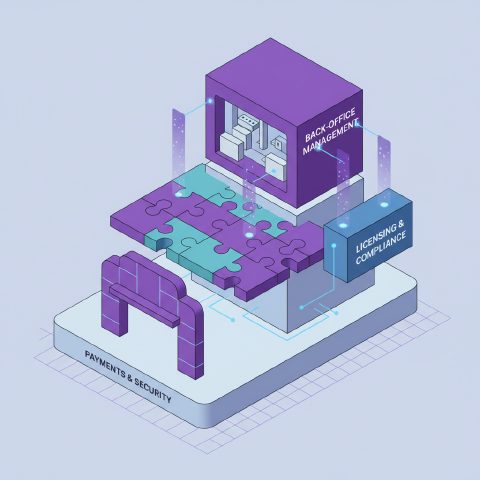
A white label casino is a pre-built, licensed, and game-stocked gambling platform that an operator rents, rebrands, and markets under their own name. The underlying technology, regulatory license, and payment infrastructure belong to the platform provider. You supply the brand, the player acquisition budget, and the customer service layer — they supply everything else.
The analogy that actually holds up is private-label grocery: the supermarket puts its own packaging on a product manufactured somewhere else. In iGaming, the 'manufacturer' is a platform company like SoftSwiss, EveryMatrix, Slotegrator, or Turnkey iGaming. They've already negotiated the game aggregator deals (typically through hubs like Relax Gaming's Silver Bullet or Pariplay's Fusion), obtained a master license from Curaçao eGaming or Anjouan, and built the CRM, bonus engine, and payment gateway integrations. You license access to all of that under your brand.
What you're actually signing when you go white label is usually a sub-license or operating agreement, not a software license. That's a meaningful legal distinction. The master licensee — your provider — remains the entity accountable to the regulator. You operate under their umbrella, which means their compliance failures become your operational problems and their license suspension becomes your site going dark. Operators discover this the hard way when a provider's Curaçao master license gets suspended over AML issues and their entire white label fleet goes offline simultaneously.
The model makes genuine sense for operators who want to test a market, build a player base, and prove unit economics before committing to a full licensing and technology build. It also suits operators entering a jurisdiction where they lack the local legal expertise to navigate the regulatory process independently — using the provider's existing compliance framework as a scaffold. The risk is treating white label as a permanent operating model rather than a launchpad, because the revenue share compounds painfully as your GGR scales.
How does a white label casino actually work, step by step?
The mechanics are straightforward: you sign an agreement with a white label provider, configure your brand within their back-office, select your game portfolio from their aggregated library, set up payment methods from their pre-integrated processor roster, and go live. The provider handles hosting, licensing compliance, and platform maintenance. You handle marketing, player support, and brand decisions.
After signing, you typically get access to a back-office portal — SoftSwiss calls theirs the Casino Management System, EveryMatrix uses the CasinoEngine admin — where you configure site appearance via templates or a limited CSS layer, set bonus rules, and choose which game studios to feature. Most providers aggregate 3,000–8,000 game titles from studios like Pragmatic Play, Play'n GO, and Evolution Gaming. You're selecting from a menu, not negotiating direct content deals.
Payment integration is where operators often get a rude surprise. The white label provider has pre-integrated a set of payment service providers — usually a mix of card processors, e-wallets, and increasingly crypto rails. You don't choose your PSP independently; you choose from their approved list. If your target market needs a specific local payment method — PIX in Brazil, OXXO in Mexico, or UPI in India — and the provider hasn't integrated it, you're either stuck or waiting months for them to prioritize it. That friction directly impacts deposit conversion rates.
On the compliance side, the provider's compliance team handles the regulatory relationship with the licensor (Curaçao eGaming, Anjouan OJSC, or wherever their master license sits). You're expected to follow their AML and KYC procedures, which they'll document in an operations manual. In practice, the depth of that support varies enormously — some providers give you a dedicated compliance contact; others hand you a PDF and wish you luck. Before signing, ask specifically who manages your SAR filings and what happens if a player triggers enhanced due diligence.
| Phase | What Happens | Typical Duration |
|---|---|---|
| Agreement & KYB | Provider conducts due diligence on your company; contracts signed | 1–3 weeks |
| Brand Configuration | Domain setup, logo/theme applied, game selection, bonus rules configured | 1–2 weeks |
| Payment Setup | PSP accounts opened under provider's MID or sub-MID; crypto wallets configured | 1–3 weeks |
| QA & Soft Launch | Internal testing, geo-blocking rules, responsible gambling tools verified | 1–2 weeks |
| Live Launch | Site goes live; provider monitors platform uptime and compliance | Ongoing |
What does a white label casino cost in 2026?
Expect a setup fee of $15,000–$60,000 and an ongoing revenue share of 15–35% of GGR, though the exact split depends heavily on the provider, your projected volume, and which markets you're targeting. Some providers layer in a monthly minimum — typically $2,000–$5,000 — regardless of GGR. These figures are directionally accurate as of 2025–2026; always model the revenue share against your projected GGR before signing.
The setup fee covers platform configuration, brand integration, and the provider's onboarding labor. It does not typically cover your marketing budget, customer support staffing, or the cost of obtaining any supplementary local licenses you might need. SoftSwiss, for example, positions itself as a premium provider — their setup fees sit toward the higher end of the range, but they include more managed services. Smaller white label shops operating out of Malta or Cyprus will quote lower upfront numbers but often compensate with higher GGR cuts or restrictive contract terms.
The revenue share model is where the math turns against you at scale. If you're generating $500,000 GGR per month and paying 25% to the provider, that's $125,000 monthly — $1.5 million annually — for platform access. At that volume, a turnkey or custom build with your own license starts looking economically rational even after accounting for the $200,000–$500,000 build cost and $30,000–$100,000 annual licensing fees. Most experienced operators treat white label as a vehicle for the first 12–24 months, then migrate to a more independent structure once they've validated the market.
Hidden costs operators routinely underestimate: payment processing fees (2–5% on card transactions, often higher on crypto), game content fees embedded in the provider's aggregation deal (you won't see these itemized), chargeback management costs, and the opportunity cost of not owning your player data outright. Some white label agreements include data portability clauses; many don't. If you ever want to migrate platforms, not owning your player database is a serious operational problem.
| Model | Upfront Cost | Ongoing Cost | Time to Market | License Ownership | Platform Control |
|---|---|---|---|---|---|
| White Label | $15K–$60K | 15–35% GGR rev-share + minimums | 4–12 weeks | Sub-license (provider owns) | Low — template-based, provider's roadmap |
| Turnkey iGaming Software | $50K–$200K+ | SaaS fee ($5K–$20K/mo) or lower rev-share | 3–6 months | Operator obtains own license | Medium — configurable, but vendor's codebase |
| Custom Build | $300K–$1M+ | Hosting, staff, maintenance | 12–24 months | Operator owns everything | Full — own codebase and integrations |
What is a turnkey iGaming software solution, and how is it different?
A turnkey iGaming software solution is a complete, ready-to-deploy casino platform — game integrations, back-office, CRM, and payment modules included — that the operator licenses or purchases to run under their own regulatory license. Unlike white label, you're buying the platform capability, not renting someone else's license. You own the compliance relationship with the regulator from day one.
The terminology gets blurry in vendor marketing — providers like EveryMatrix, Softgamings, and BetConstruct use 'turnkey' and 'white label' almost interchangeably in their sales decks. The operationally meaningful distinction is license ownership. In a true turnkey arrangement, the operator applies for and holds their own Curaçao, MGA, or jurisdiction-specific license. The software vendor provides the platform; the operator is the regulated entity. In a white label, the vendor holds the license and the operator operates under it.
Turnkey solutions typically offer more configurability. You can negotiate direct game studio deals rather than accepting the aggregator's pre-packaged library, integrate PSPs that aren't on a provider's approved list, and build custom bonus logic that a white label template won't support. EveryMatrix's CardsChat platform and SoftSwiss's SOFTSWISS Game Aggregator are examples of modular infrastructure that operators can deploy under their own license with significant configuration freedom.
The trade-off is that you inherit the compliance burden immediately. Applying for a Curaçao eGaming sub-license (post the 2023 regulatory overhaul) or an MGA B2C license requires documented AML policies, a responsible gambling framework, technical compliance certificates, and in some jurisdictions a physical presence. Budget 3–6 months and $30,000–$100,000+ for the licensing process alone, depending on jurisdiction. Operators who underestimate this timeline and burn through runway waiting for a license approval are a recurring story in this industry.
Which jurisdictions support white label casino operations?
Curaçao and Anjouan are the dominant offshore jurisdictions for white label casino operations because their master license structures explicitly allow sub-licensing — which is the legal mechanism white label providers use. MGA (Malta) and UKGC licenses don't permit sub-licensing in the same way, so white label in regulated EU and UK markets requires a different structure, typically a B2B software license paired with the operator's own B2C license.
Curaçao eGaming underwent a significant regulatory overhaul in 2023 under the new National Ordinance on Offshore Games of Hazard (NOOGH). The old four master license structure collapsed into a single Curaçao Gaming Authority framework, and the sub-license model that white label providers relied on is being phased out in favor of operators holding their own licenses. As of 2025, many white label providers operating under Curaçao are still transitioning — ask any provider specifically what license structure your operation will sit under and get it in writing.
Anjouan (Comoros Islands) has emerged as an alternative for operators who want offshore coverage while Curaçao sorts out its regulatory transition. The Anjouan Gaming License is cheaper (roughly $15,000–$25,000 for an operator license) and faster to obtain, but carries less brand credibility with payment processors and game studios. Some studios won't supply content to Anjouan-licensed operators, which limits your game library options — a real operational constraint, not just a reputational one.
For operators targeting regulated markets — New Jersey, Pennsylvania, Ontario, the UK, Sweden, Colombia (Coljuegos), Peru (MINCETUR), or Mexico (SEGOB) — white label in the offshore sense doesn't apply. These jurisdictions require the operator to hold a local license directly. White label providers operating in these markets function more like B2B software vendors: they supply the platform, you hold the license. EveryMatrix and SoftSwiss both have regulated-market offerings structured this way. The compliance requirements, capital reserves, and local entity obligations in these jurisdictions are substantially more demanding than offshore, and no white label provider can absorb those requirements on your behalf.
What games and software come with a white label casino?
Most white label platforms aggregate 3,000–10,000 game titles from 50–150+ studios via a game aggregation layer — Relax Gaming Silver Bullet, Pariplay Fusion, or the provider's proprietary aggregator. You choose which studios to activate from the available roster. Live casino content from Evolution Gaming and Pragmatic Play Live is typically available but commands higher revenue share splits or separate content fees.
The aggregation model means you're not negotiating directly with Pragmatic Play or Play'n GO — the white label provider has the master content deal, and you access it through them. That's convenient, but it means you have zero leverage on content terms and zero visibility into what the provider is paying versus what they're charging you. Some providers mark up content fees significantly; others pass through aggregator rates transparently. Ask for a content fee schedule before signing — a provider that won't show you one is telling you something.
Live casino is a particular pressure point. Evolution Gaming, the dominant live casino supplier, has strict due diligence requirements for operators. They want to know who the end operator is, what markets they're targeting, and what their compliance framework looks like. Some white label providers have blanket Evolution deals that cover their sub-operators; others require each white label client to pass Evolution's own onboarding. If live casino is central to your strategy — and in most markets it should be, given live's share of GGR — clarify this before signing anything.
Game selection also intersects with geo-targeting. Studios have jurisdiction-specific restrictions: a game certified for Curaçao may not be certified for Ontario or New Jersey. Your white label provider's back-office should handle geo-blocking at the game level, but verify this in your QA process. Serving uncertified games to restricted jurisdictions is a compliance violation that lands on you operationally even if the platform is the provider's.
How do payments work in a white label casino?
Payment processing in a white label setup runs through the provider's pre-integrated processor relationships. You typically operate under a sub-merchant ID on the provider's merchant account, or open your own accounts with PSPs from the provider's approved list. Either way, your payment options are constrained by what the provider has already built and negotiated — which may or may not match your target market's preferred deposit methods.
The sub-MID model is common and has a real downside: chargebacks and fraud on your account affect the provider's merchant account health, and vice versa. If another white label operator on the same provider's MID runs a high-chargeback operation, your card acceptance rates can suffer collateral damage. Ask providers explicitly whether you'll be on a shared MID or a dedicated one, and what their chargeback threshold policies are.
Crypto payment integration has become a meaningful differentiator among white label providers. SoftSwiss, for example, has deep crypto infrastructure through its CoinsPaid payment processor — Bitcoin, Ethereum, Litecoin, Tether, and a range of altcoins are natively supported. For operators targeting markets where traditional banking is unreliable or where crypto-native players are a significant segment, this matters. Providers without robust crypto rails are increasingly at a disadvantage in offshore markets.
Local payment methods are the conversion bottleneck that vendor sales decks consistently underemphasize. In LATAM markets — Brazil, Mexico, Colombia — players expect PIX, OXXO, PSE, or local bank transfer options. In Southeast Asia, GCash, GrabPay, and local bank rails dominate. If your white label provider's payment roster doesn't include these, you're going to see deposit abandonment rates that no bonus structure will fix. Before committing to a provider, map their payment integrations against your target market's actual deposit behavior, not their marketing claim of '200+ payment methods.'
What are the real risks operators discover too late with white label casinos?
The risks that actually hurt operators are rarely the obvious ones. License dependency, data ownership limitations, platform migration lock-in, and revenue share math at scale are the four issues that consistently surface 12–18 months into a white label operation — after the operator has built a player base and is effectively trapped.
License dependency is the most acute risk. When your provider's master license is suspended, revoked, or under investigation, your casino goes dark regardless of your own compliance record. This isn't theoretical — Curaçao's 2023 regulatory overhaul triggered operational disruptions across dozens of white label fleets when master license holders scrambled to comply with new requirements. Operators had no recourse because they weren't the licensed entity. The mitigation is to understand your provider's license status and compliance history before signing, and to build a migration plan into your operating model from day one.
Data ownership is subtler but equally damaging. Many white label agreements give the provider ownership or co-ownership of player data. When you want to migrate to a new platform — because you've outgrown the white label model or your provider has raised their revenue share — you may find you can't take your player database with you. Players have to re-register, re-verify KYC, and re-deposit. The churn from a forced migration can wipe out years of player lifetime value. Negotiate explicit data portability rights before signing, and have a lawyer review the data ownership clauses specifically.
Platform roadmap dependency is the third trap. As a white label operator, you're a revenue stream for the provider, not a product priority. Feature requests go into a queue. If you need a specific bonus mechanic, a custom loyalty program structure, or a particular reporting integration, you're waiting on the provider's development schedule. Operators who build their competitive differentiation around platform features they don't control are building on sand. Your differentiation has to come from marketing, brand, and customer service — not from platform innovation you can't ship independently.
Is a white label casino legal, and what compliance obligations do operators have?
A white label casino is legal in jurisdictions that permit online gambling under a valid license — which is most of the world outside the US federal framework and a handful of outright prohibition markets. Legality hinges on whether your provider's license covers your target markets and whether you're complying with local laws in the jurisdictions you're accepting players from. Those are two different questions operators routinely conflate.
Having a Curaçao or Anjouan license does not make you legal in every market. It makes you licensed in an offshore jurisdiction that tolerates online gambling operations targeting players in 'grey' markets — countries that haven't explicitly licensed online gambling but haven't explicitly prohibited it either. Operating into a market with explicit prohibition (France without an ARJEL license, the Netherlands without a KSA license, Germany without a DSWV license) exposes you to enforcement risk even with a valid offshore license. The risk tolerance for this varies by operator, but it's a business decision you should make consciously, not one you should discover after your payment processor freezes your account.
Your compliance obligations as a white label operator typically include: following the provider's AML/KYC procedures (which should be documented in your operating agreement), implementing responsible gambling tools (deposit limits, self-exclusion, reality checks) as required by your license, geo-blocking players from prohibited jurisdictions, and maintaining records sufficient for audit. The provider handles the regulatory reporting to the licensor; you handle the operational compliance on your end.
Tax treatment of online gambling revenue varies dramatically by jurisdiction and by the operator's own tax residency. This is an area where I'd flag genuine uncertainty — the interaction between your company's incorporation jurisdiction, the license jurisdiction, and the markets you're accepting players from creates a tax structure that requires qualified legal and tax advice specific to your situation. Don't take tax guidance from your white label provider's sales team.
Who are the main white label casino providers operators should evaluate?
The established white label providers with documented track records include SoftSwiss, EveryMatrix, Slotegrator, Turnkey iGaming, and BetConstruct. Each has different strengths in terms of market coverage, payment infrastructure, game library depth, and compliance support. No single provider is best for every operator — the right choice depends on your target markets, budget, and how much operational control you're willing to trade for speed.
SoftSwiss is arguably the most recognized name in offshore white label, with a strong crypto-native infrastructure through CoinsPaid and a substantial game aggregator. They're positioned as a premium provider — their onboarding is thorough, their compliance documentation is solid, and their pricing reflects that. If you're launching a crypto-forward casino targeting Tier 1 offshore markets, they're a credible starting point. Their revenue share terms are negotiable at volume but firm at lower GGR projections.
EveryMatrix operates a modular platform architecture — their CardsChat casino module, Odds Matrix sportsbook, and Wire payment hub can be deployed independently or together. This modularity is genuinely useful for operators who want to start with casino and add sports betting later without rebuilding. They have a stronger regulated-market footprint than most white label providers, with integrations relevant to MGA and some US state frameworks. Their pricing is SaaS-leaning rather than pure revenue share, which works better for operators who expect to scale GGR significantly.
Slotegrator and BetConstruct serve a different segment — operators in emerging markets (CIS, Africa, parts of Asia) who need localized payment support and lower entry costs. Their platforms are less polished than SoftSwiss or EveryMatrix but more accessible for operators with smaller initial budgets. Turnkey iGaming (not to be confused with the generic term 'turnkey') is a smaller provider that has built a niche in fast-launch offshore operations with competitive revenue share terms. As with any provider, conduct your own due diligence: check their license status, talk to existing operators on their platform, and have a lawyer review the contract before you wire any money.
| Provider | Best For | License Coverage | Crypto Support | Pricing Model |
|---|---|---|---|---|
| SoftSwiss | Crypto-forward offshore launches | Curaçao (transitioning), some regulated | Strong (CoinsPaid native) | Rev-share + setup fee |
| EveryMatrix | Scalable, regulated-market-ready builds | MGA, Curaçao, some US-adjacent | Moderate | SaaS + lower rev-share |
| Slotegrator | Emerging markets, lower budget entry | Curaçao, Anjouan | Moderate | Rev-share + setup fee |
| BetConstruct | Sports + casino combo, CIS/Africa | Curaçao, some local licenses | Moderate | Rev-share, negotiable |
| Turnkey iGaming | Fast offshore launch, competitive terms | Curaçao, Anjouan | Growing | Rev-share + setup fee |





Comments
No comments yet, be the first.