White Label Casino App: Build vs Buy in 2026 — The Operator's Real Cost Breakdown

What exactly is a white label casino app and how does it differ from a turnkey platform?
A white label casino app is a pre-built mobile casino product — either a native iOS/Android app or a progressive web app (PWA) — that a B2B platform provider licenses to operators under their own brand. The distinction from a turnkey platform is subtle but important: white label typically means the provider retains the gaming license and back-end infrastructure, while turnkey hands you more operational control alongside the technology.
In practice, most of what the market calls 'white label' in 2026 is delivered as a PWA rather than a native app. That's not laziness on the provider's part — Apple's App Store and Google Play both restrict real-money gambling apps by jurisdiction, making native distribution genuinely difficult for offshore operators. A well-built PWA running on a platform like SoftSwiss or EveryMatrix's CasinoEngine can match native app performance on modern devices, but operators often discover this only after they've already promised investors a 'real app.'
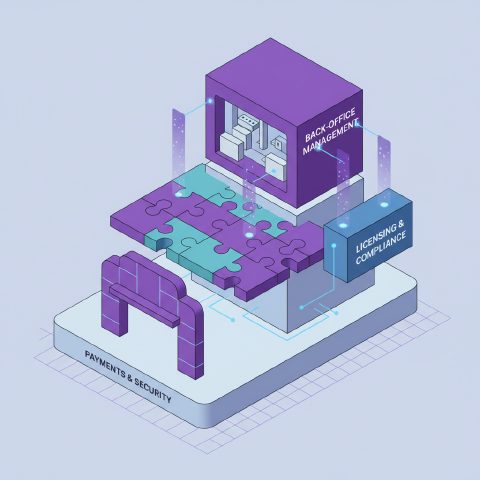
The turnkey distinction matters for licensing. With a true white label, the platform provider holds the sub-license under their master Curaçao or Anjouan license and you operate as a sub-licensee. You're faster to market but you're also dependent on their compliance posture. A turnkey deal — as sold by companies like Softgamings or BetConstruct — typically means you hold your own license and the provider supplies the technology stack, game aggregation, and payment modules, but you own the regulatory relationship. That difference has real consequences when a payment processor asks to see your license certificate.
For mobile specifically, the gap between white label and turnkey is narrowing. Providers have learned that operators demand a branded, app-like experience, so most mid-tier platforms now ship a configurable PWA with push notification support, biometric login, and offline caching as standard. The honest caveat: 'configurable' often means you can change colors and logos, not restructure the UX or checkout flow — which matters enormously for conversion on mobile.
What are the real costs of a white label casino app versus building custom in 2026?
White label casino apps typically run $20K–$80K in setup fees plus ongoing revenue share of 15–40% of GGR, depending on the provider and your negotiating leverage. A custom-built mobile casino, by contrast, is realistically a $300K–$1M+ project over 12–24 months — and that's before licensing, game deals, and payment integration costs that apply to both paths.
The white label fee structure is deceptively simple on a sales deck. You'll see a setup fee, a monthly platform fee (often $3K–$10K/month for a mid-tier provider), and a revenue share. What the deck won't highlight upfront is the cost of game content — most white label platforms aggregate games through their own deals but charge a content fee on top of the revenue share, or they've already baked it in at a rate that erodes your margin significantly at scale. Ask specifically what percentage of GGR goes to the platform versus the game studios before you sign anything.
Custom builds are a different category of financial commitment. A minimum viable mobile casino — meaning a functional PWA or native app with a game lobby, wallet, KYC flow, and basic CRM — requires a product team, frontend and backend engineers, QA, and a security audit. Realistic all-in cost for a lean team in Eastern Europe or Southeast Asia is $300K–$600K over 12–18 months. If you're targeting a regulated market like New Jersey or Ontario, add compliance engineering, third-party testing (GLI or BMM), and integration with state-mandated responsible gambling tools, and you're looking at $800K–$1.2M before you've acquired a single player.
There's a middle path that experienced operators use: start on a white label platform to validate the market, then negotiate a platform exit clause after 18–24 months and migrate to a proprietary or semi-custom stack. The migration is painful and costs real money — typically $150K–$400K in re-platforming — but you enter it with actual GGR data, a player database, and the leverage to negotiate better game deals directly with studios like Pragmatic Play or Evolution.
| Factor | White Label App | Custom Build |
|---|---|---|
| Setup cost | $20K–$80K | $300K–$1M+ |
| Time to launch | 4–12 weeks | 12–24 months |
| Ongoing cost model | Rev share 15–40% GGR + platform fee | Staff, hosting, licensing, maintenance |
| Tech ownership | None — provider owns stack | Full ownership |
| Mobile delivery | PWA (standard); native rare | Native app or PWA, your choice |
| Game content | Aggregated via provider deals | Direct studio deals or aggregator |
| Regulatory compliance | Provider handles (sub-license model) | Operator responsible |
| Customization depth | Branding + limited UX config | Unlimited |
| Scalability ceiling | Provider roadmap dependent | You control it |
| Best for | First-time operators, lean launches | Funded operators, regulated markets |
Which mobile delivery format actually performs better — PWA or native app?
For most white label casino operators in 2026, a well-optimized PWA outperforms the business case for a native app because distribution hurdles on iOS and Android make native real-money gambling apps impractical in most jurisdictions. The performance gap between PWA and native has narrowed significantly on modern hardware, but native still wins on retention metrics where push notifications and home-screen presence drive daily active use.
Apple allows real-money gambling apps on the App Store only in jurisdictions where the operator holds a locally recognized license — currently that includes the UK, a handful of US states, and some EU markets. Google's Play Store has similar restrictions and has been inconsistent in enforcement, which means operators launching on Curaçao or Anjouan licenses are essentially locked out of native app distribution on the two dominant platforms. That's why virtually every offshore white label platform ships a PWA by default.
The PWA experience has improved dramatically. On iOS 16.4+ and Android, PWAs support push notifications, offline mode, home-screen installation prompts, and biometric authentication. Providers like SoftSwiss have invested heavily in their mobile front-end — their PWA load times and lobby rendering are genuinely competitive. The friction point isn't performance; it's discoverability. You can't put a PWA in the App Store, which means you're entirely dependent on direct traffic, SEO, and affiliate links for mobile acquisition. That changes your marketing math considerably.
For operators targeting regulated markets — UK, Sweden, Netherlands, Ontario — native apps are worth the investment and the compliance overhead because the App Store presence is a legitimate acquisition channel and the trust signal matters to players. In those markets, custom or semi-custom builds that include a native app component make more strategic sense, even at the higher cost. The white label providers serving those markets, such as EveryMatrix or Pariplay, do offer native app modules, but they come with additional licensing requirements and integration timelines that erode the speed-to-market advantage of white label in the first place.
How does licensing jurisdiction affect your white label casino app options?
Your target jurisdiction dictates not just which license you need but which technical architecture is even permissible. Curaçao and Anjouan sub-licenses are the fastest and cheapest path for offshore white label operators, but they're incompatible with major payment processors and app store distribution. MGA, UKGC, and US state licenses require certified RNG, segregated player funds, and technical audits that most basic white label setups don't satisfy without significant additional work.
Curaçao remains the default for offshore white label launches in 2026, and the 2023 gaming ordinance reform — which introduced the National Ordinance on Offshore Games of Hazard (NOOGH) framework — has tightened sub-licensing requirements somewhat, but the barrier to entry is still low compared to European licenses. Anjouan (Comoros) has emerged as an alternative, issuing licenses faster and at lower cost, though its recognition by payment processors is even patchier than Curaçao's. If you're launching a white label casino app targeting players in LATAM, Africa, or emerging Asian markets, these licenses are pragmatic starting points — just don't expect Visa or Mastercard to process your payments directly.
The MGA (Malta Gaming Authority) is the benchmark for credibility in the EU. An MGA license costs roughly €25K in application fees and takes 4–6 months, but it unlocks Visa/Mastercard processing, legitimate banking relationships, and the ability to operate in most EU markets without additional local licenses (with some exceptions post-GDPR). The technical requirements are substantial — you need certified RNG, responsible gambling tools including deposit limits and self-exclusion, and your platform must pass a technical audit. Most white label providers who serve MGA licensees have pre-certified their platforms, which is a genuine advantage: EveryMatrix, for instance, holds MGA certification and can significantly reduce your compliance engineering burden.
In the US, the picture is fragmented by design. New Jersey (DGE), Pennsylvania (PGCB), Michigan (MGCB), and Connecticut each have their own technical standards and approved vendor lists. A white label platform that's certified in one state isn't automatically approved in another. This is why US-facing operators almost always work with established B2B suppliers who already have state approvals — companies like Scientific Games (now Light & Wonder), IGT, or GAN — rather than offshore white label providers who haven't gone through the US approval process. The cost and timeline of US licensing makes the build-vs-buy calculus very different from offshore.
| Jurisdiction | License Cost (approx) | Timeline | White Label Compatible? | Native App Possible? |
|---|---|---|---|---|
| Curaçao (NOOGH) | $15K–$30K/yr | 4–8 weeks | Yes — most offshore WL providers | No (App Store blocked) |
| Anjouan (Comoros) | $10K–$20K/yr | 2–4 weeks | Yes — limited provider support | No |
| MGA (Malta) | €25K setup + annual fees | 4–6 months | Yes — certified providers only | Yes (EU markets) |
| UKGC | £5K–£50K+ (size-based) | 4–6 months | Limited — strict tech reqs | Yes |
| Ontario (iGO) | CAD $10K+ | 3–6 months | Limited — registered suppliers | Yes |
| New Jersey (DGE) | $400K+ all-in est. | 12–18 months | Only DGE-approved vendors | Yes |
| Colombia (Coljuegos) | $500K+ concession | 6–12 months | Limited local providers | Yes |
Which white label casino platform providers actually deliver a strong mobile experience?
SoftSwiss, EveryMatrix, and Softgamings are the most consistently cited for mobile quality among operators I've worked with. BetConstruct and Digitain are strong for sportsbook-led products that include casino. The honest answer is that mobile quality varies significantly even within a single provider's client base — it depends heavily on how much you invest in the setup and configuration phase.
SoftSwiss has built a strong reputation for its mobile casino module, partly because their Game Aggregator (now rebranded as SOFTSWISS Game Aggregator) handles the content layer separately from the platform, which means the lobby rendering and game launch performance are optimized. Their crypto-native infrastructure also means their payment UX on mobile is genuinely smoother than legacy fiat-first platforms. Operators launching crypto casinos — which remain a significant segment in 2026 — consistently rate SoftSwiss's mobile experience above alternatives. Setup fees are in the $30K–$60K range with revenue share negotiated based on projected GGR volume.
EveryMatrix is the choice when you need MGA or UKGC compliance baked in. Their CasinoEngine and WalletEngine modules are certified, and their mobile front-end has improved substantially since 2022. They serve operators across multiple regulated markets simultaneously, which matters if you're planning a multi-jurisdiction rollout. The trade-off is that EveryMatrix is not the cheapest option and their sales process is slower — you're not going to get a demo-to-contract in two weeks. Budget for a longer onboarding and a more complex integration if you need their compliance modules.
Softgamings occupies a useful middle tier — faster to onboard than EveryMatrix, more flexible on commercial terms than SoftSwiss, and genuinely competent on mobile delivery. They aggregate 10,000+ games and their PWA performs well on mid-range Android devices, which matters if your target market includes LATAM or Africa where premium handsets aren't the norm. BetConstruct is worth considering if mobile sports betting is central to your product, since their casino module is solid but their sportsbook is the real differentiator. Don't use a sportsbook-first platform if you're building a casino-only product — the casino UX always feels like a secondary consideration in those builds.
What are the hidden costs operators discover too late with white label casino apps?
Revenue share erosion at scale, content fees on top of platform fees, payment processing margins, and the cost of migrating off the platform when you outgrow it are the four costs that consistently blindside operators. Most white label contracts also include minimum monthly fee commitments that apply even before you've acquired meaningful traffic.
Revenue share is the biggest long-term cost and the one most operators underestimate at launch because their early GGR numbers make the percentage feel abstract. At $100K GGR per month, a 30% platform revenue share costs you $30K — that's before payment processing fees (typically 3–8% of deposits depending on method and jurisdiction), game content fees if charged separately, and affiliate commissions. The math gets uncomfortable quickly at scale. Operators who've built to $500K+ monthly GGR on a white label platform often find they're paying more in combined fees than they would spend servicing a proprietary stack. That's the migration trigger point, and it's worth modeling it before you sign the white label contract.
Content fees are the sneaky one. Some platforms bundle game content into the revenue share; others charge a separate aggregation fee per game provider or per game launch. If your provider charges even 1–2% of GGR as a content fee on top of the platform share, that's a meaningful hit. Read the contract schedule carefully — specifically the sections on 'content licensing,' 'game studio fees,' and 'third-party costs.' Ask the provider to show you a fully loaded P&L example at $50K, $200K, and $500K monthly GGR. Any reputable provider will do this. If they won't, that's your answer.
Payment processing on mobile deserves its own attention. White label platforms typically offer their own payment modules or approved PSP integrations. The PSPs available on offshore platforms (Curaçao/Anjouan) are often high-risk processors charging 5–8% per transaction, and their approval rates on mobile are lower than desktop because of 3DS friction. Operators who've run the numbers tell me payment processing costs frequently exceed platform fees in the first year. If your white label provider has a proprietary payment solution, understand exactly what they charge and whether you can integrate alternative PSPs — many contracts restrict this to protect their payment revenue.
How long does it realistically take to launch a white label casino app?
A white label casino app can be live in 4–8 weeks if you have your license, domain, payment accounts, and brand assets ready before you start the platform setup. Realistically, most operators take 10–16 weeks because licensing delays, KYC with PSPs, and content configuration take longer than the sales deck suggests. Custom builds are 12–24 months minimum.
The 4-week timeline you'll see in provider marketing assumes you walk in with a Curaçao sub-license already in hand, a payment processor already approved, brand assets designed, and a clear game lobby structure. In practice, the Curaçao licensing process alone — even the sub-license route through a master license holder — takes 4–8 weeks in 2026 after the NOOGH reforms tightened documentation requirements. If you're applying for your own master license, add another 2–4 months. The payment piece is often the longest pole: getting approved by even a single high-risk PSP for a new gambling brand can take 4–8 weeks and requires AML policies, a business plan, and sometimes a personal guarantee from the director.
Platform setup itself — once you have a signed contract and your technical onboarding call — typically takes 2–4 weeks for a standard white label configuration. That includes domain setup, SSL, game lobby configuration, payment gateway integration, and basic CRM setup. The variable is how much customization you're doing. If you're using the provider's standard template with your logo and colors, 2 weeks is realistic. If you're customizing the lobby layout, adding a custom registration flow, or integrating a third-party KYC provider like Sumsub or Veriff, add 2–4 weeks for development and QA.
Responsible gambling tools and compliance configuration add time that operators consistently underestimate. Even on an offshore license, you'll want deposit limits, self-exclusion, and session time limits configured and tested — both because it's the right thing to do and because payment processors increasingly require evidence of responsible gambling measures before approving a gambling merchant account. Budget 2 weeks for this configuration and testing cycle. Total realistic timeline for a well-prepared operator launching on white label: 10–14 weeks from 'let's do this' to first deposit.
Can you build a white label casino app that ranks in organic search and acquires players through SEO?
Yes, but the technical constraints of most white label platforms create real SEO limitations. Shared infrastructure, subdomain structures, limited CMS access, and platform-controlled URL schemes mean many white label casino websites struggle to rank competitively. Operators who treat SEO as an afterthought at the platform selection stage consistently regret it.
The SEO problem with white label casino websites is structural. Many providers host all their operator clients on shared infrastructure with similar URL patterns, thin CMS capabilities, and limited control over page speed and Core Web Vitals. Google's algorithms have become increasingly sophisticated at identifying thin affiliate-style casino sites, and a white label setup with a generic template, limited unique content, and poor technical SEO signals is exactly the profile that gets filtered out of competitive search results for terms like 'online casino' or 'best slots.' This isn't unsolvable, but it requires deliberate effort from day one.
The platforms that give operators the best SEO control are those that allow a headless CMS integration or at minimum a full-featured blog/content section with clean URL structures, proper canonical tags, and editable meta data at the page level. EveryMatrix's operator clients have more CMS flexibility than most; SoftSwiss's platform is improving but historically has been more restrictive. Before signing any white label contract, ask specifically: Can I control meta titles and descriptions at the page level? Can I add custom landing pages? What's my Lighthouse score on a fresh setup? Can I integrate Google Tag Manager directly?
The operators I've seen build genuine organic traffic on white label platforms share a few characteristics: they invest in a dedicated content team from month one, they use the platform's affiliate module to build a proper affiliate program rather than relying on it as their only acquisition channel, and they treat the white label website as a brand property with original content — not a reskin of the provider's demo. That investment pays off in 12–18 months if done correctly. If you're launching with a $5K/month marketing budget and expecting SEO to carry acquisition, adjust your expectations significantly.
What should operators look for in a white label casino app contract before signing?
The five contract clauses that matter most are: revenue share calculation methodology, exit and data portability rights, exclusivity restrictions, payment processing obligations, and the provider's right to modify platform fees unilaterally. Most operators focus on the headline revenue share number and miss the clauses that will cost them far more over a three-year term.
Revenue share calculation methodology is where contracts get creative. 'GGR' sounds simple — Gross Gaming Revenue equals player deposits minus withdrawals. But some contracts calculate platform fees on 'net revenue' after subtracting bonuses, chargebacks, and payment fees, while others calculate on gross deposits before any deductions. A 25% share on net revenue is a very different deal from 25% on GGR depending on your bonus spend and chargeback rate. Get the exact formula in writing and model it against realistic operating scenarios before you sign.
Exit and data portability clauses are the ones operators regret ignoring. You need contractual rights to export your full player database — including email addresses, KYC documents, transaction history, and player preferences — if you decide to migrate platforms. Some white label providers treat the player database as their asset, not yours. That's not just a migration headache; it potentially means you can't take your players with you if the provider raises fees, goes insolvent, or loses their license. This is non-negotiable: get explicit data portability rights in the contract, and get legal review from someone who has actually reviewed iGaming platform contracts before, not a general commercial lawyer.
Unilateral fee modification clauses appear in more white label contracts than you'd expect. Look for language like 'the provider reserves the right to modify fees with 30 days notice.' In a market where your business is built on a specific margin structure, a 5-point revenue share increase with 30 days notice can be existential. Push back on this clause — negotiate a minimum lock-in period of 12–24 months on the revenue share terms, or a cap on annual increases. Providers who won't agree to any fee stability clause are telling you something about how they plan to treat you once you're dependent on their platform.
When does building a custom mobile casino actually make more sense than white label?
Custom builds make sense when you're targeting a regulated market that requires technical certification not available on white label platforms, when you have the funding and runway to sustain 12–18 months of development before revenue, or when you've already validated the market on white label and your GGR scale makes the revenue share cost of white label more expensive than owning the stack.
The US market is the clearest case for custom builds. If you're pursuing a New Jersey iGaming license or a Pennsylvania gaming permit, you need a platform that's been approved by the Division of Gaming Enforcement or the Pennsylvania Gaming Control Board. The approved vendor lists in these states include established B2B technology suppliers — not offshore white label providers. You're building a regulated, audited, certified product from day one, and the investment is justified by the market size: New Jersey alone generated $2.4B in iGaming revenue in 2023. The economics of owning your stack in a market that size are compelling.
The scale trigger is the other clear signal. I typically tell operators that if you're projecting — or have already achieved — $300K+ monthly GGR, the math on a proprietary platform starts to work. At that level, a 25–30% platform revenue share costs $75K–$90K per month. A well-run engineering team maintaining a proprietary platform costs less than that annually in many cases. The migration is painful and takes 6–12 months, but operators who've done it consistently report that the margin improvement pays back the migration cost within 12–18 months.
There's also a product differentiation argument for custom builds that's underappreciated. If your competitive advantage is a unique game mechanic, a proprietary loyalty system, or a specific UX innovation, you can't build it on a white label platform that serves 50 other operators. The operators who've built genuinely differentiated products in crowded markets — whether that's a crypto casino with a unique tokenomics model or a social casino with a proprietary progression system — have almost universally done it on custom stacks. White label is efficient for commodity casino products; it's a ceiling for product innovation.

Comments
No comments yet, be the first.