US Online Casino Legal States 2026: The Operator's Cost & ROI Breakdown
Which US states have legal online casinos in 2026?
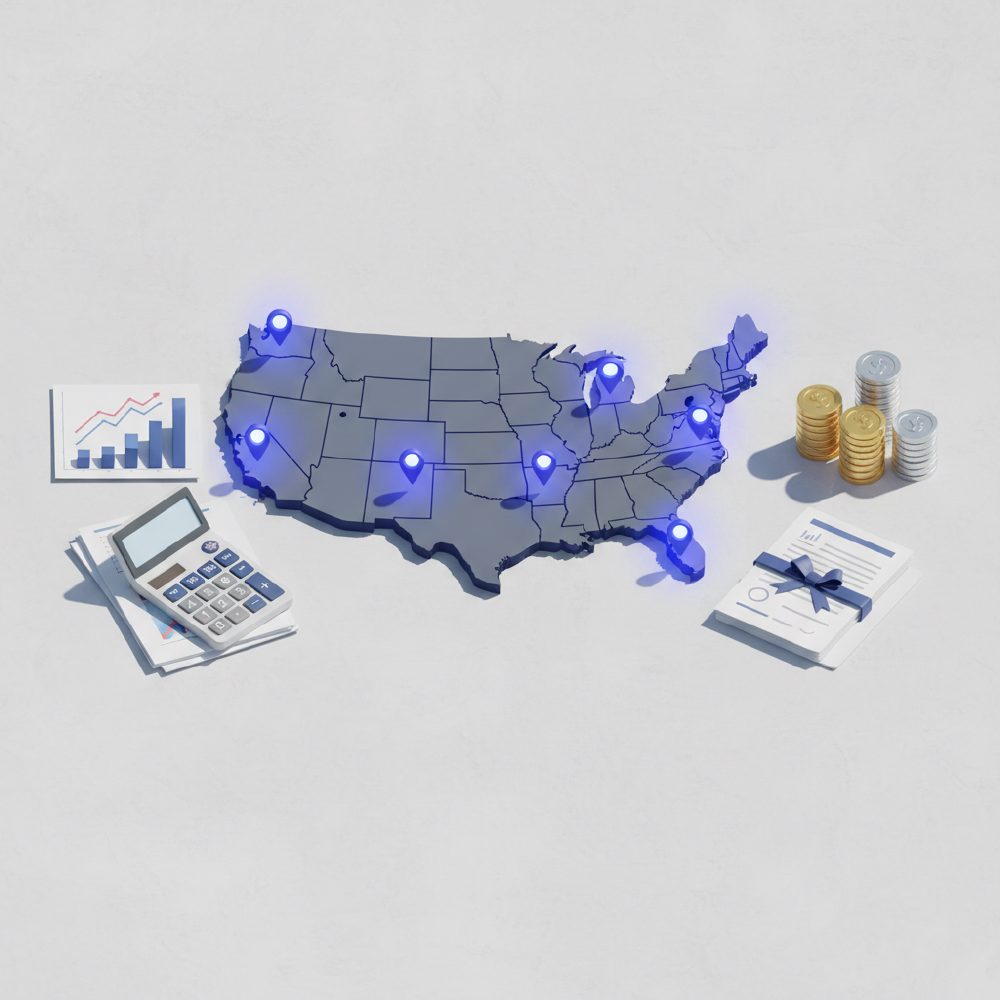
Six states have fully operational, multi-operator online casino markets in 2026: New Jersey, Pennsylvania, Michigan, Delaware, West Virginia and Connecticut. Rhode Island added regulated iGaming in 2024 but operates as a state-controlled monopoly through IGT, limiting commercial opportunity. Several others — New York, Illinois, Maryland — are in active legislative cycles but have not yet passed enabling bills.
The US iGaming map has been stubbornly slow to expand. New Jersey has been live since 2013, Delaware since 2013, Pennsylvania since 2019, Michigan since 2021, West Virginia since 2020 (though real player activity only scaled after 2022), and Connecticut since 2021 under a tribal compact structure. That's a combined addressable GGR pool the American Gaming Association estimates at roughly $7–8 billion annually across all six markets — but that figure is heavily skewed toward NJ and PA, which together account for well over 60% of total US iGaming revenue.
Rhode Island is technically legal but practically irrelevant for commercial operators. The state awarded an exclusive contract to IGT/Bally's, meaning there is no license pathway for independent operators. Watch it, but don't model it into your business plan. Similarly, Connecticut's market is dominated by the Mohegan and Mashantucket Pequot tribal nations under their state compacts — FanDuel and DraftKings operate there only as skins under tribal licenses, not as independent licensees.
New York is the elephant in the room. Multiple bills have been introduced, and legislative momentum has been building since 2023, but as of early 2026 no bill has cleared both chambers and received a governor's signature. Analysts who've been tracking Albany for years will tell you to stop counting on NY until you see an actual vote. The same caution applies to Illinois, where the governor's office has signaled openness but the legislative calendar keeps pushing iGaming behind sports betting priorities.
For operators doing market-entry analysis, the practical shortlist is New Jersey, Pennsylvania and Michigan — in that order of regulatory maturity and ecosystem depth. West Virginia is real but small (population ~1.8M, limited player pool). Delaware is a rounding error in revenue terms. Connecticut is structurally closed to new entrants without a tribal partnership.
| State | Live Since | # Active Skins (approx.) | GGR Tax Rate (Casino) | Regulator | Open to New Entrants? |
|---|---|---|---|---|---|
| New Jersey | 2013 | ~25 | 15% GGR | DGE | Yes — via land-based partner |
| Pennsylvania | 2019 | ~15 | 54% slots / 16% table | PGCB | Yes — via licensed casino partner |
| Michigan | 2021 | ~15 | 20–28% blended | MGCB | Yes — via licensed casino partner |
| Delaware | 2013 | 3 (state lottery) | ~43% effective | Delaware Lottery | No — state-run monopoly structure |
| West Virginia | 2020 | ~5 | 15% GGR | WVLCB | Yes — limited partners |
| Connecticut | 2021 | ~4 | 18% GGR | CTDCP / Tribal | No — tribal compact only |
| Rhode Island | 2024 | 1 (IGT/Bally's) | ~51% effective | RI Lottery | No — exclusive contract |
What does a US online casino license actually cost?
There is no single 'US online casino license' — you're applying for a state-specific Interactive Gaming Certificate or equivalent, always tethered to an existing land-based casino licensee. The license fee itself is often the smallest line item. Regulatory compliance build, legal fees, platform certification and working capital requirements routinely push total entry cost to $2M–$15M depending on the state.
Let's take Pennsylvania as the starkest example. The Pennsylvania Gaming Control Board (PGCB) charges a $10 million interactive gaming certificate fee — that's just the license, paid upfront, non-refundable. Then you need a land-based casino partner (one of the 12+ licensed PA casinos) who will take a revenue share for their 'skin' slot. Skin revenue shares in PA typically run 15–25% of net gaming revenue on top of the state's tax. Add platform certification costs (expect $200K–$500K with a GLI or BMM audit), legal and compliance counsel ($300K–$600K for a first-year PA entry), and responsible gambling infrastructure. You're past $12M before you've acquired a single player.
New Jersey is more accessible. The NJ Division of Gaming Enforcement (DGE) charges a $400K initial license fee for an Internet Gaming Permit, renewable at $250K. You still need a land-based Atlantic City casino as your 'hub' — that partnership typically costs 15–20% revenue share. Total realistic first-year cash outlay for a serious NJ launch: $3M–$6M, depending on how aggressively you market and whether you're building on a white-label platform or a custom stack. NJ is also the only state where a foreign operator can realistically get licensed without a US corporate structure already in place, though the DGE's suitability review is thorough.
Michigan sits in the middle. The Michigan Gaming Control Board (MGCB) charges $100K for an initial Internet Gaming Supplier license and $50K for operators. The real cost is the platform certification and the local casino partner arrangement — Detroit's three commercial casinos (MGM Grand Detroit, MotorCity, Hollywood) or tribal operators are your gateway. Michigan's blended tax rate of 20–28% (depending on game type and tribal vs. commercial) makes the unit economics genuinely attractive compared to Pennsylvania. Budget $2M–$4M for a credible Michigan launch.
West Virginia deserves a mention for founders watching budget. The WV Lottery Interactive Wagering license runs $50K annually, and the state's 15% GGR tax matches New Jersey. The problem is market size — WV's adult online gambling population is a fraction of NJ or MI, and the customer acquisition cost per depositing player in a small market often exceeds what you'd pay in a larger one because the addressable audience is thinner. Run your LTV model carefully before treating WV as a 'cheap' entry point.
| State | License Fee | Annual Renewal | Land-Based Partner Rev Share (typical) | Realistic Total Year-1 Cash Outlay |
|---|---|---|---|---|
| New Jersey | $400K | $250K | 15–20% NGR | $3M–$6M |
| Pennsylvania | $10M | $1M | 15–25% NGR | $12M–$18M |
| Michigan | $100K (supplier) / $50K (operator) | $50K | 15–22% NGR | $2M–$4M |
| West Virginia | $50K | $50K | 15–20% NGR | $1.5M–$3M |
| Connecticut | N/A (tribal compact) | N/A | Negotiated per tribal deal | Not open to new commercial entrants |
How does the Pennsylvania 54% slots tax affect operator ROI?
Pennsylvania's 54% gross gaming revenue tax on slots is the single most punishing tax rate in any regulated English-language market. For every $100 of slots GGR, the state takes $54 before you pay your platform costs, your land-based partner's revenue share, your bonusing liability or your marketing. Slots typically drive 70-80% of online casino revenue, so this isn't a niche problem — it reshapes the entire P&L.
Run a quick back-of-envelope: assume a mid-size PA online casino generating $5M/month in slots GGR. The state takes $2.7M immediately. Your land-based partner takes another $750K–$1.25M (15–25% of net). You're left with roughly $1M–$1.55M to cover platform licensing, game aggregator fees (typically 15–20% of GGR on a rev-share aggregator deal), payment processing, customer support, responsible gambling tools, marketing and overhead. At scale, profitable PA operations exist — BetMGM, DraftKings and FanDuel all run there — but they're running on massive player databases acquired elsewhere, cross-subsidizing PA acquisition with national brand spend. A standalone PA-only operator faces a brutally compressed margin structure.
Table games in Pennsylvania are taxed at 16% GGR, which is far more workable. The strategic implication: PA operators who engineer a higher-than-average table game mix outperform on margin. Live dealer products from Evolution Gaming and Pragmatic Play Live become not just a product differentiator but a tax optimization strategy. Some operators have reported blended effective tax rates of 35–40% by aggressively promoting live table games — still high, but survivable.
The $10M license fee also creates a capital recovery problem. If your blended EBITDA margin in PA is 8–12% (realistic for a non-incumbent), you need $83M–$125M in cumulative GGR just to recover the license fee, before you've earned a dollar of return on your platform build and marketing investment. That's 3–5 years of solid performance for a mid-size operator. Pennsylvania makes sense if you're entering the US market at scale with a long capital runway — it's a poor choice for a founder trying to prove a concept on $5M.
Is New Jersey still the best US state for a new online casino operator?
For most new entrants, yes. New Jersey combines the deepest player pool outside of a hypothetical New York market, a 15% GGR tax rate, the most mature regulatory framework, and the broadest supplier ecosystem of any US state. The DGE has processed more iGaming applications than any other US regulator and the compliance pathway, while rigorous, is well-documented.
New Jersey's online casino market generated approximately $2.1–2.3 billion in GGR in 2025 (figures vary by source; I'd treat anything above $2.5B with skepticism until official DGE annual reports confirm). That's a real market with real liquidity. The player base skews toward experienced online gamblers — many NJ players have accounts at multiple operators, which means acquisition is competitive but retention is possible if your product is genuinely differentiated. A me-too slots portal with standard Pragmatic Play content and a generic welcome bonus will not carve out meaningful market share. You need a product angle: superior live dealer tables, a unique loyalty structure, crypto payment options (NJ allows certain crypto workflows), or a specific demographic focus.
The Atlantic City hub requirement is both a constraint and a structural moat. You need one of the nine licensed AC casinos to sponsor your Internet Gaming Permit. The major casino groups — Caesars, MGM, Hard Rock, Resorts — already have their own skins and may not be eager to add a competitor. Smaller AC operators like Resorts Digital (which has historically been more open to third-party partnerships) or Golden Nugget AC are more realistic partners for a new entrant. Expect to negotiate a 15–20% revenue share and provide the casino with meaningful marketing guarantees.
Platform options in NJ are robust. SoftSwiss, EveryMatrix, Kambi (for sports), and GAN all have NJ-certified platforms. Scientific Games' OpenSports and Amelco also operate there. The certification process for a new platform typically takes 6–12 months with the DGE — budget for that timeline in your go-to-market plan. If you're using an already-certified white-label platform, you can compress that to 3–4 months for your specific skin approval.
What is the Michigan online casino licensing process and timeline?
Michigan's MGCB runs one of the more operator-friendly licensing processes in the US. An Internet Gaming Operator license requires an existing Michigan land-based casino partner, a platform certified by an approved testing lab, and a suitability review that typically takes 4–8 months. Total timeline from application to go-live is realistically 8–14 months for a well-prepared applicant.
The Michigan Gaming Control Board divides iGaming participants into Operators (the casino brand holding the license), Platform Providers (the technology stack), and Suppliers (game studios, payment processors, etc.). Each category has its own licensing track. If you're building on a white-label platform like SoftSwiss or EveryMatrix that's already MGCB-approved as a Platform Provider, your path is considerably shorter than if you're introducing a new platform to the state — new platform certification adds 4–6 months minimum.
Michigan's tax structure deserves careful modeling. Commercial casino operators pay 20% GGR on internet gaming. Tribal operators under compact pay 8% to the state plus negotiated amounts to local governments — a structural advantage that helps explain why tribal-affiliated skins like BetMGM (via Kewadin Casinos compact) can price more aggressively. For a commercial entrant partnering with one of Detroit's three commercial casinos, the 20% state tax plus ~15–20% partner revenue share gives you a combined take-rate of roughly 35–40% of GGR before platform and marketing costs. That's workable — significantly better than Pennsylvania.
Michigan also has a relatively sophisticated player protection framework. The MGCB requires responsible gambling tools (deposit limits, self-exclusion integration with MARCES, session time limits) to be live at launch, not added post-launch. Budget for this in your platform spec — it's not optional and the MGCB audits it. Failure to implement correctly is a license condition violation, not just a fine. I've seen operators underestimate this and face soft-launch delays of 6–8 weeks while compliance gaps are remediated.
One underappreciated advantage of Michigan: the state has been proactive about multi-state liquidity arrangements. Michigan and New Jersey have explored shared player pools for poker (though online poker liquidity remains thin nationally), and Michigan's regulatory posture suggests it will be an early adopter of any future interstate compacts for casino games if federal law evolves. Building your compliance infrastructure in MI to federal-grade standards is a reasonable long-term hedge.
How do payment processing costs differ across US iGaming states?
Payment processing is the hidden cost center every operator underestimates. UIGEA compliance obligations push US iGaming acquiring fees to 3–6% effective rates — two to three times what you'd pay in a licensed European market. The specific cost varies by state, payment method mix, and your processor relationships, but no US state makes payments cheap.
The Unlawful Internet Gambling Enforcement Act of 2006 doesn't prohibit licensed state iGaming, but it creates a compliance overhead for every bank and payment processor touching gambling transactions. Most mainstream US banks will not directly acquire for online casinos regardless of state licensing. This pushes operators toward specialist processors — Paysafe (Skrill/Neteller in the US context is limited, but their direct card acquiring arm operates in NJ and MI), PayNearMe for cash-based ACH, VIP Preferred for online bank transfers, and Play+ prepaid card solutions.
Effective processing costs in US iGaming typically break down as: card acquiring 3.5–5.5% (higher than EU due to chargeback risk premiums and UIGEA compliance overhead), ACH/bank transfer 0.5–1.5% but with higher failure rates (expect 15–25% of ACH attempts to fail on first try), and Play+ or PayNearMe at 1–2% with better completion rates. When you blend these across a realistic payment method mix, most operators land at an effective processing cost of 3–5% of gross deposits. On a $10M/month deposit volume, that's $300K–$500K/month in processing fees alone.
Crypto payments are technically permitted in New Jersey under specific conditions — operators must use a licensed money transmitter as the conversion layer, and the DGE has approved certain workflows. Michigan and Pennsylvania are more restrictive. If crypto is part of your acquisition strategy (it's particularly effective for certain demographics), model the compliance cost of the conversion layer into your payment stack budget — it's not free, and the approved providers charge for the privilege.
Chargebacks are a specific pain point. US online casino chargeback rates run 1.5–3.5% of transactions in competitive markets, versus 0.3–0.8% in mature EU markets. This is partly fraud, partly friendly fraud from players who regret losses. Your KYC stack (IDology, Socure, or Jumio are the common US choices) and transaction monitoring need to be calibrated to catch this — the cost of the tools is real, but the cost of a chargeback ratio above 1% with Visa/Mastercard is a processing relationship termination, which is existential.
What is the realistic break-even timeline for a US online casino launch?
For a well-capitalized operator entering New Jersey or Michigan with a differentiated product, break-even on operating costs (excluding license fee amortization) typically occurs at 18–30 months. Full ROI including license fee and platform build is a 4–7 year horizon for most mid-size operators. Pennsylvania's economics push that timeline to 6–10 years for non-incumbents.
The break-even math starts with your monthly fixed cost base. A realistic NJ or MI online casino operation requires: platform licensing/hosting ($50K–$150K/month depending on deal structure), game aggregator fees ($100K–$300K/month at scale, often rev-share based), payment processing ($100K–$300K/month at meaningful volume), compliance and legal ($50K–$100K/month ongoing), customer support ($30K–$80K/month), and marketing ($300K–$1M+/month — this is where operators bleed). Total monthly operating cost before revenue: $630K–$1.93M/month for a mid-size operation. You need roughly $2–5M in monthly GGR just to cover operating costs, depending on your state tax rate and partner revenue share.
Customer acquisition cost (CAC) is the variable that most founders model too optimistically. In NJ, blended CAC for a depositing player (first deposit, not just registration) runs $200–$600 depending on channel mix. Paid search and affiliate marketing in NJ iGaming are brutally competitive — you're bidding against FanDuel, DraftKings, BetMGM and Caesars with nine-figure marketing budgets. Realistic lifetime value (LTV) of an NJ online casino player: $800–$2,500 over 24 months for an average active player. The LTV/CAC ratio only works if you're acquiring through owned channels, brand partnerships or affinity groups rather than pure paid acquisition.
The operators who hit break-even fastest share a few traits: they enter with an existing player database from another jurisdiction (a European or LATAM operator cross-launching into the US), they have a genuine product differentiator that reduces reliance on bonus spend, or they've negotiated a favorable land-based partner deal that includes cross-promotion to the casino's existing customer base. A pure greenfield US launch with no existing player assets is the hardest path to profitability — not impossible, but the timeline extends significantly.
| State | Year-1 Total Investment | Monthly GGR Needed to Cover Opex | Realistic Break-Even (Opex) | Full ROI Horizon (incl. license) |
|---|---|---|---|---|
| New Jersey | $3M–$6M | $2M–$3.5M GGR/mo | 18–28 months | 4–6 years |
| Pennsylvania | $12M–$18M | $4M–$7M GGR/mo | 24–36 months | 6–10 years |
| Michigan | $2M–$4M | $1.5M–$3M GGR/mo | 16–26 months | 3–5 years |
| West Virginia | $1.5M–$3M | $800K–$1.5M GGR/mo | 20–32 months | 4–7 years |
Which US states are likely to legalize online casinos next?
New York, Illinois and Maryland are the three most-watched expansion markets, with New York carrying the most revenue upside — analysts estimate a legal NY iGaming market could generate $1.5–2.5B in annual GGR. None have passed enabling legislation as of early 2026, and each faces specific political obstacles that have stalled progress for multiple legislative cycles.
New York is the prize. A legal NY market would likely be the largest in the US within 3–4 years of launch, given the state's population density and the demonstrated appetite shown by the grey-market operators who have historically served NY players. Multiple bills have been introduced in the Albany legislature — the most recent serious attempt proposed a 35% GGR tax (a compromise between the 54% Pennsylvania model and the 15% NJ rate) and a competitive licensing structure with 4–6 operator licenses. The obstacle is the state's land-based casino lobby and the political complexity of a governor's office that has been cautious about expanding gambling faster than the new downstate commercial casinos (Yonkers, Long Island, Manhattan) can establish themselves.
Illinois passed sports betting in 2019 and the state lottery already runs online games, which creates a partial infrastructure. But the Illinois Gaming Board has been slow to advocate for full iGaming, and the legislative coalition needed to pass an online casino bill faces opposition from land-based operators worried about cannibalization. The tax rate debate in Illinois is particularly contentious — the state's fiscal needs push toward PA-style rates, which would undermine the commercial case for operators.
Maryland is smaller but worth watching. The state's sports betting market launched smoothly, the Maryland Lottery and Gaming Control Agency has a reasonable regulatory track record, and there's bipartisan interest in iGaming as a revenue source. A Maryland iGaming market at NJ-equivalent tax rates would be a viable mid-size market — population of ~6M, significant DC-area affluent demographic. My read: Maryland is more likely to pass iGaming legislation in 2026–2027 than New York, simply because the political obstacles are lower even if the revenue upside is smaller.
For operators doing scenario planning: model a New York launch as a 2027–2028 event at the earliest, and budget for a license fee in the $5M–$10M range based on how other large-state licenses have been priced. Don't hold capital in reserve for NY — deploy it in your current markets and treat NY as upside optionality, not base case.
How does US iGaming regulation affect platform and technology choices?
Every US state requires platform certification by an approved independent testing laboratory — typically GLI (Gaming Laboratories International) or BMM Testlabs. This isn't a rubber stamp. Certification tests RNG integrity, game math, responsible gambling controls and data security to standards that are often more rigorous than MGA or Curaçao requirements. Platform choice must start with certification status, not feature lists.
If you're evaluating white-label or turnkey platforms for a US launch, the first question to ask any vendor is: 'Which US states are you currently certified in, and can you provide the certification letters?' A platform certified in New Jersey is not automatically certified in Pennsylvania or Michigan — each state runs its own testing process, and the PGCB in particular has additional requirements around geolocation compliance (GeoComply is effectively mandatory in PA) and self-exclusion database integration. GAN, SoftSwiss, EveryMatrix, Kambi and Scientific Games OpenBet all have multi-state US certifications. Newer entrants may have NJ certification but be 12–18 months away from PA or MI approval.
Geolocation is a non-negotiable technical requirement in every US state. GeoComply holds a near-monopoly on state-compliant geolocation services — their technology is written into most state regulations by reference. Budget $0.05–$0.15 per session check, which adds up quickly at scale. For a platform doing 500,000 session checks per month, that's $25K–$75K/month in geolocation fees alone. It's not in most vendor sales decks.
Self-exclusion integration is another technical requirement that catches operators off-guard. Each state maintains its own self-exclusion registry (NJ's is managed by the DGE, PA uses the PGCB's database, MI uses MARCES), and your platform must check every login and registration against the state registry in real time. The integration is not complex, but it requires ongoing maintenance as registry APIs update, and failure to block a self-excluded player is a regulatory violation with meaningful fine exposure — the PGCB has fined operators $50K–$200K for self-exclusion failures.
What are the ongoing compliance costs operators overlook in US iGaming?
Ongoing compliance in US iGaming costs most operators $400K–$1.2M annually in direct spend, excluding internal headcount. The line items that surprise founders: state-mandated responsible gambling program fees, annual platform re-certification costs, AML program maintenance, and the legal cost of responding to routine DGE or PGCB information requests — which are frequent and time-consuming.
Every US state requires operators to fund responsible gambling programs, either through a direct fee or a percentage of GGR. New Jersey requires operators to contribute to the Council on Compulsive Gambling of NJ — the contribution is modest ($5K–$20K/year depending on revenue tier) but the requirement to maintain a fully functional responsible gambling program (with trained customer support staff, pop-up intervention tools, deposit limit functionality and self-exclusion processing) costs far more in implementation and ongoing operation. Budget $100K–$300K/year for responsible gambling infrastructure and staffing in a serious NJ or MI operation.
AML compliance is a federal requirement under FinCEN's Bank Secrecy Act, not just a state one. Online casinos with revenue above certain thresholds must file Currency Transaction Reports (CTRs) and Suspicious Activity Reports (SARs), maintain a written AML program, conduct annual independent audits of that program, and train staff. The cost of a proper AML program — software (NICE Actimize, Oracle FCCM, or specialist iGaming tools like Napier), compliance officer time, and annual audit — runs $150K–$400K/year for a mid-size operator. Operators who try to run a bare-minimum AML program in the US are taking a FinCEN enforcement risk that dwarfs any cost savings.
State gaming taxes are paid monthly in most jurisdictions, and the reconciliation process requires accurate gross gaming revenue reporting by game type, by player, and by session. Your back-office reporting system needs to produce this data cleanly. If you're on a white-label platform, confirm that the platform's reporting module produces state-specific tax reports in the format each regulator requires — not all do, and custom reporting development post-launch is expensive and disruptive.


Comments
No comments yet, be the first.