What Is a Casino Aggregator? The Operator's Complete Guide for 2026
What is a casino aggregator, exactly?
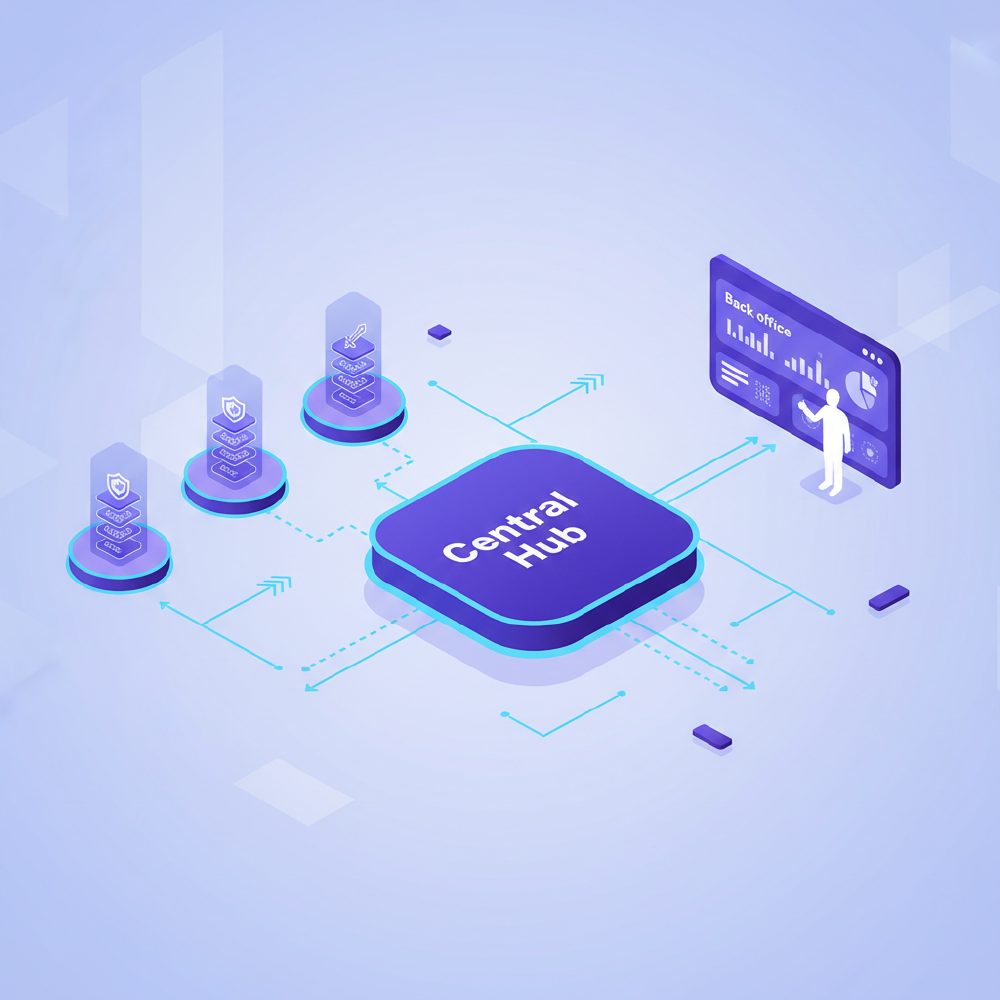
A casino aggregator is a B2B technology and commercial intermediary that licenses game content from multiple studios, certifies it across jurisdictions, and re-distributes it to operators through a single, standardised API. Instead of integrating each studio separately, an operator connects once and gets access to the aggregator's full catalogue — typically hundreds to several thousand titles.
The cleanest analogy is a content distributor in traditional media: the aggregator holds the upstream licensing relationships, handles the technical plumbing (wallet integration, RNG certification, jurisdiction whitelisting), and charges the operator a fee for that convenience. The operator never signs directly with Pragmatic Play, Play'n GO or Hacksaw Gaming — the aggregator does, and the operator accesses those games through the aggregator's layer.
Technically, aggregators expose a single REST or proprietary API endpoint. Behind that endpoint they manage game launch URLs, session tokens, bet and win callbacks, and — critically — free-round and bonus tooling that varies by studio. Most mature aggregators also provide a back-office dashboard for game configuration, jurisdiction blocking, RTP variant selection and reporting. This is the operational layer operators underestimate: the quality of that back-office determines how much manual work your team does post-launch.
The aggregator model emerged in the mid-2010s as studio fragmentation exploded. By 2018 there were already 300+ active studios; today that number is north of 700. No operator team can maintain 700 bilateral integrations. Aggregators solved that problem — but they introduced their own: an additional commercial layer, contractual dependencies, and the occasional situation where a studio's content is available on a competitor's platform before yours because of aggregator exclusivity windows.
How does a casino aggregator actually work under the hood?
The aggregator sits between your platform and the game studios. When a player launches a slot, your platform calls the aggregator's API with a session token; the aggregator authenticates the session, calls the studio's game server, and proxies bet and win transactions back through your wallet. The operator sees a single integration; the aggregator handles all studio-specific protocol differences.
The wallet integration is where most launch delays happen. Aggregators use either a transfer wallet model (funds move between operator wallet and a game wallet at session start/end) or a seamless wallet model (every bet/win hits your wallet in real time). Seamless is operationally cleaner and better for bonus accounting, but it demands lower latency from your platform. If your infrastructure is cloud-hosted in Frankfurt and the aggregator's game servers are in Singapore, you will see round-trip latency that affects player experience. Ask every aggregator candidate where their game-server nodes are located relative to your primary player market.
Certification and jurisdiction management is the other invisible layer. A game certified for MGA is not automatically available in UKGC or New Jersey. The aggregator maintains a matrix of which titles are certified in which jurisdictions, and their API typically lets you whitelist or blacklist content by licence. This sounds straightforward; in practice, a new studio joining the aggregator's roster may take 3–6 months to get certified in your jurisdiction even after the technical integration is live. Operators who launched in Ontario in 2022–2023 ran into this repeatedly — games available on the aggregator globally were locked out of the iGaming Ontario framework until AGCO certification completed.
Free rounds (free spins) are a separate protocol headache. Studios implement bonus rounds differently — some use a dedicated free-round API, others use a campaign management system, others require manual configuration per bonus type. A good aggregator abstracts this into a unified bonus API. A mediocre one gives you a patchwork where 60% of studios support automated free rounds and the rest need manual workarounds. Before signing, ask specifically for the free-round coverage percentage across the studios you care about.
What does a casino aggregator cost — and what are the real numbers?
Aggregator fees typically come in two layers: a revenue share on GGR (commonly 2–5%, though this varies widely by aggregator and negotiated studio rates) plus a monthly platform or API fee ranging from roughly €2,000 to €15,000/month depending on the provider and your scale. Setup and integration fees of €5,000–€30,000 are common. These figures are indicative — exact terms depend heavily on your volume and leverage.
The revenue share is the number that compounds painfully at scale. If a studio's standard RTP payout to operators is, say, 94% of GGR returned to the studio as content fee, and the aggregator takes an additional 3% on top of that, your effective content cost is higher than a direct deal where you'd pay only the studio's rate. At €100k GGR/month, 3% is €3k — manageable. At €1M/month, that's €30k/month you're paying for the convenience of not managing direct integrations. This is why operators with serious volume almost always run a hybrid model: aggregator for the long tail, direct deals for the top 10 titles driving 60–70% of their slots GGR.
Setup fees cover technical integration, certification of your platform with the aggregator, and onboarding into their back-office. Some aggregators waive setup fees for larger commitments or if you're already on a platform they have a native integration with — SoftSwiss's Game Aggregator, for instance, integrates natively with the SoftSwiss casino platform, which eliminates a separate integration project entirely. EveryMatrix's CasinoEngine similarly has pre-built connectors for operators on their platform stack.
Hidden costs operators miss: minimum monthly guarantees (some aggregators require a minimum GGR commitment or charge a floor fee regardless of activity), certification costs in regulated markets (which may be passed through to the operator), and currency conversion fees if your player accounts are in a currency the aggregator doesn't natively settle in. Always request a full commercial term sheet, not just the headline revenue share number, and model it against your projected GGR mix before signing.
| Cost Component | Typical Range | Notes |
|---|---|---|
| Setup / integration fee | €5,000 – €30,000 | Often negotiable or waived for larger commitments |
| Monthly platform / API fee | €2,000 – €15,000/mo | Varies by aggregator tier and game count |
| Revenue share on GGR | 2% – 5% | On top of studio content fees; negotiate at volume |
| Minimum monthly guarantee | €0 – €10,000/mo | Some aggregators impose a floor — flag this early |
| Certification pass-through | Variable | Regulated markets (UKGC, MGA) may add per-title costs |
| Direct studio deal (comparison) | 0% aggregator layer | Studio rate only — but requires individual integration |
Which casino aggregators lead the market in 2026?
The aggregators with the broadest studio rosters, strongest regulated-market certification coverage, and most mature bonus tooling in 2026 are SoftSwiss Game Aggregator, EveryMatrix CasinoEngine, Relax Gaming (also a studio), Slotegrator, and Pariplay (Aspire Global). Each has a different commercial model and jurisdictional strength — picking based on raw game count alone is a mistake.
SoftSwiss Game Aggregator is the default choice for many white-label and turnkey operators because it integrates natively with the SoftSwiss casino platform and carries 200+ studios including Pragmatic Play, Evolution, BGaming and Hacksaw Gaming. Its Curaçao and MGA certification coverage is solid, and the back-office is genuinely operator-friendly. The trade-off: if you're not on the SoftSwiss platform, the standalone integration is more involved, and their commercial terms favour operators already within the SoftSwiss ecosystem.
EveryMatrix CasinoEngine is the aggregator arm of EveryMatrix's broader platform stack, with 10,000+ games from 170+ studios as of late 2024. Their jurisdictional coverage is strong in Europe — MGA, UKGC, Sweden, Denmark, Romania — and they've been aggressive in certifying for regulated US states. If your roadmap includes North America, EveryMatrix has done more groundwork there than most aggregators. Relax Gaming occupies an interesting dual position: it's both a studio producing its own content (Money Train series, etc.) and an aggregator distributing third-party studios through its Silver Bullet and Powered By Relax programmes. Operators who want curated, quality-over-quantity rosters find Relax compelling, though their catalogue is smaller than SoftSwiss or EveryMatrix.
Slotegrator targets the emerging-market and crypto-casino segment — their Curaçao and offshore certification work is strong, and they're frequently the aggregator of choice for operators launching in LATAM or Africa where MGA-certified content isn't always required. Pariplay (now part of Aspire Global / Everi) has deep roots in the UK and European regulated markets and offers a Fusion aggregation platform with a solid bonus engine. For operators targeting the UK specifically, Pariplay's UKGC relationships and compliance tooling are worth examining. Beyond these five, there are aggregators like Hub88, Salsa Technology (strong in LATAM), and Digitain that serve specific regional or platform niches.
| Aggregator | Approx. Game Count | Jurisdictional Strength | Best Fit For |
|---|---|---|---|
| SoftSwiss Game Aggregator | 15,000+ titles | Curaçao, MGA, UKGC | SoftSwiss platform operators, crypto casinos |
| EveryMatrix CasinoEngine | 10,000+ titles | MGA, UKGC, US states, Nordics | Regulated EU + US market entrants |
| Relax Gaming | 4,000+ titles (curated) | MGA, UKGC, Sweden | Quality-focused, branded content strategy |
| Slotegrator | 10,000+ titles | Curaçao, offshore, LATAM | Emerging markets, crypto operators |
| Pariplay (Fusion) | 20,000+ titles | UKGC, MGA, Romania | UK/EU regulated operators |
| Hub88 | 8,000+ titles | MGA, Curaçao | Mid-tier operators, Asia-Pacific focus |
| Salsa Technology | 5,000+ titles | LATAM regulators (SEGOB, Coljuegos) | LATAM-first operators |
What licences does a casino aggregator need — and does that cover the operator?
No — an aggregator's B2B supplier or distribution licence does not replace your operator licence. The aggregator must hold a valid B2B licence (or distribution approval) in each jurisdiction where it distributes content. You, as the operator, must hold a separate B2C operator licence. These are distinct legal entities with distinct regulatory obligations, and confusing them is a costly mistake.
In Curaçao, under the new Gaming Control Board framework that replaced the master licence system in 2023–2024, aggregators need to register as B2B gaming suppliers separately from operators. The old Curaçao master licence structure (where a sub-licence from a master holder covered both supply and operation) is being phased out. If you're evaluating an aggregator for a Curaçao-based operation, confirm they have — or are in the process of obtaining — a valid supplier registration under the new GCB framework, not just a legacy master-licence relationship.
In MGA-regulated Malta, aggregators must hold a B2B Critical Gaming Supply licence. Studios distributed through the aggregator must themselves be certified for Malta, or the aggregator must hold a distribution agreement that covers them. When you're reviewing an aggregator's MGA-certified game list, check whether the certification sits with the studio or with the aggregator as distributor — it affects what happens if the aggregator relationship ends. Under UKGC, the Gambling Commission requires that any software supplier in the chain holds a Remote Operating Licence or is a certified software supplier. EveryMatrix and Pariplay both hold UKGC licences; if you're operating in Great Britain, your aggregator must be on the UKGC's approved supplier list.
In US regulated states — New Jersey, Pennsylvania, Michigan, Connecticut — every software supplier, including aggregators, must undergo a separate state-level approval process. This is time-consuming (12–24 months in some states) and expensive. Most aggregators operating in the US have done this work for the major states, but if you're targeting a newly regulated state, confirm the aggregator's approval status before building your launch timeline around their catalogue. Assuming a game available in New Jersey is automatically available in a new state is a mistake I've seen operators make repeatedly.
Casino aggregator vs. direct studio deal — which is right for your operation?
For most operators at launch, an aggregator is the right call: faster access to a broad catalogue, single integration, and managed certification. Direct studio deals make sense for your highest-volume titles once you have the GGR data to justify the integration cost and the commercial leverage to negotiate better rates. Running both in parallel is the mature operator model.
The break-even analysis is straightforward in principle, messier in practice. A direct integration with Pragmatic Play costs real money — technical integration work, legal fees, certification, and account management overhead — but eliminates the aggregator's revenue share on every bet through that studio. If Pragmatic Play represents 40% of your slots GGR and you're paying an aggregator 3% on that volume, the direct deal pays for itself quickly at scale. The complication is that studios like Pragmatic Play, Evolution, and Play'n GO have minimum GGR thresholds for direct deals — often in the range of €500k–€1M+ GGR per month — and will direct smaller operators back to aggregators regardless of preference.
There's also a negotiating reality: aggregators have volume leverage with studios that individual operators don't. The rate an aggregator negotiates with a studio is often better than what a mid-tier operator could get directly. So the aggregator layer isn't purely a cost — it's partly buying into negotiated rates you couldn't access alone. This calculus shifts as you grow. By the time you're at €2M+ GGR/month, you have enough leverage to negotiate direct studio deals that beat the aggregated rate, and the integration cost is easily justified.
A practical framework: launch on an aggregator, track your GGR by studio monthly, and flag any studio exceeding 10% of your total slots GGR as a direct-deal candidate. Run the numbers at 6 months. Most operators find 3–5 studios worth pursuing directly within the first year of meaningful volume. Keep the aggregator for the long tail — the 200 studios driving the remaining 30–40% of your catalogue engagement — because the economics there never justify direct integration.
| Factor | Via Aggregator | Direct Studio Deal |
|---|---|---|
| Integration time | 2–8 weeks (single API) | 2–6 months per studio |
| Commercial cost | Studio rate + aggregator rev share (2–5%) | Studio rate only |
| Minimum volume requirement | None (most aggregators) | Typically €500k–€1M+ GGR/mo |
| Certification management | Aggregator handles | Operator/studio manage jointly |
| Bonus API coverage | Standardised (quality varies) | Studio-native, often more complete |
| Dependency risk | Single point of failure for all studios | Studio-specific; isolated risk |
| Best for | Launch phase, long-tail content | Top 5–10 studios at scale |
What should operators look for in a casino content aggregator contract?
The five contract clauses that bite operators hardest are: revenue share escalators tied to volume tiers, minimum monthly guarantees, termination notice periods (often 90–180 days), studio exclusivity windows that delay new content, and IP ownership of any custom configurations you build in their back-office. Read these before signing — not after.
Revenue share tiers sound operator-friendly ('your rate drops as volume grows') but the tier thresholds are often set at levels you won't hit for 18–24 months. Meanwhile, the entry-tier rate applies to 100% of your early revenue. Push for more aggressive early tiers, or a flat rate that's competitive from day one. Minimum monthly guarantees are the other budget killer — some aggregators charge a floor fee (say €5,000/month) regardless of your actual GGR. If your launch ramps slowly, you're paying for capacity you're not using. Negotiate a grace period of 3–6 months before minimums kick in.
Termination notice periods matter more than operators realise at signing. A 180-day notice period means that if you want to switch aggregators or go direct with studios, you're locked in for six months. In a fast-moving market, that's a meaningful constraint. Try to negotiate 60–90 days, and ensure the contract specifies what happens to your player session data and game history on termination — you need that data for regulatory compliance, and it shouldn't sit solely on the aggregator's infrastructure.
Studio exclusivity windows are a less-discussed issue. Some aggregators have exclusive distribution windows for new studio content — meaning a new studio's titles appear on their platform before any other aggregator. This sounds like a benefit, but the flip side is that your competitors on the same aggregator get the same content simultaneously, eliminating any differentiation. If you're building a content-differentiated brand, ask specifically about exclusivity arrangements and whether any studios on the roster are exclusive to this aggregator permanently. Finally, check who owns any custom game configurations, bonus templates or lobby configurations you build in the aggregator's back-office. Some contracts treat these as the aggregator's IP. That's a problem if you ever migrate.
How does an iGaming solution aggregator differ from a casino aggregator?
The term 'iGaming solution aggregator' is broader — it typically refers to a platform vendor that aggregates not just casino game content but also sportsbook feeds, payment gateways, CRM tools and compliance modules into a single integrated stack. A casino aggregator is specifically the content distribution layer. The distinction matters when evaluating vendors who use both terms interchangeably in their sales materials.
Companies like EveryMatrix, SoftSwiss and Digitain market themselves as iGaming solution aggregators because they bundle a casino aggregator (game content), a sportsbook (BetConstruct, SBTech, or proprietary), a payment layer, and a back-office into one commercial relationship. This bundling is operationally convenient — one contract, one integration, one support team — but it creates vendor lock-in that's expensive to unwind. When every layer of your stack comes from one vendor, your negotiating leverage on any individual component is minimal.
A pure-play casino aggregator like Relax Gaming or Hub88 does only the content distribution piece. You bring your own platform, your own payment stack, and your own sportsbook. This modular approach gives you more control and often better commercial terms on each component, but it requires more integration work and more vendor management. For a first-time operator, the bundled iGaming solution aggregator is usually the pragmatic choice. For an operator with a tech team and existing platform infrastructure, the modular approach is worth the overhead.
When a vendor pitches you as an 'iGaming solution aggregator,' ask them to itemise which components are proprietary and which are third-party integrations they're reselling. A sportsbook feed resold through an aggregator at a markup is not the same as a proprietary sportsbook. The distinction affects your commercial terms, your ability to negotiate directly with the underlying provider, and your exposure if the aggregator's relationship with that third party breaks down.
How long does it take to integrate a casino aggregator?
A straightforward aggregator integration on a modern platform takes 4–10 weeks for technical work, assuming your platform has a documented API and your team has casino integration experience. Add 2–4 weeks for QA and UAT. Regulated-market certification of your platform with the aggregator can add another 4–12 weeks on top. Budget 3–4 months end-to-end for a clean integration in a regulated market.
The technical integration itself — connecting your wallet to the aggregator's API, implementing game launch flows, handling bet/win callbacks, and wiring up the back-office — is the fastest part if both sides are competent. Most mature aggregators provide a sandbox environment, detailed API documentation, and an integration engineer assigned to your project. Where things slow down is on your side: incomplete wallet API documentation, back-office systems that weren't built with casino integration in mind, or a development team that's new to gaming protocols. I've seen integrations drag to 6 months because the operator's platform team was simultaneously building other features and deprioritised the aggregator work.
Certification timelines are the less controllable variable. If you're launching on Curaçao, the certification requirements are relatively light — the aggregator typically needs to verify your licence status and run a basic platform compliance check, which can complete in 2–4 weeks. For MGA, the process is more rigorous: your platform needs to be audited against MGA's technical standards, game RNGs need to be certified, and the aggregator needs to confirm your operator licence is in good standing. Budget 8–12 weeks for MGA certification if it's your first regulated-market launch. For UKGC, add another layer: UKGC requires software supplier approvals and may conduct its own technical audit.
A practical tip: run your integration in parallel with your licensing process, not sequentially. The licence application and the platform integration can proceed simultaneously. Operators who wait for the licence before starting the integration routinely add 3–6 months to their launch timeline for no good reason. Your aggregator can provision a sandbox environment and begin integration work before your licence is issued — just ensure your contract with the aggregator includes a provision for delayed go-live without penalty if your licence takes longer than expected.
What are the biggest risks of relying on a single casino aggregator?
Single-aggregator dependency creates three material risks: concentration risk if the aggregator loses a key studio relationship or its own licence, performance risk if their infrastructure degrades and takes your entire catalogue offline, and commercial risk if they raise rates knowing you have no quick alternative. Diversifying across two aggregators — or running one aggregator plus select direct deals — is the standard risk mitigation at scale.
Studio relationship breakdowns are more common than the industry publicly acknowledges. Aggregators and studios renegotiate commercial terms regularly, and occasionally those negotiations fail. When they do, the studio's content can be pulled from the aggregator's platform with relatively short notice — sometimes 30–60 days. If that studio represents a meaningful share of your GGR and you have no direct relationship or alternative aggregator carrying them, you have a gap in your catalogue that players notice. The 2022–2023 period saw several notable studio-aggregator disputes that affected operators downstream. Maintaining at least a backup aggregator relationship — even a dormant one with a signed contract — is cheap insurance.
Infrastructure performance is the other underrated risk. Your entire slots catalogue runs through the aggregator's API. If their infrastructure goes down, every game in your casino is unavailable. Most aggregators publish SLA commitments of 99.9% uptime, but the gap between 99.9% and 100% is 8.7 hours of downtime per year — and in practice, incidents cluster around peak traffic periods like major sporting events or promotional campaigns. Ask any aggregator candidate for their actual incident history over the past 12 months, not just their SLA commitment. The honest ones will share it.
Commercial leverage erosion is the slow-burn risk. Once your platform, bonus engine, and operations team are built around one aggregator's tooling, switching costs are high. The aggregator knows this. Rate renegotiations at renewal tend to be less operator-friendly than the initial deal. The mitigation is to avoid deep technical dependencies on aggregator-proprietary features — use standard API patterns where possible, keep your game configuration data exportable, and maintain relationships with alternative aggregators even if you're not actively using them. This gives you credible walk-away leverage at renewal time.
Can a crypto or offshore casino use a casino aggregator?
Yes — and most do. Crypto casinos and offshore operators (typically Curaçao or Anjouan licensed) are among the heaviest users of aggregators because they need broad catalogues fast and often lack the commercial relationships to go direct with major studios. The key constraint is that some studios restrict their content from unlicensed or crypto-only operators, so your aggregator's roster for offshore/crypto use cases will be narrower than for MGA operators.
Curaçao-licensed operators have access to a wide aggregator market — SoftSwiss, Slotegrator, Hub88 and several smaller aggregators specifically serve this segment. The studio roster available under Curaçao is substantial, though it excludes studios that operate exclusively in stricter regulated markets (some Scandinavian studios, for example, restrict their content to MGA and UKGC operators only). For a crypto casino launching on Curaçao in 2025–2026, a realistic catalogue through a good aggregator is 3,000–8,000 titles, which is more than sufficient for a competitive launch.
Anjouan (Comoros) is an emerging offshore licensing jurisdiction that has attracted operators since 2022 as an alternative to Curaçao. Aggregator support for Anjouan-licensed operators is still developing — some aggregators treat Anjouan the same as Curaçao for content distribution purposes, others require additional due diligence. If you're licensing in Anjouan, confirm explicitly with your target aggregator that they will distribute content to operators under that licence before you commit to the licensing process.
Crypto-specific considerations: if your casino accepts cryptocurrency natively (BTC, ETH, stablecoins) rather than converting to fiat, you need to confirm the aggregator's wallet integration supports crypto settlement or that your platform handles the conversion transparently before the bet/win callbacks. Most aggregators settle in EUR or USD — the crypto conversion layer sits on your platform side. This is an integration detail that sounds minor but has caused accounting and bonus calculation headaches for operators who didn't model it correctly before launch.





Comments
No comments yet, be the first.