White Label Casino Cost Breakdown 2026: Setup Fees, Monthly Retainers and Revenue Share Compared
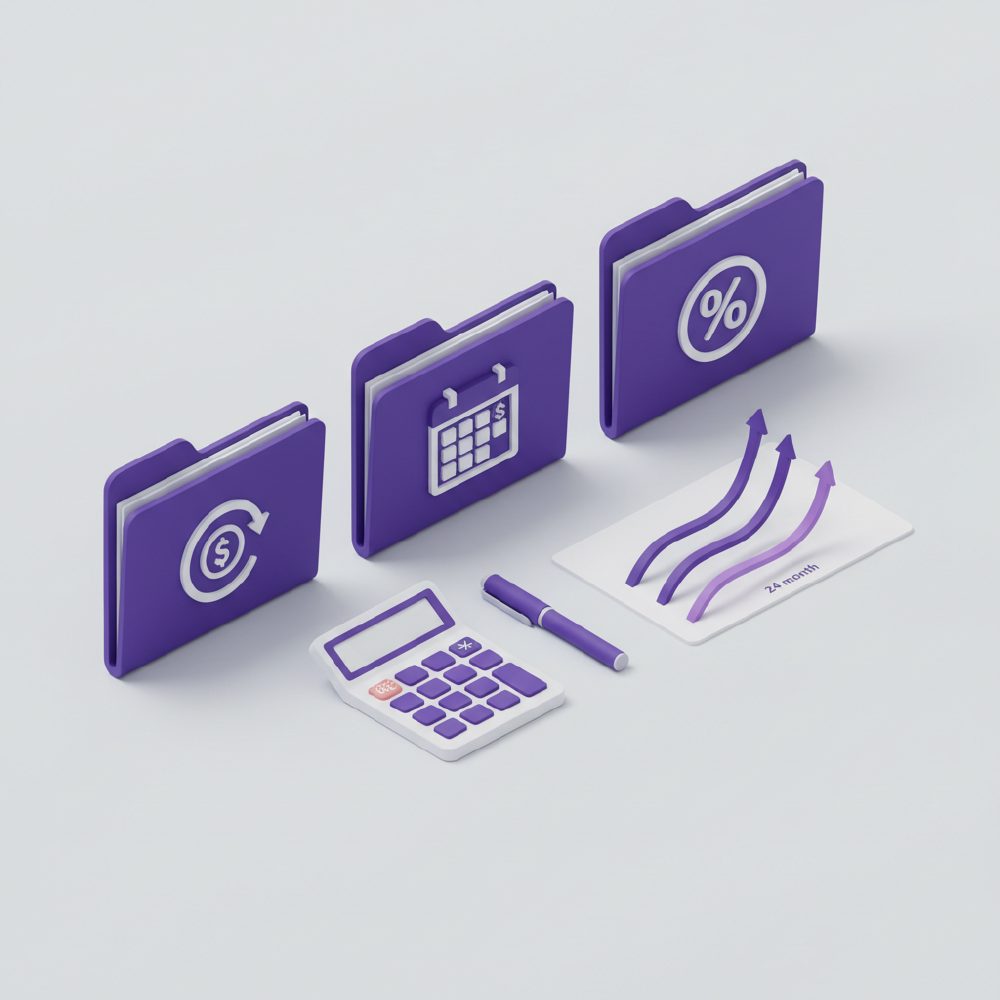
What are the three main casino platform pricing models and how do they differ?
Casino platforms charge operators through three structures: a one-time setup fee, a recurring monthly retainer (SaaS-style), or a revenue share on gross gaming revenue. Most vendors blend at least two of these. The core difference is who absorbs the risk of slow growth, setup fees front-load the cost onto you, while revenue share front-loads it onto the vendor.
Setup fees cover the cost of deploying the platform, configuring your brand, integrating payment methods, and onboarding your game library. They are essentially a build-and-launch charge. Once paid, you own the configured instance (within the vendor's licensing terms) and your ongoing cost is separate. This model suits operators who have capital, want lower long-term costs, and are confident in their growth projections.
Monthly retainers work more like software subscriptions. You pay a fixed fee regardless of performance, which the vendor uses to justify ongoing hosting, compliance updates, technical support and sometimes account management. The appeal is predictability, you can model your P&L without a variable cost line. The trap is that a flat fee becomes proportionally expensive during slow months and cheap during good ones, so it rarely aligns incentives between you and the supplier.
Revenue share is the model vendors love to lead with in sales calls because it sounds low-risk to an operator who hasn't done the math yet. The vendor takes a percentage of your GGR, typically 15 to 45 percent depending on the provider, your projected volume, and what's included in the deal. At low GGR, this is genuinely cheaper than a high setup fee. At meaningful scale, it becomes your single largest operating cost. Some operators running $200,000+ per month in GGR are still on early-stage revenue share contracts because renegotiating mid-contract is harder than it sounds.
The practical reality is that most platforms use a hybrid. SoftSwiss, for example, typically charges a setup fee plus a revenue share that decreases as volume increases. EveryMatrix structures its deals similarly. Pure SaaS monthly models are more common in the US market (where state-licensed B2B suppliers like GAN or Kambi operate on fixed licensing fees) or with newer cloud-native platforms targeting crypto operators. Know which blend you're looking at before you compare quotes.
| Model | Upfront Cost | Ongoing Cost | Risk Bearer | Best For |
|---|---|---|---|---|
| Setup Fee Only | $15K-$300K+ | Low or none | Operator | Well-funded launches, long-term operators |
| Monthly Retainer | $0-$20K setup | $3K-$15K/month | Operator (fixed) | Predictable-budget operators, US licensed markets |
| Revenue Share | $0-$30K setup | 15-45% of GGR | Vendor (partially) | Early-stage, capital-light launches |
| Hybrid (Setup + RevShare) | $10K-$60K | 10-30% of GGR (sliding) | Shared | Most mid-tier white-label operators |
| Custom Turnkey Build | $100K-$500K+ | Maintenance + hosting | Operator | Established groups, proprietary IP goals |
What does a white label casino setup fee actually include in 2026?
A white label setup fee covers platform configuration, brand theming, game library activation, payment gateway integration and go-live QA. What it does not typically cover: your gaming license, payment processing merchant accounts, marketing, or ongoing technical changes after launch. Vendors rarely volunteer that list of exclusions upfront.
The setup fee range is wide for a reason. At the lower end ($15,000 to $30,000), you're getting a templated deployment, your logo on a shared infrastructure, a standard game lobby from the vendor's aggregated library, and two or three payment methods already wired up. Platforms like Turnkey Casino or some of the smaller Curaçao-focused white-label shops operate in this tier. Fast to launch, limited flexibility.
Mid-range setups ($30,000 to $80,000) typically include custom UI/UX work, a broader payment stack (crypto plus card plus local e-wallets), dedicated account management during onboarding, and sometimes a sub-license under the vendor's Curaçao or MGA master license. This is where most serious operators land. SoftSwiss's setup fees for new operators have historically sat in this range, though exact figures depend on scope and negotiation leverage.
Above $80,000 you're moving toward turnkey territory or bespoke builds. Here the vendor is essentially building you a semi-custom product: proprietary back-office configurations, direct game studio integrations rather than aggregator feeds, multi-currency accounting, and compliance modules for specific jurisdictions. The EveryMatrix CasinoEngine at enterprise tier, or a full Softgamings build, can reach $150,000 to $300,000 before you factor in license costs.
One thing operators consistently miss: setup fees are usually non-refundable, and the scope of work attached to them is often vague. Get a detailed Statement of Work before you wire anything. Specifically confirm whether the fee includes the gaming license sub-license or if that's billed separately, whether payment gateway integration covers your target markets (a European card processor won't help you in LATAM), and what the handover process looks like. I've seen operators pay a $40,000 setup fee and then discover their 'included' payment integration was Stripe, which doesn't process gambling transactions.
How does casino revenue share actually work and what percentage should you expect?
Casino revenue share is calculated as a percentage of your gross gaming revenue, total bets minus winnings, before bonuses and operational costs. Vendor rates range from 15 percent for high-volume committed operators to 45 percent for small new launches. The percentage is applied monthly, making it a variable cost that scales directly with your success.
GGR is the standard base, but read your contract carefully. Some vendors calculate their share on NGR (net gaming revenue, after bonuses and chargebacks), which is more operator-friendly. Others use GGR before bonus deductions, which means you're paying the vendor a share of revenue you never actually kept. On a casino running $100,000 in GGR with $20,000 in bonus costs, the difference between a 30 percent GGR share and a 30 percent NGR share is $6,000 per month. That adds up.
Sliding-scale structures are worth pushing for in any negotiation. A typical structure might look like: 35 percent on GGR up to $50,000/month, dropping to 25 percent between $50,000 and $200,000, and 18 percent above that. Providers like SoftSwiss and Digitain will entertain these conversations if you can demonstrate credible volume projections or if you're willing to commit to a minimum term. The vendor's incentive is locking in a long-term relationship; use that as leverage.
The compounding math is what kills operators who don't model it. Say you're at $300,000 GGR per month and paying 30 percent revshare. That's $90,000 going to the platform vendor every month, $1,080,000 per year. Add your game content fees (typically 10 to 18 percent of GGR paid to aggregators like Relax Gaming or SBTech), your payment processing costs (2 to 5 percent of deposits), your affiliate commissions, and your licensing fees, and you can be paying out 60 to 70 percent of GGR before you've covered a single staff salary or marketing spend.
Revenue share also creates a perverse incentive problem. The vendor profits whether you're profitable or not, as long as players are depositing. This means their support and optimization priorities don't always align with yours. If your conversion rate is poor, that's your problem. If your payment acceptance rate is low, that costs you more than it costs them. Keep that dynamic in mind when evaluating how much operational support a revshare vendor is actually motivated to provide.
| Operator Type | Typical GGR RevShare Range | Notes |
|---|---|---|
| New launch, no track record | 35-45% | Vendor absorbs setup risk; operator pays heavily at scale |
| Established brand, $50K+ monthly GGR | 25-35% | Negotiable with volume commitments |
| High-volume operator, $200K+ monthly GGR | 15-25% | Sliding scale or fixed lower rate achievable |
| White-label with own sub-license | 10-20% | Operator carries more compliance cost, less revshare |
| Crypto-native platform (e.g., Softswiss Crypto) | 20-35% | Varies widely; some pure SaaS options available |
Setup fee vs revenue share: which is cheaper over 24 months?
At low GGR (under $30,000 per month), revenue share almost always costs less than a high setup fee over 24 months. Once you cross $100,000 per month in GGR, a higher upfront setup fee with lower ongoing revshare almost always wins. The crossover point depends on your specific rates, but it typically hits between months 8 and 14 for a growing operation.
Run the math with three scenarios before you sign anything. Model a conservative case (GGR grows slowly to $50K/month by month 24), a base case ($150K/month), and an optimistic case ($400K/month). For each scenario, calculate total platform cost under a setup-fee-heavy deal versus a low-setup-high-revshare deal. Most operators only model the base case, which is exactly what the vendor's sales deck is optimized for.
Here's a concrete example. Option A: $60,000 setup fee, 15 percent revshare. Option B: $10,000 setup fee, 35 percent revshare. At $100,000 GGR per month, Option A costs $15,000/month in revshare; Option B costs $35,000/month. The $50,000 setup fee difference is recovered in month 2.5 under Option A. By month 24, Option A saves you $480,000 minus the setup fee difference, net saving of $430,000. That's not a rounding error.
The counterargument for revenue share is capital preservation. If you're launching with $200,000 total and a $60,000 setup fee consumes 30 percent of your runway, you may not have enough left for marketing, bonusing and player acquisition, which is where most early-stage casinos actually fail. A lower setup fee keeps cash in the business during the high-spend acquisition phase. This is a legitimate trade-off, not a vendor trick.
My recommendation: if you have the capital, negotiate the lowest possible revshare by paying a higher setup fee, then treat the setup fee as a capital investment with a defined payback period. If capital is tight, take the low-setup revshare deal but build a renegotiation clause into the contract at a defined GGR milestone, something like 'at $75,000 monthly GGR, operator may renegotiate revshare to no higher than X percent.' Vendors will push back on this, but it's a reasonable ask and a good signal about whether they're a long-term partner or just optimizing for their own margin.
What are the hidden costs operators miss when comparing white label casino pricing?
The five costs vendors consistently understate are: gaming license fees, game content aggregator fees on top of platform revshare, payment processing and chargeback reserves, KYC and AML compliance tooling, and the cost of player support staffing. These can easily add 25 to 40 percentage points on top of whatever GGR percentage your platform contract shows.
Gaming licenses are the most predictable hidden cost, but operators still underestimate them. A Curaçao Gaming Authority (CGA) license under the new 2023 framework costs around $17,000 to $25,000 in application fees plus annual renewal fees, and you'll need a local representative and a compliant AML policy. An MGA license runs $25,000 in application fees with a $25,000 annual compliance contribution, plus the cost of a Malta-based compliance officer. A Coljuegos license in Colombia or a SEGOB permit in Mexico involves local corporate structures, local bank accounts, and multi-year approval timelines that can cost $150,000 to $500,000 in total setup. None of that appears in a platform vendor's pricing sheet.
Game content fees are the second surprise. Most white-label platforms give you access to a game library via an aggregator like SoftSwiss Game Aggregator, Relax Gaming, or EveryMatrix's Spribe integration. The platform's revshare covers the platform, not the game content. You'll typically pay 10 to 18 percent of GGR separately to the aggregator or studios, depending on your deal. That means a 30 percent platform revshare plus 15 percent game content fee is already 45 percent of GGR gone before you process a single payment.
Payment processing is another compounding cost. Card processing for gambling merchants runs 3 to 6 percent of deposit volume (not GGR, deposit volume, which is higher). Crypto processing through providers like CoinsPaid or B2BinPay is cheaper at 0.5 to 1.5 percent but requires wallet infrastructure. Chargeback reserves, where processors hold 5 to 10 percent of your monthly volume for 90 to 180 days, can lock up meaningful working capital. A casino processing $500,000 in monthly deposits might have $50,000 to $100,000 in rolling reserves that are unavailable to the business.
KYC and AML tooling rarely comes bundled at a level that satisfies regulators. Platforms include basic identity verification, but serious compliance requires third-party providers like Sumsub, Onfido or Jumio for document verification, plus transaction monitoring tools. Budget $1,000 to $5,000 per month depending on verification volume. Player support staffing is the final underestimated line: even a lean operation needs 24/7 live chat coverage, and outsourced support for gambling operators runs $8,000 to $20,000 per month for a basic team. Add it all up before you build your P&L.
How do white label costs compare to turnkey and custom build costs?
White-label is the fastest and cheapest path to launch: $15,000 to $80,000 setup, live in 4 to 12 weeks. Turnkey solutions cost $80,000 to $300,000 with 3 to 6 month timelines. Custom builds start at $300,000 and regularly exceed $1 million, with 12 to 24 month development cycles. The trade-off is control, differentiation and long-term cost structure.
White-label platforms (SoftSwiss, EveryMatrix, Digitain, SBC, Softgamings) deploy fast because you're using shared infrastructure. Your brand sits on top of a pre-built engine. This limits how much you can customize the player experience, the back-office logic, or the payment routing. For most operators entering a market for the first time, that's fine. You're validating a market, not building a proprietary product. The operational risk is that you're dependent on the vendor for uptime, compliance updates, and game library decisions.
Turnkey solutions give you more control over the front end and sometimes the back office, but you're still using the vendor's core engine. The higher cost reflects custom development work, dedicated infrastructure, and often a more hands-on integration with your chosen payment providers. Operators targeting specific regulated markets (say, Peru's MINCETUR or Argentina's provincial regulators) often need a turnkey approach because the compliance requirements are too specific for a generic white-label template.
Custom builds make sense for operators who want to own their technology, build proprietary features (a unique bonus engine, a custom live dealer integration, a branded game), or who are building a platform business rather than just an operator business. The economics only work if you're planning to run at significant scale or license the technology to other operators. Most founders who choose custom builds underestimate the ongoing engineering cost: a team of 8 to 15 developers, QA engineers, and DevOps staff to maintain a live gambling platform is a $1.5 million to $4 million annual payroll commitment, before any product development.
The honest answer for most operators reading this: start white-label, negotiate hard on the revshare, and plan your exit from the vendor's platform at month 18 to 24 if volume justifies it. Treat the white-label period as market validation, not a permanent architecture decision. Several successful operators have used SoftSwiss or EveryMatrix to prove their market, then migrated to a turnkey or custom build once they had the cash flow and the data to justify the investment.
| Factor | White Label | Turnkey | Custom Build |
|---|---|---|---|
| Setup Cost | $15K-$80K | $80K-$300K | $300K-$1M+ |
| Time to Launch | 4-12 weeks | 3-6 months | 12-24 months |
| Ongoing Platform Cost | 15-45% GGR revshare | 10-25% GGR or flat fee | Hosting + team salaries |
| Customization Level | Low-Medium | Medium-High | Full |
| Vendor Dependency | High | Medium | None (post-build) |
| Suitable GGR Range | $0-$500K/month | $100K-$2M/month | $500K+/month or platform play |
| Example Providers | SoftSwiss, EveryMatrix, Digitain | Softgamings, BetConstruct | In-house or bespoke agency |
How do casino platform costs differ across jurisdictions like Curaçao, MGA and US states?
Jurisdiction shapes your total cost more than any single platform fee. A Curaçao sub-license launch can be operational for $80,000 to $150,000 all-in. An MGA-licensed operation requires $300,000 to $500,000 before you acquire a single player. A US state license (New Jersey, Pennsylvania, Michigan) requires a partnership with a land-based licensee and multi-million dollar compliance infrastructure.
Curaçao remains the most accessible jurisdiction for new operators because the Gaming Authority's 2023 reform, while adding more compliance requirements than the old master-license model, still allows a relatively streamlined path. You can sub-license under a master license holder or apply directly. Total setup cost including platform, license, compliance tooling and basic operational infrastructure runs $80,000 to $200,000 depending on your platform choice and payment stack. The trade-off is banking access, Curaçao-licensed operators face significant friction with European and North American payment processors, which pushes many toward crypto-heavy payment stacks.
MGA licensing (Malta Gaming Authority) is the benchmark for European credibility. The license itself costs around €25,000 in application fees with a €25,000 annual compliance contribution, but the real cost is the infrastructure: a Malta-based compliance officer, AML policy sign-off, certified RNG testing, and a technical audit of your platform. Budget $300,000 to $500,000 for the first year including all setup costs. The payoff is access to better payment processors, higher player trust in regulated European markets, and the ability to operate in several EU jurisdictions under MGA's framework.
US state markets are a different category entirely. New Jersey, Pennsylvania, Michigan and West Virginia require operators to partner with a licensed land-based entity (a 'skin' arrangement), and the platform must be certified by the state's gaming control board. The certification process alone can take 12 to 18 months and cost $200,000 to $500,000 in compliance and legal fees. Platform costs in this environment are typically structured as flat monthly licensing fees from B2B suppliers like GAN, Kambi or Scientific Games, rather than revshare, because the regulatory environment demands more transparent cost structures. Total first-year investment for a single US state launch rarely comes in under $2 million.
LATAM markets (Colombia via Coljuegos, Peru via MINCETUR, Mexico via SEGOB) sit between these extremes. Colombia is the most developed, with a structured online licensing regime, but the license fee is around $700,000 for a five-year term plus a local corporate presence. Peru's framework is newer and still evolving. Mexico's federal SEGOB permits are theoretically available but practically difficult for foreign operators. These markets reward operators who invest in local payment methods (PSE in Colombia, PagoEfectivo in Peru, SPEI in Mexico) and local customer support, which adds operational cost that Curaçao-focused operators often underestimate.
What negotiation leverage do operators have when discussing platform pricing?
Your leverage is volume commitments, exclusivity in a market, and the credibility of your team. Vendors will discount setup fees by 20 to 40 percent for operators who can demonstrate a real player acquisition plan, a funded marketing budget, or a track record in adjacent markets. Signing a longer contract term (24 to 36 months) also unlocks lower revshare rates.
The single most effective negotiation tactic I've seen operators use is competitive tension. Get quotes from three vendors simultaneously and let each one know you're comparing. SoftSwiss, EveryMatrix and Digitain all have sales teams with discount authority, and none of them wants to lose a deal to a competitor. A credible competing offer can move revshare down 5 to 10 percentage points or knock $10,000 to $20,000 off a setup fee. The key word is credible, vendors can tell when an operator is bluffing about competing offers.
Volume commitments are the other lever. If you can credibly commit to $100,000 in monthly GGR within 12 months (backed by a marketing budget and an acquisition plan), some vendors will offer a reduced revshare from day one rather than making you earn it through a sliding scale. You're essentially pre-paying for the lower rate with a contractual obligation. If you miss the volume target, the contract typically reverts to a higher rate or includes a minimum monthly fee. Read those clauses carefully.
Market exclusivity is underused. If you're entering a specific geography (say, the Brazilian market ahead of its formal regulation, or a Spanish-speaking LATAM country), some platform vendors will offer preferential pricing in exchange for exclusivity in that market. They get a reference customer and a foothold; you get a lower cost structure. This works best with mid-tier vendors who are actively expanding their geographic footprint.
One more thing: negotiate the exit clause as hard as you negotiate the entry price. If you decide to migrate your player base to a different platform at month 18, what does that cost? Can you export your player data? Who owns the player accounts? These questions are rarely asked in the excitement of a launch negotiation, and they become very expensive questions to answer after the fact. A vendor who won't give you a clean data export clause at signing is a vendor who's planning to use your player data as a lock-in mechanism.
How should operators model ROI across different casino pricing structures?
Model ROI by calculating total platform cost as a percentage of projected GGR across three scenarios (conservative, base, optimistic) over 24 months. Add all non-platform costs (license, payments, content, compliance, staff) to get true cost of revenue. A healthy online casino should target platform plus content costs below 35 percent of GGR by month 18.
Start with your GGR projection, not your deposit projection. GGR is what you keep after paying out winnings; it's typically 3 to 6 percent of total betting handle for slots-heavy casinos and 1 to 2 percent for sports betting. If your model shows $1 million in monthly deposits, you're likely looking at $40,000 to $80,000 in GGR, not $1 million. I've reviewed operator business plans that confused these two figures and built P&Ls that were off by an order of magnitude.
Layer your cost stack from the top. Platform revshare sits first because it's the largest and most variable line. Add game content fees (10 to 18 percent of GGR), payment processing (model it as a percentage of deposit volume, not GGR), affiliate commissions (typically 25 to 40 percent of NGR for CPA or revshare affiliates), and your fixed costs (license, compliance, support staff, hosting). What's left is your contribution margin before marketing spend.
A realistic target for a white-label operation at $150,000 GGR per month: platform revshare 25 percent ($37,500), game content 14 percent ($21,000), payment processing 3 percent of deposits (call it $15,000 on $500,000 deposits), affiliate costs 30 percent of NGR (variable). Fixed costs of $25,000 to $40,000 per month for compliance, support, and hosting. At this scale, you're looking at 60 to 70 percent of GGR consumed by cost of revenue before marketing. That leaves 30 to 40 percent for marketing and profit, which is workable but tight. This is why player lifetime value and retention are more important than acquisition volume in online casino economics.
The ROI model should also include a payback period calculation for your setup fee. If you paid $50,000 in setup fees and your contribution margin (GGR minus all variable costs) is $20,000 per month, your payback period is 2.5 months. That's excellent. If your contribution margin is $5,000 per month, your payback is 10 months and you need to be confident you'll still be operating at month 11. Build the payback period into your funding plan and make sure your runway covers it with a buffer.
What questions should operators ask platform vendors before signing a pricing contract?
Ask specifically about GGR versus NGR calculation, what triggers a minimum monthly fee, how the revshare changes if you migrate to your own license, what data export rights you have on exit, and whether game content fees are included or additional. These five questions surface the contract terms that create the most operator regret post-signing.
The GGR versus NGR question is non-negotiable. Get the vendor to specify in writing exactly how the revshare base is calculated: does it include or exclude bonus costs, chargebacks, voided bets, and jackpot contributions? A 30 percent revshare on GGR and a 30 percent revshare on NGR can differ by 8 to 12 percentage points in real terms for a bonus-heavy acquisition strategy. If the vendor says 'we'll define it in the contract,' that's fine, but review that definition with a lawyer before you sign.
Minimum monthly fees are the silent killer for operators who have a slow month. Many contracts include a clause that if your revshare payment falls below a minimum (say, $3,000 to $8,000 per month), you pay the minimum regardless. This protects the vendor's revenue floor. It's not inherently unreasonable, but you need to know the number and factor it into your cash flow model. A three-month slow period where you're paying $6,000 per month in minimum fees on near-zero GGR is a $18,000 drain that can destabilize an undercapitalized launch.
Ask about the license migration path explicitly. If you start on the vendor's sub-license and later obtain your own MGA or Curaçao license, does your revshare rate change? Some vendors reduce the rate (because they're no longer carrying your compliance risk), but others don't, and a few contracts actually penalize you for migrating off their license. Know this before you sign because it affects your long-term cost trajectory significantly.
Finally, ask for three reference customers at a similar scale to your projected operation and actually call them. Not the vendor's showcase references, ask for mid-tier operators who've been live for 12 to 18 months. Ask them specifically about support responsiveness, whether the platform delivered what was promised at launch, and whether they'd sign the same contract again knowing what they know now. This due diligence step takes two hours and can save you six figures in avoidable mistakes.




Comments
No comments yet, be the first.