Start Your Own Online Casino for Free in 2026: The Myth vs. The Messy Reality
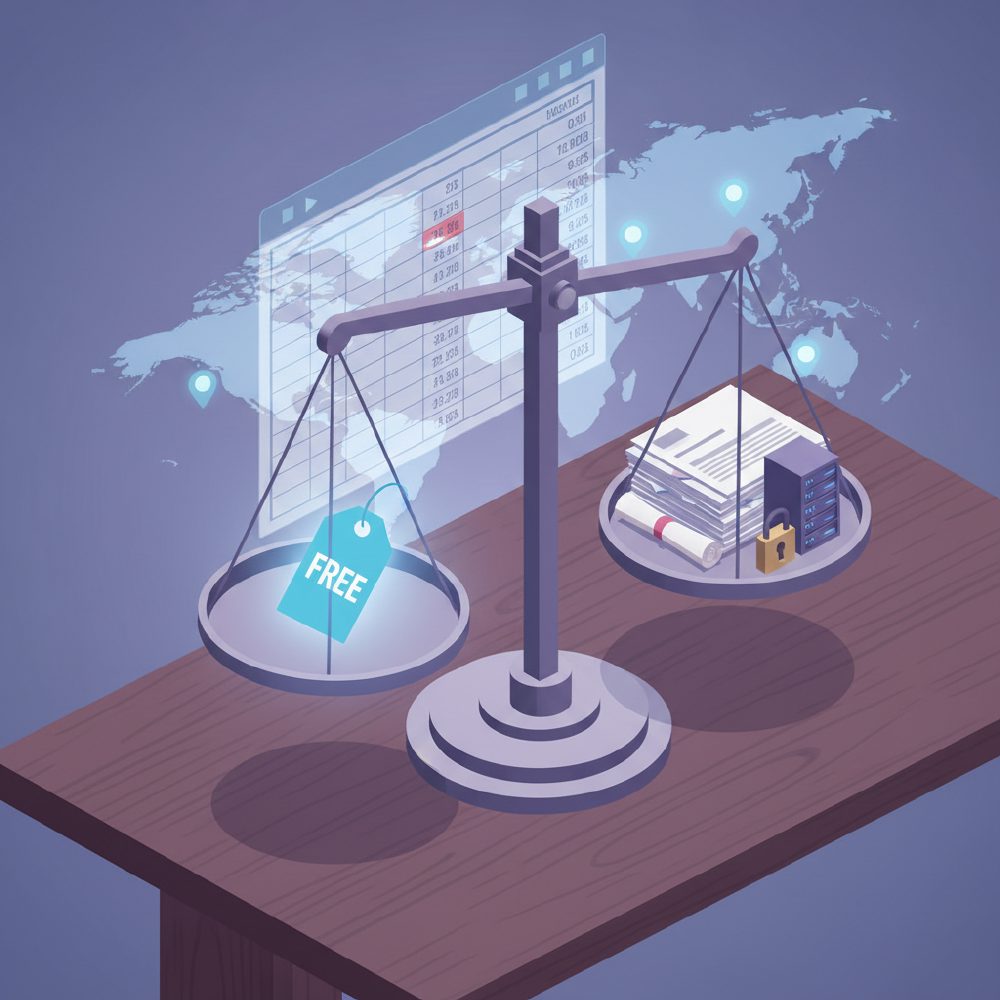
What Does 'Start Your Own Online Casino for Free' Actually Mean?
In practice, 'free' refers to one of three things: a demo or sandbox environment from a B2B platform provider, a revenue-share white-label deal with no setup fee, or misleading vendor marketing that buries real costs in the fine print. None of these options let you operate a real, licensed casino with live players at zero cost.
I've seen this search query drive a lot of first-time operator inquiries, and almost every one of them arrives with the same misconception: that some combination of free software, a cheap offshore license, and a payment processor will let them go live for a few hundred dollars. It won't. The confusion comes from a few legitimate but limited offerings that vendors market aggressively — and from a general misunderstanding of what 'the platform' actually is versus everything else you need around it.
Some white-label providers, including SoftSwiss's white-label division and Turnkey Casino solutions, do offer zero-upfront-fee arrangements where you pay a monthly fee plus a revenue share instead of a large setup cost. That's a real option. But the license, the payment gateway deposits, the KYC tooling, the responsible gambling software, and your working capital reserve are entirely separate — and none of them are free. When you add those up, you're typically looking at $30,000 on the very low end for an offshore-licensed operation, and $100,000–$500,000+ for anything in a regulated EU or US market.
There are also sandbox and demo environments that platform providers offer so you can evaluate their back-office before committing. SoftSwiss, EveryMatrix, and Softgamings all have demo setups. These are genuinely useful for due diligence, but they have no real payment rails, no live games, and no license — they're test environments, not businesses. Conflating a demo with a launchable product is where a lot of time and energy gets wasted.
The honest framing: 'free' in this industry means either deferred cost or no-capital-required-upfront — not actually free. Every model eventually extracts value, either through revenue share, monthly fees, or both. Understanding which extraction model fits your projections is the real decision you need to make.
What Are the Real Minimum Costs to Launch an Online Casino in 2026?
The minimum realistic budget to launch a white-label online casino under a Curaçao license in 2026 is approximately $30,000–$60,000, covering platform setup, licensing, basic payment integration, and a small working capital buffer. Anything below that figure means you're cutting corners on compliance or operating without proper reserves — both of which will end your operation faster than you expect.
Let me break this down by category, because vendors are very good at quoting you only the parts they sell. The platform setup fee for a white-label solution ranges from $0 (revenue-share-only deals) to $15,000–$30,000 for a more turnkey arrangement with EveryMatrix or SoftSwiss. Monthly platform fees typically run $2,000–$5,000 on top of a 15–30% GGR revenue share. These numbers are real but incomplete.
The Curaçao Gaming Authority (CGA) license — the most common offshore entry point — now costs roughly $5,000–$8,000 in application fees under the reformed 2023 framework, with annual maintenance around $15,000–$20,000. The old sublicense-under-a-master-license model is being phased out as Curaçao restructures, so expect the compliance requirements and associated costs to creep upward through 2025–2026. An Anjouan (COMOROS) license is cheaper at around $15,000–$25,000 all-in annually, but it's accepted by fewer payment processors and players in regulated markets are increasingly wary of it.
Payment processing is where budgets blow up. Most acquiring banks and PSPs require a security deposit or rolling reserve — typically 5–10% of monthly processing volume held for 90–180 days. If you're projecting $200,000 in monthly deposits, that's $10,000–$20,000 sitting in reserve before you've processed a single transaction. Add KYC/AML tooling (Sumsub, Veriff, or similar run $500–$2,000/month depending on volume), responsible gambling software (mandatory for most licenses), and a fraud detection layer, and your monthly operational overhead is substantial before you've acquired a single player.
Working capital is the cost most first-time operators underestimate most severely. You need to be able to pay out winning players while waiting for your PSP to release funds. A minimum float of $10,000–$25,000 is not optional — it's the difference between running a casino and running a scam. Budget honestly, or don't launch.
| Cost Category | Low Estimate | High Estimate | Notes |
|---|---|---|---|
| Platform setup (white-label) | $0 | $30,000 | Zero upfront possible with rev-share deals; higher for turnkey |
| Platform monthly fee | $2,000/mo | $5,000/mo | Plus 15–30% GGR share on most deals |
| Curaçao CGA license (year 1) | $20,000 | $35,000 | Includes application, compliance, legal; 2024–2026 reformed framework |
| Anjouan license (alternative) | $15,000 | $25,000 | Cheaper but fewer PSP options |
| Payment processing deposit/reserve | $10,000 | $30,000 | Rolling reserve held by PSP; not a fee, but capital locked |
| KYC/AML tooling (annual) | $6,000 | $24,000 | Sumsub, Veriff, or similar; volume-dependent |
| Responsible gambling tools | $1,200 | $6,000/yr | Mandatory on most licenses; some platforms bundle it |
| Working capital float | $10,000 | $25,000 | Player payout buffer — non-negotiable |
| Legal/compliance setup | $3,000 | $15,000 | Corporate structure, T&Cs, AML policy drafting |
| TOTAL ESTIMATED RANGE | ~$30,000 | ~$150,000+ | Before marketing spend |
Are There Legitimate Revenue-Share or Zero-Upfront White-Label Models?
Yes — several established platform providers offer white-label deals with no upfront setup fee, instead taking a larger revenue share (typically 30–50% of GGR). These are legitimate arrangements, not scams, but the long-term cost can far exceed a conventional setup fee once your casino starts generating real volume. They're best suited for operators testing a new market with limited capital.
The revenue-share model makes sense at low volume. If you're generating $20,000 GGR per month and paying 40% to your platform provider, that's $8,000/month — manageable. But at $200,000 GGR/month, you're handing over $80,000 every month indefinitely. A conventional setup fee of $20,000–$40,000 with a 15–20% rev share looks dramatically better at scale. The math is straightforward, but operators consistently underestimate how quickly volume grows (or overestimate it, depending on the situation).
Providers that operate genuine zero-upfront models include some smaller white-label aggregators and a few regional players — I won't name vendors I haven't reviewed recently, because the terms change frequently. What I will say is that any provider offering zero upfront AND a low revenue share (under 20%) deserves serious scrutiny of their contract. Either the games library is thin, the payment integrations are limited, or there are punitive exit clauses that make it expensive to leave. Read the termination provisions before you sign anything.
One model worth understanding is the sub-operator arrangement, where you operate under another operator's license and platform. This is how some smaller casino brands launch in markets like the UK or Malta — they never hold a license themselves, they just operate as a skin under a licensed entity. The economics are often worse than a direct white-label deal, but the regulatory burden is dramatically lower. If you're genuinely capital-constrained, this is worth exploring, though it limits your control over the product significantly.
Crypto-native platforms have also introduced some interesting low-barrier models. Providers like Sportsbet.io's B2B arm or some Telegram-based casino frameworks operate with minimal upfront cost, but they typically serve unregulated or gray markets. The risk profile is entirely different — no chargebacks, no KYC requirements in some cases — but also no banking relationships, no mainstream payment options, and significant legal exposure depending on where your players are located.
How to Start Your Own Online Casino for Free: What Steps Are Actually Possible Without Capital?
Without capital, you can realistically complete market research, evaluate platform demos, draft a business plan, and begin exploring license requirements — all at zero cost. You cannot legally operate a real casino, process payments, or sign platform agreements without money. The free steps are preparation, not operation.
This is worth being direct about because a lot of content online blurs the line between 'free research' and 'free launch.' Here's what you can genuinely do for nothing: evaluate white-label platform demos from providers like SoftSwiss, EveryMatrix, Softgamings, or Digitain; read the Curaçao Gaming Authority's published licensing requirements; use free tools like SimilarWeb to analyze competitor traffic; and draft a financial model in a spreadsheet. All of that is valuable, and skipping it is how operators waste their capital on the wrong platform or the wrong market.
If you want to get hands-on with casino software without spending money, most B2B aggregators will give you a demo environment for 30–90 days after an introductory call. This is a legitimate sales tool for them, and a legitimate due-diligence tool for you. Use it. Spend time in the back-office, understand how player segmentation works, look at the reporting, and stress-test the game lobby configuration. The things that frustrate you in a demo will frustrate your players in production.
What you cannot do for free: obtain a gaming license (all jurisdictions charge application and annual fees), sign a platform agreement (they require deposits or guarantees), open a merchant account (requires corporate structure and often a license), or integrate real-money payment methods. These aren't bureaucratic obstacles — they're the actual infrastructure of a legal gambling business. Anyone telling you otherwise is either selling you something or doesn't understand the industry.
The realistic path for a zero-capital operator is to spend 3–6 months in preparation mode: build your business plan, identify your target market, shortlist two or three platform providers, and start raising the capital you actually need. Treat the free phase as your due diligence window, not your launch window.
White-Label vs. Turnkey vs. Custom Build: Which Is Cheapest to Launch?
White-label is the cheapest and fastest entry point — typically $0–$30,000 upfront with a revenue share. Turnkey solutions cost $20,000–$80,000 but give you more control. A custom build starts at $200,000 and takes 12–24 months. For operators with limited capital, white-label is the only realistic starting point — but it comes with long-term margin compression.
The white-label model means you're essentially renting a pre-built casino platform, game library, and sometimes payment integrations from a provider. Your brand sits on top of their infrastructure. Speed to market is genuinely fast — 4–12 weeks from contract signing to live is achievable with providers like SoftSwiss or Softgamings. The trade-off is that you share your margin with the platform, you have limited ability to customize the product, and your game library is whatever they've negotiated — you're not picking individual studios.
Turnkey solutions sit in the middle. Providers like EveryMatrix's turnkey offering or Aspire Global give you a more configurable product — you can often negotiate direct game studio integrations, custom payment routing, and a more differentiated front-end. The setup cost is higher, the timeline is longer (8–20 weeks typically), and you need a larger team to manage the product. But your revenue share to the platform is lower, and you own more of the customer relationship.
Custom builds are for operators who have already proven a market, have significant capital, and want to own their technology stack. The major operators — bet365, DraftKings, Evolution's direct clients — built custom. For a new entrant, this is almost never the right starting point. The minimum viable product for a custom casino platform, built on modern architecture with proper compliance tooling, is $300,000–$800,000 and 18–30 months of development. The opportunity cost alone is prohibitive.
| Factor | White-Label | Turnkey | Custom Build |
|---|---|---|---|
| Upfront cost | $0–$30,000 | $20,000–$80,000 | $300,000–$800,000+ |
| Time to launch | 4–12 weeks | 8–20 weeks | 18–30 months |
| Platform rev share | 25–50% GGR | 15–30% GGR | 0% (you own it) |
| Game library control | Low | Medium | Full |
| Payment customization | Low–Medium | Medium–High | Full |
| Compliance burden | Shared with provider | Mostly yours | Entirely yours |
| Best for | First-time operators, tight budget | Operators with some experience | Scaled, proven operations |
| Example providers | SoftSwiss WL, Softgamings | EveryMatrix, Aspire Global | In-house dev team |
What Licensing Options Exist for Low-Budget Casino Operators?
Curaçao and Anjouan are the two most accessible offshore licenses for operators with limited capital. Both allow you to serve most international markets (with notable exceptions including the US, UK, and most EU member states). Curaçao is more widely recognized by payment processors; Anjouan is cheaper but less accepted. Neither is free — budget $15,000–$35,000 for year one.
The Curaçao Gaming Authority completed a significant regulatory overhaul in 2023, transitioning from the old master-license sublicense model to a direct licensing framework. Under the new system, operators apply directly to the CGA rather than through one of the four master licensees. This is better for compliance credibility but has increased the cost and complexity of obtaining a license. As of 2025, application processing times are running 3–6 months, and the annual license fee is in the range of $15,000–$20,000, with additional compliance and legal costs on top.
Anjouan (Federal Islamic Republic of the Comoros) has emerged as a cheaper alternative, with all-in first-year costs often cited at $15,000–$25,000. It's a legitimate jurisdiction with a real regulatory framework, but it's less recognized by mainstream European payment processors, and some players in regulated markets are skeptical of it. If your target market is crypto-native or emerging markets in LATAM or Asia, Anjouan can work. If you need Visa/Mastercard processing for European players, Curaçao is a better foundation.
Malta Gaming Authority (MGA) and Gibraltar licenses are significantly more expensive and complex — budget $25,000–$50,000 in fees alone, plus substantial compliance infrastructure and a physical presence requirement. These are appropriate for operators targeting EU markets seriously, but they're not entry-level options. The same applies to UK Gambling Commission (UKGC) licensing, which requires a UK-based entity, extensive due diligence, and ongoing compliance costs that easily exceed $100,000 annually when you factor in the required systems and staffing.
US state licenses are a category of their own. Each state with legal online casino gambling — currently New Jersey, Pennsylvania, Michigan, Connecticut, Delaware, Rhode Island, and West Virginia — requires a separate license, local partnerships in most cases, and compliance with state-specific technical standards. A multi-state US launch is a $1M+ undertaking. Single-state entry is possible for well-capitalized operators, but 'low budget' and 'US licensed' are mutually exclusive in 2026.
What Are the Hidden Costs Vendors Don't Tell You About?
The costs that surprise operators most are KYC/AML compliance tooling, responsible gambling integrations, payment processing reserves, chargeback management, and the ongoing legal cost of maintaining compliance as regulations evolve. These aren't optional line items — regulators and payment processors require them. Together, they can add $30,000–$80,000 to your first-year budget.
KYC and AML compliance is the one that blindsides people most consistently. Regulators require you to verify player identity, screen for politically exposed persons (PEPs), and monitor transactions for suspicious activity. This isn't something you can do manually at any meaningful volume. Tools like Sumsub, Veriff, or Onfido charge per verification — typically $0.50–$3.00 per check depending on the verification type and volume tier. At 500 new players per month with an average of two verification events each, you're spending $500–$3,000/month just on identity checks. That's before your AML transaction monitoring tool, which is a separate system.
Responsible gambling (RG) integrations are mandatory under virtually every legitimate license, including Curaçao post-2023. Self-exclusion tools, deposit limits, session time limits, and reality checks need to be built into your platform. White-label providers often include basic RG tools, but integration with national self-exclusion databases (like GAMSTOP in the UK or OASIS in Germany) requires additional technical work and sometimes a separate contract. Budget $1,000–$5,000 upfront for RG implementation and $100–$500/month in ongoing costs.
Chargeback management is another hidden cost that compounds with volume. Payment processors charge $20–$100 per chargeback dispute, and if your chargeback rate exceeds 1% of transactions, you risk losing your merchant account entirely. Fraud detection tools (Kount, Seon, or similar) cost $500–$3,000/month but are essential for keeping your chargeback rate in check. This is not optional if you want to keep your payment processing.
Finally, don't underestimate the ongoing legal cost. Regulations change — Curaçao restructured its entire framework in 2023, Germany's GlüNeuRStV introduced new restrictions in 2021 that many operators weren't prepared for, and US states continue to add requirements. Retaining a gaming lawyer on even a light retainer ($500–$2,000/month) to monitor regulatory changes in your target markets is money well spent. Operators who skip this discover compliance gaps when a payment processor or regulator flags them — at which point it costs ten times as much to fix.
Can You Use Crypto to Launch an Online Casino Cheaply?
Crypto-native casino launches do have a lower barrier to entry — no merchant account required, faster settlement, and some jurisdictions are more permissive for crypto operations. But you still need a license for most markets, and the absence of traditional payment rails limits your addressable audience significantly. Crypto reduces certain costs; it doesn't eliminate the fundamental requirements of a legal gambling operation.
The crypto casino model has genuinely disrupted the cost structure in one specific area: payment processing. Without Visa/Mastercard, you don't need a traditional merchant account, which eliminates the rolling reserve requirement and the chargeback exposure. For a Bitcoin or stablecoin-only operation targeting crypto-native players, this is a meaningful cost reduction. Platforms like BC.Game and Stake built their early operations on this model, and the infrastructure cost is lower than a fiat operation of comparable size.
That said, the licensing question doesn't disappear. Curaçao has explicitly regulated crypto gambling under its framework, and Anjouan does as well. Operating without a license — even a crypto-only operation — exposes you to enforcement risk in most jurisdictions, and increasingly, crypto exchanges and payment processors are requiring proof of licensing before processing gambling-related transactions. The 'no license needed for crypto' assumption is outdated as of 2024–2026.
There are also market size limitations to consider honestly. The addressable market for a crypto-only casino is a fraction of the total online gambling market. Most players still want to deposit with a credit card, bank transfer, or local payment method (PIX in Brazil, UPI in India, OXXO in Mexico). If your casino can't accept those, you're competing in a smaller, more crowded niche. Crypto is a useful payment channel to add; it's a limiting constraint to make it your only channel.
For operators with very limited capital who want to test a concept, a crypto-native launch under an Anjouan or Curaçao license, using a white-label platform that supports crypto payments natively, is probably the lowest-cost legitimate entry point available. Expect to spend $20,000–$40,000 all-in for year one, with a much smaller working capital requirement than a fiat operation. That's not free, but it's the closest realistic approximation.
What Are the Risks of Trying to Launch a Casino Without Proper Licensing or Capital?
Operating an unlicensed online casino exposes you to criminal prosecution in most jurisdictions, payment processor termination, domain seizure, and personal liability for company directors. The risk isn't theoretical — enforcement actions against unlicensed operators have increased significantly across the EU, UK, and US since 2022. This is not a corner worth cutting.
The enforcement landscape has tightened materially in the last three years. The UK Gambling Commission has issued substantial fines — including a £19.2 million penalty against Betway in 2023 — and has increasingly pursued directors personally, not just the corporate entity. In the US, the DOJ has prosecuted offshore operators serving American players under the Wire Act and UIGEA. Germany's regulators have moved aggressively against unlicensed operators since the GlüNeuRStV took effect. Even Curaçao, historically permissive, is now suspending licenses and investigating operators who breach their framework.
Payment processor risk is often more immediate than regulatory risk for small operators. If Visa or Mastercard identifies your merchant account as processing gambling transactions without proper licensing, they will terminate the account and potentially blacklist your company directors. Getting a new merchant account after a termination for cause is extremely difficult — some operators find themselves effectively unbanked for 12–18 months. This kills the business more reliably than a regulator fine.
Domain seizure is another tool regulators use. Several EU member states have implemented domain-blocking and even seizure mechanisms for unlicensed operators. If your domain gets seized, you lose your SEO equity, your player database access, and your brand in one action. Rebuilding on a new domain is possible but expensive and slow.
I'm not trying to moralize here — I'm telling you what I've seen happen to operators who cut these corners. The cost of doing it right is real and significant. The cost of doing it wrong is higher, less predictable, and sometimes irreversible. If you don't have the capital to launch properly, the right move is to delay, raise more, or pursue a different business model — not to launch without a license and hope nobody notices.
What Realistic Alternatives Exist If You Can't Afford to Launch a Casino?
If you don't have the capital for a licensed casino launch, three legitimate alternatives exist: casino affiliate marketing (zero capital required, earns revenue share from established operators), becoming a white-label sub-operator under an existing licensee, or building a B2B product for the industry rather than operating B2C. All three can generate meaningful income without the licensing and capital requirements of a standalone operation.
Casino affiliate marketing is genuinely free to start. You build content, drive traffic to licensed operators, and earn a commission — typically 20–40% revenue share on referred players, or a CPA (cost per acquisition) of $50–$300 per depositing player depending on the market. The downside is that it takes 12–24 months of consistent content and SEO work before you see meaningful income, and you're entirely dependent on the operators you promote not changing their affiliate terms. But the upside is zero licensing risk, zero payment processing complexity, and no working capital requirement.
The sub-operator model is worth understanding if you have some capital but not enough for a full license. Under this arrangement, you operate a branded casino skin under another operator's license. The licensee handles compliance, payment processing, and regulatory relationships. You handle marketing and player acquisition, and you split revenue with the licensee. The economics are often worse than a direct license (you might net 20–30% of GGR after all splits), but the barrier to entry is dramatically lower. This model is common in the UK and Nordic markets.
Building a B2B product — a game studio, an affiliate management platform, a KYC tool, a responsible gambling solution — is a longer-term play but doesn't require a gambling license in most jurisdictions (game studios are an exception in some markets). If your background is in technology or a specific vertical, this can be more capital-efficient than trying to compete as an operator in a market where player acquisition costs are rising every year.
The honest advice: if you're searching for how to start an online casino for free, you're probably not yet at the stage where launching your own casino is the right move. Spend 12 months in the industry first — as an affiliate, as a sub-operator, or in a B2B role — and you'll make dramatically better decisions when you do have the capital to launch properly.



Comments
No comments yet, be the first.