How to Start an Online Casino in the US in 2026: The Legal Map Operators Actually Need (7 vs 39 States Explained)
What is the current legal status of online casinos across US states in 2026?
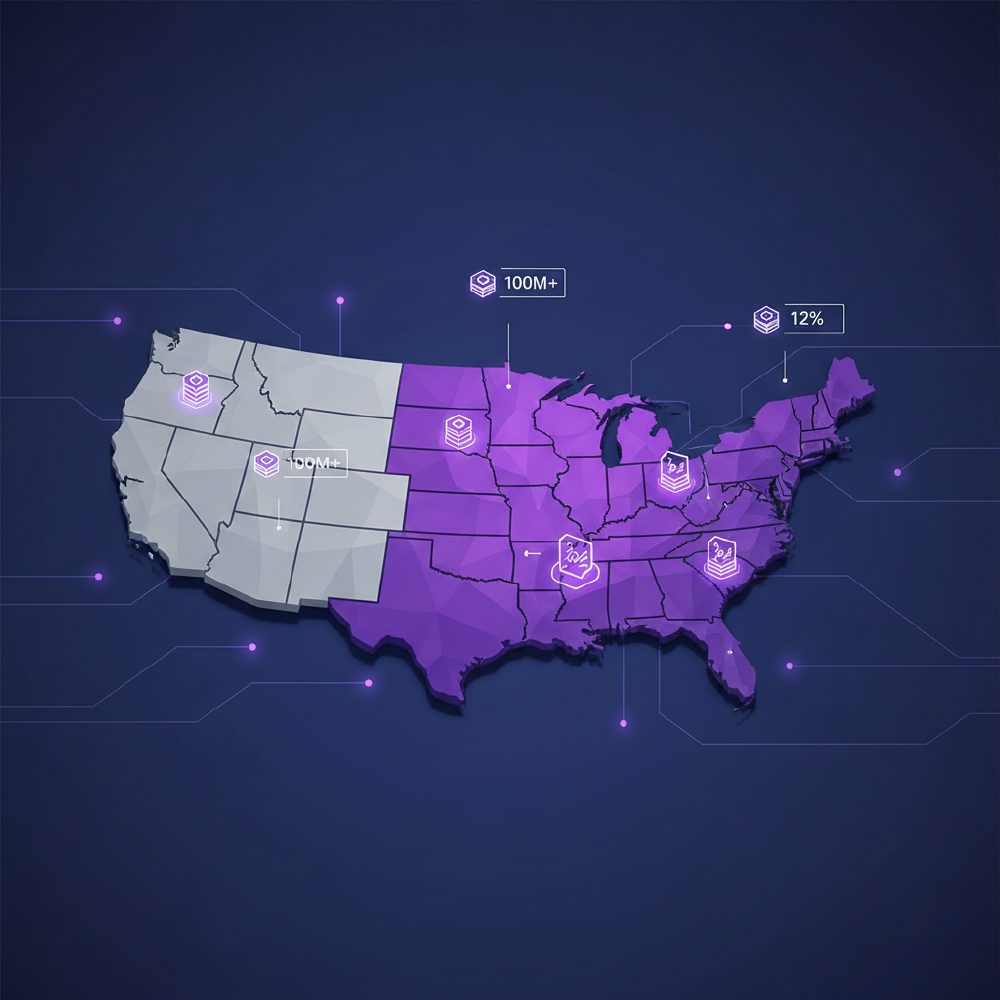
As of 2026, real-money online casino gaming (iGaming) is legal in exactly 7 US states: New Jersey, Pennsylvania, Michigan, Connecticut, Delaware, West Virginia, and Rhode Island. Every other state either prohibits it outright or simply hasn't passed enabling legislation yet. Sports betting is a separate category and is far more widely legalized, roughly 39 states plus Washington D.C. have active legal frameworks.
The distinction between 'online casino' and 'sports betting' matters enormously for operators. When a headline says a state 'legalized online gambling,' it almost always means sports betting only. Casino games, slots, blackjack, roulette, live dealer, require a separate iGaming authorization that most states have not enacted. This is the single most common misread I see from founders who come to me after spending six months talking to platform vendors.
New Jersey remains the benchmark US iGaming market. It launched in 2013 and generated roughly $2.4 billion in gross gaming revenue in 2023, more than any other state. Pennsylvania is the second-largest, crossing $2 billion GGR annually. Michigan launched in January 2021 and has grown aggressively, with operators like BetMGM, DraftKings, and FanDuel dominating the top of the market. Connecticut, Delaware, West Virginia, and Rhode Island are live but considerably smaller, Delaware in particular operates through a state lottery monopoly model that effectively locks out new entrants.
Several states are in active legislative cycles that could expand the map in 2026 or 2027. New York, Illinois, and Indiana have had iGaming bills introduced, and Maryland has been close. None have crossed the finish line yet, and I'd caution against building a business plan around a state that hasn't passed legislation, I've seen operators burn through runway waiting for a market that never opened. Build your model on what's live today; treat pending states as upside, not baseline.
| State | Online Casino (iGaming) | Online Sports Betting | Launch Year (Casino) | Regulator |
|---|---|---|---|---|
| New Jersey | ✅ Legal | ✅ Legal | 2013 | DGE (Division of Gaming Enforcement) |
| Pennsylvania | ✅ Legal | ✅ Legal | 2019 | PGCB (PA Gaming Control Board) |
| Michigan | ✅ Legal | ✅ Legal | 2021 | MGCB (MI Gaming Control Board) |
| Connecticut | ✅ Legal | ✅ Legal | 2021 | CTDCP / Tribal Compacts |
| West Virginia | ✅ Legal | ✅ Legal | 2020 | WV Lottery Commission |
| Delaware | ✅ Legal (Lottery only) | ✅ Legal | 2013 | Delaware Lottery |
| Rhode Island | ✅ Legal | ✅ Legal | 2024 | Rhode Island Lottery |
| New York | ❌ Not legal | ✅ Legal | N/A | NYGC |
| Illinois | ❌ Not legal | ✅ Legal | N/A | IGB |
| Florida | ❌ Not legal | ⚠️ Contested (Tribal) | N/A | DBPR / Tribal |
| Texas | ❌ Not legal | ❌ Not legal | N/A | No regulator |
| California | ❌ Not legal | ❌ Not legal | N/A | No regulator |
Why do 39 states have sports betting but only 7 allow online casinos?
Sports betting legalization accelerated after the Supreme Court's PASPA repeal in May 2018, giving states a clean on-ramp with relatively straightforward legislation. Online casino games face far stronger opposition from land-based casino lobbies, tribal gaming compacts, and moral objections from legislators. The political lift is simply much heavier, and the revenue arguments haven't been compelling enough in most statehouses yet.
The PASPA repeal handed states a binary choice: opt in to sports betting or don't. The legislative template was clear, the tax revenue argument was easy to sell, and the opposition was manageable. iGaming is a different fight. In states like New York and Illinois, land-based casino operators, who hold significant political capital, have actively lobbied against online casino legalization because they fear cannibalization. The evidence from New Jersey and Michigan suggests cannibalization is minimal, but that argument hasn't penetrated every statehouse yet.
Tribal gaming compacts add another layer of complexity. In states like Florida, Arizona, and California, tribal nations hold exclusive or near-exclusive rights to certain game types under federal Indian Gaming Regulatory Act (IGRA) compacts. Any iGaming bill has to negotiate around those compacts, which can take years and often fails. Florida's Seminole Tribe launched a mobile sports betting product in 2023 under a contested compact interpretation, online casino games weren't part of that deal and remain illegal for commercial operators.
Tax rates also play a role in the political math. Pennsylvania taxes online slots at 54%, a figure that shocked operators when the bill passed in 2017 but that the market has absorbed because the player base is large enough. Legislators in pending states sometimes propose similarly aggressive tax structures, which can paradoxically kill the bill by making the market unattractive to the operators whose lobbying support is needed to pass it. This circular dynamic has stalled iGaming in several states that seemed close.
What does it actually cost to get a US iGaming operator license in 2026?
Licensing costs vary dramatically by state. New Jersey's Casino Control Act requires a physical land-based partner and a transactional waiver or full license, total entry costs including legal fees, compliance infrastructure, and application fees typically run $500K to $2M+. Pennsylvania's iGaming operator license fee alone is $10M. Smaller markets like West Virginia are cheaper but also generate far less revenue.
Let me give you the numbers vendors don't put in their pitch decks. In New Jersey, you cannot hold an online casino license as a standalone entity, you must be affiliated with a land-based Atlantic City casino licensee. That means either acquiring or partnering with a brick-and-mortar operator, which is a significant capital barrier. The DGE's transactional waiver process allows some flexibility, but you're still looking at legal costs of $200K-$500K before you flip a single card. Pennsylvania's $10M license fee is the starkest example of pay-to-play in any regulated market, it's deliberately designed to limit the field to well-capitalized operators.
Michigan is more accessible. The MGCB charges a $100K application fee for internet gaming operators, plus an annual fee structure tied to revenue. You still need a commercial or tribal casino partner to hold the primary license, but the entry cost is lower and the market has proven deep enough to support multiple operators profitably. West Virginia is the cheapest regulated entry point, application fees are in the $50K-$100K range, but monthly GGR is a fraction of New Jersey or Michigan, so the ROI timeline stretches out.
Beyond the license fee, budget for compliance technology (AML monitoring, responsible gambling tools, geolocation like GeoComply), legal retainers, and the platform infrastructure itself. A realistic all-in budget for entering a single regulated US iGaming state from scratch, including technology, legal, and the license fee, is $1M-$3M before you acquire a single player. Anyone quoting you less hasn't done it.
| State | License Fee (Approx.) | Land-Based Partner Required? | Tax Rate (Online Slots) | Market Size (Annual GGR Est.) |
|---|---|---|---|---|
| New Jersey | $400K-$500K (transactional waiver) + legal | Yes (Atlantic City casino) | 15% | ~$2.4B |
| Pennsylvania | $10M operator license | Yes (PA licensed casino) | 54% (slots) / 16% (table) | ~$2.0B |
| Michigan | ~$100K application + annual fees | Yes (commercial/tribal casino) | 20-28% (slots) | ~$1.8B |
| Connecticut | Tribal compact only, no open licensing | Tribal partner required | 18% | ~$400M |
| West Virginia | ~$50K-$100K | Yes (WV licensed casino) | 15% | ~$150M |
| Rhode Island | State lottery monopoly | Not applicable (state-run) | N/A | ~$100M |
What is the fastest realistic path to launching an online casino in the US in 2026?
The fastest path is a B2B or white-label partnership with an operator that already holds a state iGaming license. You provide capital, marketing, or a specific player acquisition angle; they provide the license and compliance infrastructure. A standalone license application takes 12-36 months depending on the state. A partnership deal can get you live in 6-12 months if the operator and platform are already in place.
Most platform vendors, SoftSwiss, EveryMatrix, Kambi, Amelco, will tell you they can have you live quickly. What they don't always clarify is that the platform is the easy part. The regulatory bottleneck is the license, and in the US, that bottleneck is structural: you need an existing licensed entity to operate under. The fastest operators I've seen launch in the US did so by acquiring a minority stake in or forming a revenue-share agreement with a licensed land-based casino that had an unused or underutilized iGaming skin allocation.
New Jersey, Pennsylvania, and Michigan all allow the primary licensee to offer multiple branded skins, in NJ, up to three skins per land-based partner. That skin model is the entry point for many B2C brands that don't want to own a casino floor. You negotiate a revenue-share with the licensee (typically 15-30% of net gaming revenue going to the land-based partner), and you run the brand, the marketing, and the player experience. The licensee handles regulatory reporting and compliance. It's not cheap, but it's faster and lower-risk than a greenfield license application.
The technology stack for a US-regulated launch is non-negotiable on a few points: GeoComply for real-time geolocation (mandatory in every regulated state), a US-compliant RNG certification, AML/KYC tooling that meets BSA standards, and responsible gambling features including self-exclusion integration with state databases like NJ's NJSELF-EXCLUSION program. Platforms that have already built these integrations, Scientific Games (now Light & Wonder), IGT's iGaming division, or GAN, have a real advantage over offshore-focused platforms trying to retrofit US compliance.
Can you operate an online casino targeting US players from an offshore license like Curaçao or Anjouan?
Technically possible, practically dangerous. Offshore-licensed operators can and do accept US players, but they operate in direct violation of state laws and face UIGEA exposure at the federal level. This model works until it doesn't, and when it stops working, it can mean asset seizures, banking cutoffs, and personal liability for founders. It is not a viable foundation for a capitalized, scalable business.
I want to be direct here because I've advised operators who came to me after choosing this path: the offshore-targeting-US model is a risk management problem, not a business model. The Unlawful Internet Gambling Enforcement Act of 2006 doesn't criminalize gambling directly, but it makes it illegal for payment processors to handle transactions related to unlawful internet gambling. That creates a constant payment processing headache, you'll cycle through processors, face chargebacks at rates that kill margins, and spend significant operational energy on payment routing that could go into product.
More importantly, the enforcement environment has tightened. The DOJ's Wire Act interpretation, state-level enforcement actions, and increased scrutiny of cryptocurrency payment channels have all raised the risk profile. Operators running offshore with US traffic have had domains seized, payment accounts frozen, and in some cases faced federal indictments. The individuals who got indicted weren't running massive operations, they were mid-sized operators who thought they were below the radar.
If you're building a business you intend to raise institutional capital for, take public, or sell, the offshore-US model is a non-starter. No credible investor will touch a company with unresolved US regulatory exposure. If you're building for a short-term cash play with no exit ambitions, that's a different risk calculus, but you should go in with eyes open about what 'it goes wrong' actually looks like.
How does the sports betting vs online casino regulatory framework differ for operators?
Sports betting and online casino licensing are separate regulatory tracks in every US state that has both. Sports betting licenses are generally cheaper, faster to obtain, and carry lower tax rates. iGaming licenses are more expensive, require deeper compliance infrastructure, and in most states mandate a land-based casino affiliation. The two can coexist under one operator entity, but they're not interchangeable.
The confusion here is understandable, DraftKings and FanDuel hold both sports betting and iGaming licenses in states like New Jersey and Michigan, so from the outside it looks like one thing. But internally, these are separate license categories with separate applications, separate compliance obligations, and often separate tax treatment. A sports betting license in Pennsylvania costs $10M (same as iGaming), but in states like Colorado or Tennessee, sports betting licenses run $10K-$750K, orders of magnitude cheaper than iGaming entry.
The game content regulatory framework is also fundamentally different. Sports betting operators submit their betting rules and odds algorithms for review; iGaming operators must certify every game title through approved testing labs (BMM Testlabs, GLI, Gaming Laboratories International are the dominant players). In New Jersey, every slot and table game must be individually approved by the DGE before it goes live. That approval process adds 4-8 weeks per game title and creates a meaningful content lag versus offshore markets where you can go live with 5,000 titles on day one.
Payment processing differs too. Sports betting operators in most states can use standard ACH, debit card, and PayPal integrations. iGaming operators face the same options but with higher fraud rates and more complex KYC requirements because the average session value is higher. The responsible gambling requirements are also more stringent for casino products, mandatory deposit limits, cooling-off periods, and session time reminders are standard regulatory requirements in every iGaming state.
Which US states are closest to legalizing online casinos and what should operators watch in 2026?
New York, Illinois, Indiana, and Maryland are the states most frequently cited as near-term iGaming candidates. New York in particular has the revenue argument locked in, it's the largest sports betting market in the US, but land-based casino opposition and tribal compact complexity have stalled bills repeatedly. None of these are sure things in 2026, but New York and Illinois are worth tracking closely.
New York is the prize. The state generated over $2 billion in sports betting GGR in its first full year, more than any other state, and iGaming would likely produce similar or greater numbers given the population density. Governor Hochul's office has been cautiously supportive, but the state legislature has competing interests: the four commercial casinos in the Catskills and the Finger Lakes regions are terrified of online competition, and they have significant lobbying power. The bills introduced in 2024 and 2025 didn't make it to a floor vote; 2026 could be different if the fiscal pressure increases.
Illinois is interesting because it already has a complex multi-tier commercial casino framework and a large sports betting market. The state's Gaming Board is sophisticated and has experience with complex operator relationships. The obstacle is similar to New York, land-based operators lobbying hard against it. Indiana has had bipartisan support for iGaming bills and a relatively operator-friendly regulatory culture; if any state breaks through in 2026, Indiana is my best guess alongside New York.
Maryland passed sports betting in 2020 and has a functioning commercial casino market. iGaming bills have been introduced but haven't gained traction. The state's tax appetite is high, which tends to scare off operators and paradoxically reduces the lobbying support needed to pass legislation. For operators doing market entry planning, I'd recommend building a 'Day 1 ready' compliance and technology stack for New York and Illinois, meaning your platform vendor has those state certifications in progress, your land-based partnership conversations are happening now, and your legal counsel is tracking the legislative calendar.
What platform and technology stack do you need to launch a regulated US iGaming operation?
A US-compliant iGaming stack requires geolocation (GeoComply is the de facto standard), a state-certified RNG, AML/KYC tooling meeting BSA standards, responsible gambling features integrated with state self-exclusion databases, and game content certified by an approved testing lab. Offshore platforms retrofitting US compliance are slower and riskier than platforms built with US regulation as a design requirement.
GeoComply is non-negotiable, every regulated US iGaming state mandates real-time geolocation to confirm players are physically within state borders. GeoComply holds the dominant market position and is approved in every live iGaming state. Their SDK adds latency and occasionally creates player friction (VPN users and certain mobile configurations get false positives), but there's no credible alternative that's been approved across all seven states. Budget roughly $0.05-$0.15 per session for geolocation costs, which adds up at scale.
On the platform side, GAN (now part of Sightline Payments), IGT's iGaming division, and Kambi (for the sports layer) are the established US-native options. EveryMatrix and SoftSwiss have been expanding their US presence and have completed or are in progress on state certifications, but their US track record is shorter. Scientific Games / Light & Wonder has deep relationships with land-based casinos and a strong US content library, which matters because their game catalog comes pre-certified in most states. If you're partnering with a land-based casino that's already on one of these platforms, switching costs are real, factor that into your partnership negotiations.
The compliance technology layer, AML transaction monitoring, player behavior analytics for responsible gambling, and ID verification, is where operators consistently underestimate cost and complexity. Vendors like Jumio or Onfido handle the KYC layer; AML monitoring platforms like Featurespace or NICE Actimize handle transaction surveillance. In New Jersey, your compliance program must be documented and submitted to the DGE as part of your operating procedures. This isn't a checkbox, regulators audit it, and deficiencies result in fines or license conditions. Budget $150K-$400K annually for the compliance technology stack alone in a mid-sized operation.
How do US iGaming tax rates compare across the 7 legal states, and how should operators model them?
Tax rates on iGaming gross gaming revenue range from 15% in New Jersey and West Virginia to 54% on online slots in Pennsylvania. These rates are applied to GGR (gross gaming revenue, i.e., bets minus winnings), not revenue net of bonuses or marketing. Pennsylvania's 54% slot tax is the most punishing in any regulated Western market and must be modeled carefully, it fundamentally changes the unit economics of bonus-heavy acquisition strategies.
The Pennsylvania slot tax deserves its own paragraph because it catches operators off guard. At 54% GGR tax on slots, if you run a 20% bonus cost on top of that, you're left with roughly 26 cents of every dollar wagered to cover platform fees, payment processing, customer support, and profit. The math works at scale, DraftKings and BetMGM are profitable in PA, but it requires a low-cost acquisition model and tight bonus management. Operators who import offshore bonus strategies into Pennsylvania get destroyed financially. The table game rate (16%) and poker rate (16%) are far more manageable, which is why Pennsylvania operators tend to emphasize table games and poker in their marketing mix.
New Jersey's 15% rate is the most operator-friendly in the country and is one reason NJ has the most competitive and innovative iGaming market. The lower tax floor allows operators to invest more in product, bonusing, and customer experience, which has driven the market's growth. Michigan sits in the middle, 20% for online slots at commercial casinos, though tribal operators pay different rates under their compacts. Connecticut's tribal-only model means tax rates are governed by compact terms rather than public statute, which makes them less transparent.
For financial modeling, I recommend operators build three scenarios: a conservative case using actual state GGR tax rates with no bonus cost, a base case with a 15% blended bonus-to-GGR ratio, and an aggressive case with 25% bonus spend. Run those numbers against your platform fee (typically 10-20% of GGR for white-label arrangements), payment processing costs (2-4% of deposits), and your land-based partner revenue share (15-30% of net). In most states except New Jersey and Michigan, the math is tight enough that you need a clear player acquisition cost advantage to make the numbers work.
| State | Online Slots Tax Rate | Online Table Games Tax Rate | Online Poker Tax Rate | Notes |
|---|---|---|---|---|
| New Jersey | 15% | 15% | 15% | Flat rate across game types; most operator-friendly |
| Pennsylvania | 54% | 16% | 16% | Highest slot tax in any Western regulated market |
| Michigan | 20-28% (commercial) | 20-28% | 20-28% | Tribal rates vary by compact; commercial = 20% base + local share |
| Connecticut | Compact-governed | Compact-governed | N/A | Tribal-only; exact rates not publicly disclosed |
| West Virginia | 15% | 15% | 15% | Mirrors NJ rate structure; small market |
| Rhode Island | State lottery model | State lottery model | N/A | State takes majority share; private operator margin thin |
What are the biggest mistakes operators make when trying to enter the US iGaming market?
The most common and expensive mistakes are: assuming a sports betting license covers casino games, underestimating the land-based partnership requirement, importing offshore bonus strategies without adjusting for US tax rates, and building on a platform that hasn't completed US state certifications. Each of these can cost 12-18 months and $500K+ to unwind.
The sports-betting-equals-casino assumption is the most frequent error I see from founders who've done their research but read the wrong headlines. A DraftKings sports betting license in a state like Colorado does not give DraftKings the right to offer online slots in Colorado, Colorado hasn't legalized iGaming. The license categories are separate, the legislation is separate, and the regulatory agencies sometimes differ. I've had founders come to me after spending $300K on a platform build for a state that turned out not to have iGaming legislation. Always confirm the specific game category authorization before you spend a dollar on platform development.
Underestimating the land-based partnership is the second killer. Operators assume they can walk into a small West Virginia or Delaware casino and negotiate favorable terms because the casino 'needs' the online revenue. In practice, the land-based operators know exactly what their license is worth, and they negotiate accordingly. Revenue shares of 25-35% of net gaming revenue are common. In some cases, the land-based partner will demand equity. If you don't have leverage, a strong brand, a differentiated player acquisition strategy, or significant capital, you'll end up with a deal that makes the business barely viable.
The platform certification gap is a slower-burning problem. An operator who partners with a platform vendor that is 'in process' on state certifications can find themselves waiting 6-12 months for approval while paying platform retainer fees and burning runway. Always ask your platform vendor for the specific certification status in your target state, not 'we're working on it' but the actual submission date and the regulator's current review stage. GAN, IGT, and Light & Wonder have the most complete US certification footprints; newer entrants like EveryMatrix are catching up but may have gaps in specific states.


Comments
No comments yet, be the first.