How to Buy Online Casino Games for Your Website in 2026: The Operator's Real Guide

What does it actually mean to buy casino games for a website?
Almost no operator 'buys' casino games in the sense of purchasing a perpetual asset. What you are really doing is licensing game content under a B2B supply agreement. The studio or aggregator retains the game software, and you pay either a percentage of net gaming revenue (NGR) or a recurring flat fee to stream that content to your players.
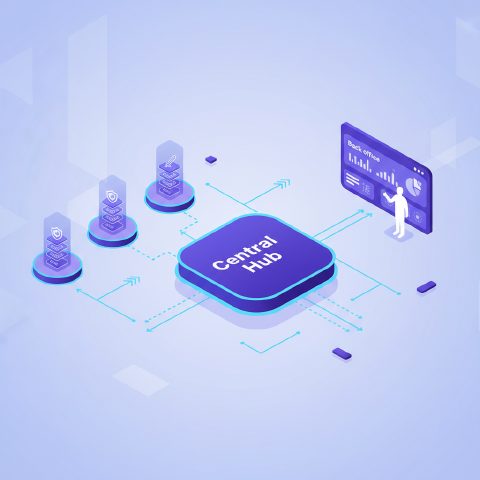
The distinction between buying and licensing is not semantic. It has direct implications for your balance sheet, your regulatory filings and your negotiating leverage. When you sign a revenue-share deal with a studio like Pragmatic Play, you are paying roughly 10 to 15 percent of the NGR those games generate on your platform. There is no upfront purchase price for the game itself. The studio keeps the RTP certification, the math model and the source code. You get an API endpoint and a back-office reporting dashboard.
Flat-fee licensing exists, but it is far less common in the B2C casino space. You see it more in B2B white-label arrangements where a platform vendor charges a fixed monthly fee for a bundled content library. The upside is cost predictability. The downside is that you are paying the same amount whether those games generate $10,000 or $500,000 in GGR that month. For early-stage operators with volatile revenue, flat fees can be brutal.
There is also a third model worth knowing: the content aggregator pass-through. Aggregators like Relax Gaming's Silver Bullet or Softswiss Game Aggregator license games from dozens of studios, then sublicense them to operators under a single contract. The aggregator charges its own margin, typically 1 to 3 percent of NGR on top of the underlying studio's share. You pay more per game, but you get hundreds of titles through one integration instead of negotiating fifty separate studio contracts.
Understanding this structure upfront saves you from the most common mistake I see: operators who budget for a one-time content cost and then discover they are paying 15 to 20 percent of gross revenue every month indefinitely. Model your content costs as a percentage of projected NGR before you sign anything.
Where do you actually buy casino games? Aggregators vs. direct studio deals vs. white-label bundles
There are three primary sourcing routes: game aggregators (one API, many studios), direct studio licensing (negotiate with each provider individually) and white-label platform bundles (content packaged with the platform). Each route has a different cost structure, integration complexity and minimum volume requirement. For most operators launching in 2026, an aggregator is the right starting point.
Game aggregators are the dominant sourcing route for operators with fewer than 50,000 monthly active players. EveryMatrix CasinoEngine, Softswiss Game Aggregator, Relax Gaming, and Hub88 (acquired by Kindred, now operating independently) all offer catalogues of 5,000 to 10,000 titles through a single API. You negotiate one contract, complete one technical integration, and access content from Pragmatic Play, NetEnt, Red Tiger, Hacksaw Gaming and dozens of others simultaneously. The aggregator handles the sublicensing paperwork with each studio, which alone can save six months of legal back-and-forth.
Direct studio deals make economic sense only at scale. Pragmatic Play, Play'n GO, Evolution and Playtech all have minimum monthly guarantee clauses. The figures I have seen in recent contracts range from $5,000 to $20,000 per month per studio, depending on the studio's tier and your jurisdiction. If you cannot demonstrate that volume, the studio will either decline to deal or insist you go through one of their approved aggregator partners anyway. The revenue-share rate you can negotiate directly is typically 1 to 3 percentage points better than what an aggregator passes through, but only if you are generating enough volume for that saving to outweigh the integration and legal overhead.
White-label bundles from platform vendors like SoftSwiss (now Aviatrix's parent ecosystem), EveryMatrix or Turnkey Casino typically include a curated content library as part of the monthly platform fee. This is the fastest path to a live casino with games. The catch is that you are dependent on the platform vendor's existing studio relationships. If they do not have a deal with a studio you want, you cannot add it without the vendor's cooperation. Operators who outgrow white-label arrangements often find that migrating their player database away from the vendor's platform is the most painful part of the exit.
| Route | Time to first game live | Upfront cost | Ongoing cost (% NGR) | Catalogue size | Best for |
|---|---|---|---|---|---|
| Aggregator (e.g. EveryMatrix, Hub88) | 4-10 weeks | Integration fee $5k-$20k | 12-18% total | 3,000-10,000 titles | Operators under 50k MAU |
| Direct studio deals | 3-6 months per studio | Legal/integration per studio | 10-15% per studio | 200-1,000 per studio | High-volume operators ($500k+ GGR/mo) |
| White-label platform bundle | 2-6 weeks | Setup fee $10k-$50k | Flat fee or rev-share + platform fee | 1,000-5,000 curated titles | First-time operators wanting speed |
Which game studios should you prioritize when buying casino game content?
Pragmatic Play, Evolution, Play'n GO and Hacksaw Gaming are the four studios that consistently appear on operators' must-have lists in 2026. Pragmatic Play alone accounts for a disproportionate share of slot GGR across most markets. Evolution is non-negotiable if you want live dealer. The others fill specific player segments. Prioritize breadth early, then optimize for your actual player data.
Pragmatic Play is the closest thing iGaming has to a mandatory supplier. Their slot portfolio, anchored by titles like Gates of Olympus, Sweet Bonanza and The Dog House, drives a large share of slot revenue on most European and LATAM-facing casinos. Their live casino vertical has also matured to the point where it is a credible alternative to Evolution for operators who want a single provider covering both slots and live. Revenue-share rates through aggregators typically land at 12 to 15 percent of NGR for Pragmatic Play content.
Evolution is the undisputed market leader in live dealer. If your target audience expects baccarat, roulette, blackjack and game show content, you need Evolution. There is no realistic substitute at their production quality and table variety. The complication is that Evolution is selective about who they supply. They require proof of regulatory compliance, minimum traffic projections and, in some cases, a minimum guarantee. Operators launching on a Curaçao sublicense sometimes find Evolution harder to access than those with an MGA or UKGC license.
Play'n GO has a loyal player base in Scandinavia and Germany, and their Book of Dead remains one of the most-searched slot titles in the EU. Hacksaw Gaming, Nolimit City and Push Gaming are the studios that sophisticated players in competitive markets actively seek out. Adding even a handful of titles from these studios signals to acquisition channels that your casino is a serious product rather than a generic white-label.
For US-regulated markets, your studio options narrow significantly. Scientific Games (now Light & Wonder), IGT and Everi have the majority of approved game libraries in states like New Jersey, Pennsylvania and Michigan. International studios like Pragmatic Play are gradually getting state approvals, but the process is slow and state-by-state. If you are launching in a US state, check the Division of Gaming Enforcement's approved supplier list for that state before you plan your content strategy.
How much does it cost to buy casino games for your website?
Expect to spend $10,000 to $30,000 in one-time integration and setup costs, then 12 to 20 percent of net gaming revenue on an ongoing basis. The ongoing percentage is the number that matters most. On $100,000 monthly GGR, that is $12,000 to $20,000 per month going to content costs alone, before platform fees, payment processing or marketing.
The one-time costs include the aggregator's technical integration fee (typically $5,000 to $20,000), any legal review of the content supply agreement (budget $2,000 to $5,000 for a specialist iGaming lawyer), and internal development time to build the game lobby, category filters and search functionality. If you are on a white-label platform, the platform vendor handles the integration, but you are paying for that through a higher monthly fee or a wider revenue-share margin.
The ongoing revenue-share structure is where operators consistently underestimate their costs. A typical aggregator deal might look like this: the underlying studio charges 12 percent NGR, the aggregator adds 2 percent, and you pay 14 percent total. On a casino generating $500,000 in monthly GGR with a 90 percent RTP and a 10 percent NGR margin, your NGR is roughly $50,000. Content costs at 14 percent NGR are $7,000 per month. Scale that GGR to $5 million and you are paying $70,000 per month just for game licenses. That math is why high-volume operators invest in direct studio deals despite the complexity.
There are also certification and compliance costs that vendors rarely mention in their sales presentations. If you are operating under an MGA or UKGC license, your platform and game integrations may require independent testing laboratory (ITL) certification from labs like eCOGRA, BMM or GLI. These audits can cost $5,000 to $25,000 depending on scope. For US state licenses, the certification requirements are even more rigorous and expensive. Budget for these separately from the game licensing costs.
| Cost item | One-time or ongoing | Typical range | Notes |
|---|---|---|---|
| Aggregator integration fee | One-time | $5,000-$20,000 | Varies by aggregator and scope of integration |
| Legal review of supply agreement | One-time | $2,000-$5,000 | Use an iGaming-specialist lawyer, not a generalist |
| ITL certification (if required) | One-time per jurisdiction | $5,000-$25,000 | MGA, UKGC and US states typically require this |
| Ongoing content revenue share | Monthly (% of NGR) | 12-20% of NGR | Lower for direct deals at scale, higher for white-label bundles |
| Minimum guarantee (direct studio deals) | Monthly fixed | $5,000-$20,000 per studio | Only applies to direct deals, not aggregator routes |
Does your casino license affect which games you can buy?
Yes, significantly. Your licensing jurisdiction is a filter that studios and aggregators apply before they will supply you. A Curaçao eGaming license gives you broad but not universal access. An MGA license opens the widest catalogue. A UKGC license adds compliance obligations that some smaller studios avoid. US state licenses restrict you to a short list of state-approved suppliers.
Studios and aggregators are not passive content warehouses. They have their own compliance obligations and reputational risk. Most tier-1 studios will not supply an operator who holds only a Curaçao sublicense from a master license holder with a poor compliance track record. Since Curaçao reformed its licensing framework in 2023 and introduced the National Ordinance on Offshore Games of Hazard (NOOGH), the quality bar for Curaçao operators has risen, and studios are gradually becoming more willing to supply Curaçao-licensed operators directly. But the legacy reputation still creates friction.
MGA (Malta Gaming Authority) licensees have the widest access to tier-1 studio content. The MGA is widely recognized by studios as a credible regulator, and most major providers have existing sublicensing frameworks for MGA operators. If you are targeting European markets and want the broadest possible game catalogue, the MGA license is the right foundation. The cost is higher (application fees around 5,000 EUR, annual compliance fees and a more intensive onboarding process), but the content access advantage is real.
UKGC (UK Gambling Commission) licensees face the most demanding compliance environment. Studios supplying UKGC operators must themselves comply with UKGC technical standards, which includes specific requirements around responsible gambling features, bonus mechanics and display of RTP. Some smaller studios have chosen not to seek UKGC approval because the compliance overhead is not worth the UK market size for them. Operators launching with a UKGC license should verify studio approvals before building their content roadmap.
For US state operators, the constraint is most severe. New Jersey's DGE, Pennsylvania's PGCB and Michigan's MGCB each maintain their own approved supplier lists. A studio must go through a separate approval process in each state. As of 2025, the approved lists in most states are dominated by US-heritage suppliers like IGT, Scientific Games and Aristocrat, with a growing but still limited presence from international studios. If you are building a US-state-licensed casino, your content strategy needs to start with the approved supplier list, not with what you see on European competitor sites.
What is the integration process for adding casino games to your website?
Game integration runs through a single API connection to your chosen aggregator or studio. The technical work involves wallet integration (connecting your player balance system to the game's transaction calls), game launch URL generation, and back-office reporting setup. A competent development team can complete an aggregator integration in four to eight weeks. Allow extra time for testing and certification.
The core technical protocol for most modern casino game integrations is a seamless wallet API. When a player launches a game, the game client sends bet and win transaction calls to your wallet endpoint in real time. Your platform must respond within strict latency thresholds (typically under 300 milliseconds) or the game will error out. This is not a place to cut corners on infrastructure. A poorly optimized wallet integration causes transaction failures, which players experience as lost bets, and which create chargebacks and complaints that regulators take seriously.
Aggregators like EveryMatrix and Hub88 provide a unified API that abstracts the individual studio protocols. Instead of implementing Pragmatic Play's specific API, then NetEnt's, then Red Tiger's, you implement one aggregator API and the aggregator handles the translation. The aggregator also manages the game metadata feed (titles, RTP values, volatility ratings, thumbnail images) that populates your lobby. This is a significant operational simplification that justifies the aggregator's margin for most operators.
Beyond the wallet API, you need to implement game launch flows (generating authenticated launch URLs for each player session), back-office reporting (pulling transaction data for reconciliation and player account management), and responsible gambling controls (session time limits, loss limits, self-exclusion checks before game launch). Jurisdictions like Sweden, the UK and Germany mandate specific technical implementations of these controls, and your aggregator or studio should provide documentation on how their API supports compliance.
The testing phase before go-live is where timelines slip. Budget at least two weeks for end-to-end testing of the wallet integration under load, covering edge cases like network timeouts, duplicate transaction handling and currency rounding. If your jurisdiction requires ITL certification, the lab will need access to a staging environment and will run their own test scripts. GLI and BMM typically quote four to eight weeks for a full platform certification, though expedited reviews are available at higher cost.
Should you buy live dealer games separately or bundle them with slots?
Live dealer content comes from a completely separate supply chain than slots. Evolution, Pragmatic Play Live, Ezugi and Vivo Gaming each run their own dedicated studios with real dealers, physical equipment and streaming infrastructure. You cannot get live dealer through a standard slot aggregator API. Budget for a separate integration, a separate commercial agreement and significantly higher revenue-share rates.
Evolution Gaming is the market leader in live dealer, and their commercial terms reflect that position. Revenue-share rates for Evolution content typically run 15 to 18 percent of NGR, higher than most slot studios. They also have more stringent operator qualification requirements. Operators with strong EU or MGA credentials find Evolution more accessible than those launching on offshore licenses. If Evolution declines to supply you directly, they work through a small number of certified aggregator partners, so there is usually a path in, but it may cost more.
Pragmatic Play Live has become a credible alternative for operators who want to consolidate their studio relationships. If you are already using Pragmatic Play for slots, adding their live dealer vertical simplifies your commercial relationship and your integration. Their live studio quality has improved substantially since 2022, and for markets outside the UK and Germany, many players cannot distinguish the experience from Evolution's.
Ezugi (now part of Evolution, ironically) and Vivo Gaming are options for operators targeting LATAM and emerging markets where live dealer is popular but Evolution's pricing is prohibitive. Ezugi has strong penetration in Brazil and Colombia. Vivo Gaming is commonly used by Curaçao-licensed operators serving LatAm players. Their revenue-share rates tend to be lower than Evolution's, and their operator qualification requirements are less demanding.
One practical consideration: live dealer games require a different lobby presentation than slots. Players need to see table availability, betting limits and dealer information before launching. Most aggregators and platform vendors provide pre-built live lobby components, but if you are building a custom front end, factor in the additional UI development for live dealer specifically.
What are the legal risks of buying casino game content without proper licensing?
Supplying unlicensed casino games to players is a criminal offense in most regulated markets and a civil liability in others. Studios and aggregators will not knowingly supply operators without valid licenses. The real risk is operators who launch on weak offshore licenses and then accept players from regulated markets where they have no authorization. This is not a gray area in the EU, UK or US.
The most common mistake I see from first-time operators is conflating 'offshore license' with 'legal everywhere.' A Curaçao license authorizes you to operate from Curaçao. It does not authorize you to accept players from Germany, Sweden, the Netherlands or any other country with its own licensing regime. If you are accepting Dutch players without a KSA (Kansspelautoriteit) license, you are operating illegally in the Netherlands, regardless of your Curaçao license. Studios and aggregators who supply you are also potentially exposed, which is why many tier-1 providers now require geo-blocking commitments from operators as a condition of supply.
In the US, the legal risk is even more acute. Offering casino games to players in states without legal online gambling (which is most states) is a federal and state criminal offense under the Unlawful Internet Gambling Enforcement Act (UIGEA) and various state statutes. Studios that have gone through the painful process of getting state-by-state approvals are not going to risk those licenses by supplying an operator who then serves US players without authorization. If you are targeting any US traffic, you need a state license, full stop.
There is also a contractual risk that operators overlook. Supply agreements with studios and aggregators typically include representations that you hold valid licenses for the jurisdictions where you operate. If you breach that representation, the studio can terminate the agreement immediately, pulling all their games from your platform. Losing your entire game catalogue mid-operation is an existential event for a casino. It has happened. Read the license representations in your supply contracts carefully and make sure your geo-blocking and KYC controls actually back them up.
How do you evaluate a game aggregator before signing a contract?
Evaluate aggregators on four dimensions: catalogue depth and studio quality, API reliability and uptime SLAs, commercial terms including revenue-share rates and minimum commitments, and the quality of their back-office reporting tools. Get references from operators already live on the platform. A vendor demo is not a substitute for talking to an operator who has run their reconciliation process in production.
Catalogue depth is the obvious starting point, but the more important question is which specific studios are available under the aggregator's sublicensing agreements. Some aggregators list a studio in their marketing materials but have not actually finalized the sublicensing terms, meaning you cannot go live with that studio's content immediately after signing. Ask for a definitive list of studios available under active sublicense agreements, not a pipeline or 'coming soon' list. Pragmatic Play, Evolution, Play'n GO, NetEnt, Red Tiger and Hacksaw Gaming should all be available on day one from any tier-1 aggregator.
API reliability is something operators discover too late. Request the aggregator's uptime statistics for the past 12 months, broken down by studio feed. An aggregator might have 99.9 percent overall uptime but have had two 4-hour outages for a specific studio's content that cost operators real GGR. Ask how they handle studio-side outages (do they have cached game states? do they notify operators proactively?) and what their SLA compensation terms are for downtime.
The back-office reporting tools matter more than most operators realize at the RFP stage. You need to be able to reconcile game transaction data against your player account balances daily. Aggregators vary significantly in the granularity and timeliness of their reporting APIs. Some provide real-time transaction feeds. Others provide daily batch files. If you are in a jurisdiction with daily reporting obligations to the regulator, you need real-time or near-real-time data. Ask for a demo of the reporting module specifically, not just the game lobby.
On commercial terms, watch for two specific clauses. First, minimum monthly guarantees: some aggregators include a minimum NGR commitment below which you pay a floor fee regardless of actual performance. This is particularly punishing in the first six months when your player base is still growing. Second, exclusivity or non-compete clauses: some aggregators restrict you from signing direct studio deals for studios within their catalogue. If you plan to eventually move high-volume studios to direct deals, make sure the aggregator contract does not block that path.
Can you buy casino games for a crypto or provably fair casino differently?
Crypto casinos have a parallel supply chain that traditional operators often miss. Provably fair game studios like Spribe (Aviator), BGaming and Turbo Games build content specifically for crypto-friendly operators and offer more flexible licensing terms than tier-1 studios. If you are launching a crypto-focused casino, your game mix will look different from a fiat casino, and your aggregator choice should reflect that.
Spribe's Aviator is the single most important game in the crypto casino space right now. It is a crash-style game with provably fair mechanics, and it has driven enormous engagement on crypto-facing platforms across Africa, LATAM and Eastern Europe. Spribe licenses Aviator directly and through a small number of aggregators. If you are building a crypto casino and you do not have Aviator, you are starting with a significant competitive disadvantage in those markets. Revenue-share rates for Aviator are not publicly disclosed, but operators I have spoken with describe them as higher than typical slot rates given the game's market position.
BGaming is a studio that has built its catalogue around crypto operator needs: provably fair mechanics, Bitcoin-denominated play, and a content library that skews toward the player demographics common on crypto platforms. They are accessible through several aggregators and are generally more flexible on operator qualification than tier-1 EU studios. For a Curaçao-licensed crypto casino, BGaming is often an easier first studio relationship than Pragmatic Play.
The aggregator landscape for crypto casinos has its own players. Softswiss, which built its reputation in the crypto space before expanding to fiat, has a game aggregator product with strong crypto operator support. Their platform and aggregator products are often bundled, which is worth knowing if you are evaluating SoftSwiss as a white-label partner. The crypto-specific aggregators tend to have fewer titles than the mainstream aggregators, but higher concentrations of the titles that actually matter for crypto player acquisition.
What mistakes do operators make when buying casino game content for the first time?
The four most expensive mistakes are: signing a content deal before finalizing the license (which wastes months when the studio then requires proof of license), underestimating ongoing revenue-share costs in financial models, failing to negotiate geo-blocking and market exclusion terms, and building a lobby with 3,000 games when 80 percent of GGR will come from 50 titles.
The sequencing mistake is the most common and the most avoidable. Operators get excited about the product and start negotiating with studios or aggregators before they have a license in hand or even a clear licensing timeline. Studios will not execute a supply agreement with an unlicensed entity. You will spend weeks in commercial negotiations, get to heads of terms, and then wait six months for your license before you can sign. That is not wasted time if you use it to finalize technical specifications and lobby design, but most operators do not. They burn legal fees on premature negotiations and then have to re-negotiate when the license terms or jurisdiction have changed.
The financial modeling mistake is underestimating content costs. I have reviewed business plans from operators who model content costs as a flat monthly fee of $10,000 regardless of GGR scale. When you explain that content costs are 12 to 18 percent of NGR and NGR itself is typically 3 to 8 percent of GGR (after bonuses and RTP), the unit economics look very different. On a $2 million GGR month with 5 percent NGR ($100,000 NGR) and 15 percent content costs, you are paying $15,000 per month just for games. Model this correctly before you commit to a revenue-share structure.
The lobby design mistake is a subtler one. Operators assume that more games equal better player experience. The data does not support this. On most casino platforms, 80 to 90 percent of total GGR comes from 30 to 60 titles. A lobby of 5,000 games with poor search and filtering is worse for conversion than a curated lobby of 500 games with excellent UX. Launch with a focused catalogue of 300 to 500 high-quality titles, get your lobby UX right, and expand based on actual player search and request data. Your aggregator's back-office data will tell you which games players are searching for that you do not yet have.





Comments
No comments yet, be the first.