How to Start an Online Casino in Europe in 2026: The Operator's Real-Cost Guide
What does it actually mean to start an online casino in Europe in 2026?
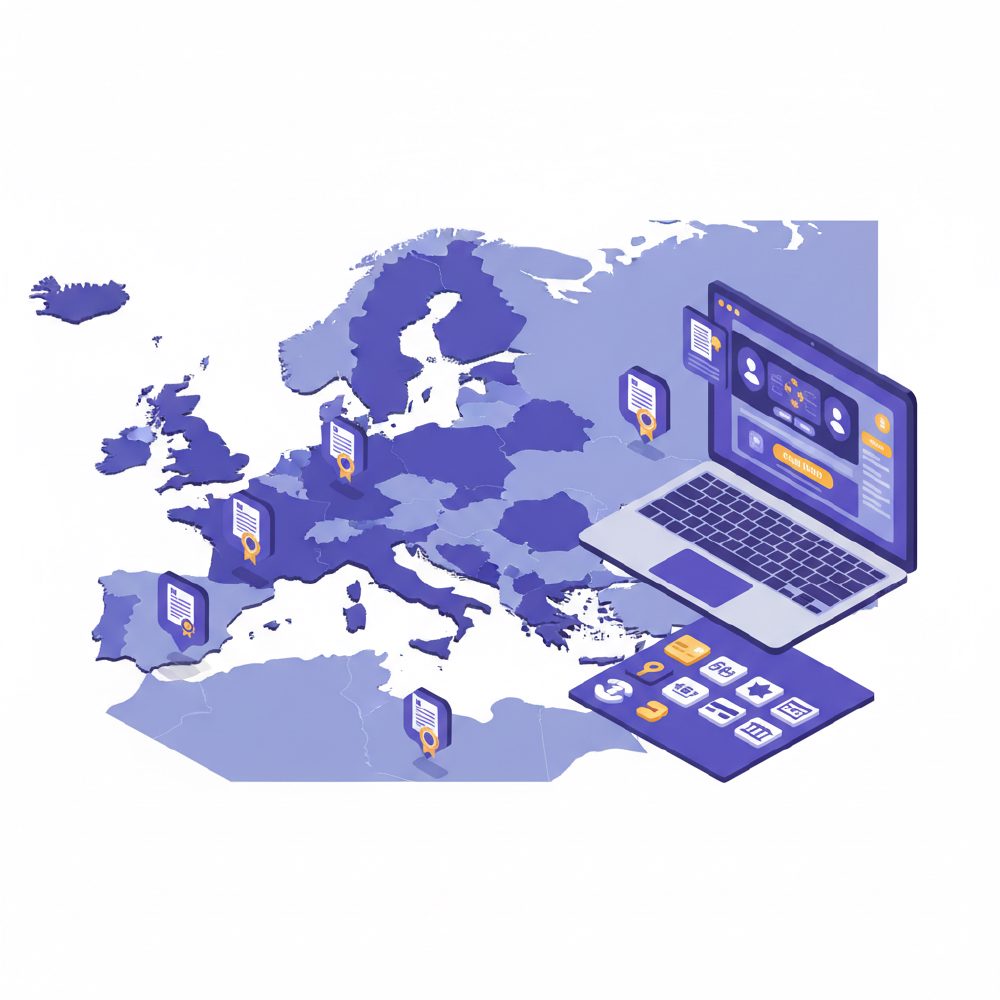
Europe is not a single gambling market. It is 30-plus regulatory regimes sitting inside a common economic zone, and the rules diverge sharply from one country to the next. Starting an online casino in Europe means picking a licensing strategy, a platform stack, and a target geography, and those three decisions are tightly interlinked.
Most operators who ask about starting an online casino in Europe are really asking one of two different questions. The first is: how do I get a reputable license that lets me operate across multiple European markets? The second is: how do I legally enter a specific regulated country like Germany or Sweden? The answer to each is completely different, and conflating them is one of the most expensive early mistakes I see founders make.
The MGA (Malta Gaming Authority) license remains the most commercially recognized B2C license for European-facing operations in 2026. It does not give you a passport into every EU market, but it signals legitimacy to payment processors, game studios, and affiliate networks. A Curaçao license is cheaper and faster but increasingly squeezed out of tier-one European payment rails. If you want to serve German, Dutch, or Swedish players legally, you need a local license on top of anything else you hold.
The practical starting point is deciding whether you are building a gray-market operation targeting markets without strict enforcement, or a fully regulated operation targeting a specific national market. Both paths exist in 2026, but the risk profiles, capital requirements, and operational complexity are entirely different. This guide covers both, with honest commentary on where each path breaks down.
Which European gambling licenses should operators consider in 2026?
For most new operators, the shortlist comes down to MGA Malta for credibility, Curaçao or Anjouan for speed and cost, and a national license if you are targeting a single regulated market. Each has a different price tag, timeline, and compliance burden. Picking the wrong one at the start costs six to twelve months of backtracking.
The MGA license (B2C Gaming Service License) is the gold standard for European-facing operators. The application process typically takes six to twelve months, requires a local Malta presence, a compliance officer, and technical audits of your RNG and platform. Licensing fees run roughly €25,000 in application and compliance contributions, plus ongoing annual fees. The real cost is the operational overhead: MGA expects quarterly reporting, AML/KYC frameworks that meet FAFT standards, and responsible gambling tools baked into the platform. Budget €60,000-€120,000 all-in for the first year when you include legal fees and setup costs.
Curaçao eGaming has been the go-to offshore license for over a decade, but the regulatory overhaul that started in 2023 and continued through 2024-2025 has changed the landscape. The new National Ordinance on Offshore Games of Hazard (NOOGH) framework requires direct licensing rather than sub-licensing under a master, and compliance requirements have tightened. Costs have risen to roughly €25,000-€40,000 for the license itself, plus an approved local representative. It is still faster than MGA (four to six months in most cases) but the days of a €5,000 sub-license are over. Anjouan (Comoros) has emerged as an alternative for operators who want a low-cost offshore entry point, with fees under €15,000 and a two-to-three month timeline, though payment processor acceptance is more limited.
National licenses in regulated EU markets are a different category entirely. Germany's GGL (Gemeinsame Glücksspielbehörde der Länder) issues online slots and virtual table game licenses, but the product restrictions are severe: €1 spin limits, no live dealer, mandatory five-second spin intervals. Sweden's Spelinspektionen license costs around SEK 400,000 (roughly €35,000) in application fees and requires a local presence. The Netherlands KSA license demands Dutch-language responsible gambling tools, a local payment processor relationship, and a cooling-off system. None of these are quick wins; plan for twelve to eighteen months and €100,000+ in legal and compliance costs before your first Dutch or Swedish player deposits.
| License | Timeline | Approx. First-Year Cost | Payment Processor Acceptance | Best For |
|---|---|---|---|---|
| MGA Malta (B2C) | 6-12 months | €60,000-€120,000 | High | Operators targeting multiple EU markets |
| Curaçao (new framework) | 4-6 months | €30,000-€60,000 | Medium | Operators entering tier-2 markets or testing a product |
| Anjouan (Comoros) | 2-3 months | €10,000-€20,000 | Low-Medium | Crypto-focused or early-stage operators |
| Germany GGL | 12-18 months | €100,000-€200,000 | High (Germany only) | Operators committed to the German market long-term |
| Sweden Spelinspektionen | 12-18 months | €80,000-€150,000 | High (Sweden only) | Operators targeting Nordic players |
| Netherlands KSA | 12-18 months | €100,000-€180,000 | High (Netherlands only) | Operators with existing EU presence expanding to NL |
White-label, turnkey, or custom build: which platform model fits a European launch?
White-label is the fastest and cheapest way to launch in Europe, typically 8-14 weeks and €50,000-€150,000 all-in. Turnkey gives you more control and your own license at a cost of €200,000-€400,000 and four to eight months. Custom builds are for operators who have already proven the model and need proprietary infrastructure. Most first-time European operators should start white-label.
White-label platforms in Europe work by placing you under the platform provider's existing MGA or Curaçao license. Providers like SoftSwiss, EveryMatrix, and Relax Gaming's white-label arm handle the compliance, payment processing, and game aggregation. You get a branded front-end and a revenue share agreement, typically 15-25% of GGR going to the platform. The upside is speed and lower capital risk. The downside is that you are building on someone else's infrastructure, and if the licensor has a compliance problem, your operation is affected. You also have limited negotiating power with game studios and payment providers because those relationships belong to the platform, not you.
Turnkey solutions from providers like SoftSwiss (their turnkey product), EveryMatrix's full-stack offering, or Pronet Gaming give you your own license, your own payment integrations, and direct supplier contracts. The setup cost is higher, typically €200,000-€400,000 depending on the scope of game content and payment methods, but you own the commercial relationships. This matters more than it sounds: direct deals with studios like Pragmatic Play or Evolution Gaming come with better revenue share terms as your volumes grow, and you can negotiate payment processing fees independently.
Custom builds are rare at launch and usually a mistake. I have seen operators spend €800,000-€1.5 million on a proprietary back-office only to discover that the MGA requires certified RNG testing on any custom game engine, which adds another six months and €50,000 in audit costs. Unless you have a genuinely differentiated product feature that no existing platform can replicate, start with a proven stack and migrate later. The European market is competitive enough that time-to-market matters more than technical originality in year one.
| Model | Launch Timeline | Upfront Cost Range | Ongoing Platform Fee | License Ownership | Recommended For |
|---|---|---|---|---|---|
| White-Label | 8-14 weeks | €50,000-€150,000 | 15-25% GGR rev-share | Licensor (not you) | First-time operators, limited capital |
| Turnkey | 4-8 months | €200,000-€400,000 | Monthly SaaS + % GGR | Operator | Operators with €300k+ budget and growth plans |
| Custom Build | 12-24 months | €800,000+ | Internal dev costs | Operator | Established operators building proprietary features |
How do you structure the game content library for a European audience?
European players expect a minimum of 2,000-3,000 game titles at launch, including slots from Pragmatic Play, NetEnt, and Play'n GO, plus live dealer tables from Evolution Gaming or Ezugi. Getting there via a game aggregator like Relax Gaming, SoftSwiss Game Aggregator, or EveryMatrix's CasinoEngine is faster than negotiating direct studio deals, though it costs more per GGR percentage point.
The fastest route to a deep game library is through an aggregator. SoftSwiss Game Aggregator, EveryMatrix CasinoEngine, and Pariplay connect you to 100+ studios through a single integration. You pay a platform fee plus a per-studio revenue share, typically totaling 8-12% of GGR on top of whatever the aggregator charges. For a new operator, this is the right trade-off: you get immediate access to the titles players recognize, and you avoid the six-to-twelve month wait for direct certification with studios like Pragmatic Play, who have strict volume and licensing requirements before they will deal directly.
Direct studio deals become worth pursuing once you are generating €500,000+ in monthly GGR. At that point, a direct Pragmatic Play or Evolution contract will save you two to four percentage points of GGR versus aggregator pricing. Evolution Gaming, which dominates live dealer in Europe, is particularly important to get right. Their live casino product (Lightning Roulette, Crazy Time, Blackjack) drives a disproportionate share of revenue for European operators. Evolution requires MGA or equivalent licensing, a compliance review, and minimum guaranteed volumes before they sign a direct contract.
Regulated national markets add another layer of complexity. In Germany, certain game mechanics are prohibited under the GGL framework, including bonus buys and some crash games. In Sweden, Spelinspektionen requires that all games offered to Swedish players are certified by an approved test lab (like BMM, GLI, or Gaming Laboratories International). Build your game approval workflow into your launch timeline, not as an afterthought. I have seen operators delay a Swedish launch by three months because they assumed their MGA-certified game library would automatically satisfy Spelinspektionen requirements. It does not.
What payment methods and acquiring solutions actually work for European online casinos?
European casino payment processing is genuinely hard. Card acquiring for gambling is restricted by most major banks, and MCC code 7995 (gambling) triggers automatic declines from many card issuers. A functional European payment stack in 2026 combines card acquiring through a specialist gambling acquirer, open banking via providers like Trustly or Volt, and crypto rails for markets where those are accepted.
Card acquiring is the first crisis most new European operators face. Visa and Mastercard have both tightened their gambling merchant rules since 2020, and finding a bank willing to issue you an MCC 7995 merchant account with reasonable decline rates is genuinely difficult. Specialist gambling acquirers like Payvision (now ING's acquiring arm), Nuvei, and Safecharge (now part of Nuvei) are the names to know. Expect processing fees of 3-5% for card transactions, plus chargeback liability that can freeze your merchant account if it exceeds 1% of transactions. Chargebacks are a structural problem in European gambling; build a chargeback management process before you launch, not after your first dispute batch arrives.
Open banking has become essential in Europe, particularly in the UK, Germany, and the Nordics. Trustly is the dominant provider, offering instant bank transfers with no chargeback risk and lower fees than card acquiring (typically 1-2% of transaction value). Volt and Tink are alternatives worth evaluating. For Swedish operators, BankID-based payments are practically mandatory. For German players, Sofort (now Klarna) and Giropay have significant penetration. The payment mix varies enough by country that you should build a market-specific payment configuration rather than a one-size-fits-all stack.
Crypto payments are growing in European casino operations, particularly for operators on Curaçao or Anjouan licenses targeting markets where traditional banking friction is high. CoinsPaid, BitPay, and NOWPayments integrate with most major casino platforms. The compliance angle matters here: MGA-licensed operators cannot accept anonymous crypto transactions. You need KYC on crypto deposits just as you do on fiat. For operators in regulated EU markets, crypto acceptance requires explicit regulatory approval and AML tracing tools. Do not assume crypto is a compliance shortcut in Europe; it is an additional compliance surface.
What are the real compliance and AML requirements for European casino operators?
European AML compliance for online casinos is governed by the EU's Anti-Money Laundering Directives (currently the 6th AMLD framework moving toward a unified AMLA regulation). Every licensed European operator needs a documented AML policy, a designated MLRO, transaction monitoring, and KYC verification on all players before they can withdraw. This is not optional overhead; regulators audit it and issue six-figure fines for failures.
The core compliance requirement is a Customer Due Diligence (CDD) framework. At minimum, this means collecting name, date of birth, address, and government ID before a player can withdraw, and Enhanced Due Diligence (EDD) for players who deposit above certain thresholds (typically €2,000 per month or €10,000 cumulative). MGA requires operators to define their own risk-based thresholds in their AML policy and get those policies approved. Germany's GGL goes further: identity verification is mandatory before a player can deposit at all, not just at withdrawal. This materially affects conversion rates and needs to be factored into your revenue projections.
Transaction monitoring is the part operators underestimate most. You need software that flags unusual deposit patterns, structuring behavior, and politically exposed persons (PEPs) in real time. Platforms like SoftSwiss and EveryMatrix have built-in transaction monitoring modules, but for MGA compliance you typically need a dedicated AML tool like Jumio, Onfido, or Sumsub for KYC, plus a separate transaction monitoring layer. Budget €2,000-€8,000 per month for these tools depending on player volume. The MLRO role (Money Laundering Reporting Officer) must be a qualified individual; in Malta, they need to meet MGA's fit-and-proper criteria and cannot be the same person as the CEO.
Responsible gambling (RG) tools are a compliance requirement, not a marketing feature. MGA mandates deposit limits, loss limits, session time limits, self-exclusion, and integration with GAMSTOP (for UK-facing operations) or national self-exclusion registers. Sweden's Spelpaus self-exclusion database integration is mandatory for Spelinspektionen licensees. Germany requires integration with OASIS, the national exclusion system. Build these integrations into your platform specification from day one. Retrofitting them after launch is expensive and will delay your license renewal.
How long does it take to launch an online casino in Europe?
A white-label launch under an existing MGA or Curaçao license can go live in 8-14 weeks if you have your business entity, payment accounts, and content deals ready. A turnkey launch with your own license takes six to twelve months minimum. Targeting a regulated national market like Germany or Sweden adds another twelve to eighteen months on top of the platform build.
The fastest legitimate European launch path in 2026 is a white-label setup under a provider like SoftSwiss or EveryMatrix, operating under their MGA license. Week one to three: company incorporation in Malta or a suitable jurisdiction, signing the platform agreement, and completing the provider's KYB (Know Your Business) process. Week three to eight: front-end customization, payment integration, game content configuration, and responsible gambling tool setup. Week eight to fourteen: soft launch with limited traffic, QA testing, and compliance review. This timeline assumes you have capital ready, a domain, and a basic brand. Any delay in company setup or payment acquiring will stretch it.
A turnkey launch where you hold your own MGA license is a different timeline. The MGA application alone takes six to twelve months. Simultaneously, you are building or configuring your platform, integrating payment providers, and negotiating game content deals. Realistically, plan for ten to sixteen months from the decision to launch to your first live player. Operators who try to compress this timeline by starting the platform build before the license is approved often waste development spend on features the MGA subsequently requires them to change.
The timeline for entering a specific regulated national market is the longest of all. Germany, Sweden, and the Netherlands each have multi-stage application processes with public consultation periods, technical audits, and fit-and-proper assessments of directors and shareholders. I have worked with operators who submitted a complete Netherlands KSA application and waited fourteen months for a decision. Build that uncertainty into your financial model. The operators who succeed in regulated EU markets are the ones who treat the licensing process as a parallel workstream, not a prerequisite that has to finish before anything else starts.
What does it cost to start an online casino in Europe, including hidden expenses?
The honest all-in cost to start a European online casino ranges from €150,000-€250,000 for a white-label launch to €400,000-€700,000 for a turnkey operation with your own MGA license. Those figures cover licensing, platform, payment setup, and initial marketing. They do not include the working capital reserve you need to cover player withdrawals and payment processor rolling reserves.
The costs that operators consistently underestimate fall into three categories. First, payment processor rolling reserves. Most gambling acquirers hold 5-10% of your monthly processing volume in a rolling reserve for three to six months to cover chargebacks. On €500,000 in monthly deposits, that is €25,000-€50,000 sitting inaccessible for up to six months. This is not a fee; it is a cash flow constraint that kills undercapitalized operators in their first quarter. Budget for it explicitly.
Second, legal and compliance costs compound quickly. MGA licensing legal fees from a Malta-based gambling law firm typically run €20,000-€40,000 for the application, plus ongoing retainer costs of €2,000-€5,000 per month for compliance support. AML software, KYC tools, and responsible gambling integrations add another €2,000-€8,000 per month. Third-party audits (RNG certification, platform security penetration testing) cost €10,000-€30,000 per cycle. None of these appear on the vendor sales deck.
Third, affiliate and marketing costs in Europe are high. The European affiliate market is mature and competitive. Cost per acquisition (CPA) for a depositing casino player in tier-one European markets ranges from €150-€400 depending on the country and channel. Revenue share deals with affiliates typically run 25-40% of net gaming revenue. Budget at least €50,000-€100,000 for marketing in the first three months just to generate enough data to optimize your acquisition funnel. Operators who launch with €50,000 total and expect organic SEO to carry them in year one are setting themselves up for failure.
How does taxation work for European online casino operators?
Tax treatment for European online casino operators depends on where the operating company is incorporated, not where players are located. Malta offers a 5% effective corporate tax rate under its full imputation system, making it the dominant choice for MGA-licensed operators. National markets like Germany and Sweden impose gross gaming revenue (GGR) taxes of 5.3% and 18% respectively on locally licensed operations.
Malta's tax regime is the reason so many iGaming companies are headquartered there. The standard corporate tax rate is 35%, but Malta's full imputation system allows shareholders to claim a 6/7 refund on dividends, resulting in an effective rate of approximately 5% on distributed profits. This structure requires genuine substance: a real office, local employees, and management decisions taken in Malta. The MGA scrutinizes substance requirements, and the EU's state aid rules mean this structure needs to be properly documented by a Malta-based tax adviser. Budget €15,000-€30,000 per year for corporate tax compliance in Malta.
If you hold a national license in Germany, you pay 5.3% GGR tax on online slots revenue under the Interstate Treaty on Gambling (GlüStV 2021). Sweden's Spelinspektionen licensees pay 18% GGR tax. The Netherlands imposes a 29.5% GGR tax rate on KSA-licensed operators. These are significant costs that directly affect unit economics. A 29.5% GGR tax in the Netherlands, combined with 25-40% affiliate revenue share and platform costs, leaves very thin margins unless your player lifetime values are high.
VAT is a separate issue. Most European jurisdictions exempt gambling services from VAT, but the rules vary for B2B services. If you are purchasing platform services from a Malta-based provider as a Malta-based operator, the VAT treatment is straightforward. If you are a non-EU entity purchasing services from an EU provider, you need to understand the reverse charge mechanism. Get a tax opinion specific to your corporate structure before you sign platform contracts; the difference between a correct and incorrect VAT position can be a six-figure liability.
What are the biggest mistakes operators make when launching in Europe?
The most common and costly mistakes are: picking a license based on price rather than market fit, underestimating payment acquiring timelines, launching without a compliant AML framework, and spending marketing budget before the product is stable. Each of these can cost six figures to fix after the fact. Most are avoidable with three months of proper pre-launch planning.
Choosing a Curaçao license because it is cheap, then discovering that 70% of your target player base is in Germany or Sweden where Curaçao-licensed operators cannot legally advertise or process payments, is the single most common strategic error I see. The license needs to match the market. If you want European tier-one players, you need a license that tier-one European payment processors and affiliate networks will work with. The extra cost of an MGA license pays for itself within six months of operation at any meaningful scale.
Payment acquiring is almost always the longest lead-time item, and almost always the last thing operators start working on. Gambling merchant accounts require extensive documentation: business plan, source of funds for shareholders, AML policy, responsible gambling policy, and often a live platform for the acquirer to review. Starting this process after the platform is built means a two-to-four month gap where your casino is technically ready but cannot accept deposits. Start the acquiring application in parallel with the platform build, not after it.
Launching without a tested AML framework is the mistake that ends careers. MGA has issued fines exceeding €1 million to operators for AML failures, and in 2024-2025 the regulator increased the frequency of compliance audits. The fine is almost secondary to the reputational damage and the potential license suspension. Before your first player deposits, your transaction monitoring must be live, your KYC process must be documented and tested, and your MLRO must be appointed and briefed. This is not a box-ticking exercise; regulators read the audit trail and look for evidence that the framework was actually operating, not just documented.





Comments
No comments yet, be the first.