The Operator's Guide to iGaming Alternative Payment Solutions in LATAM 2026: PIX, SPEI, PSE and Beyond
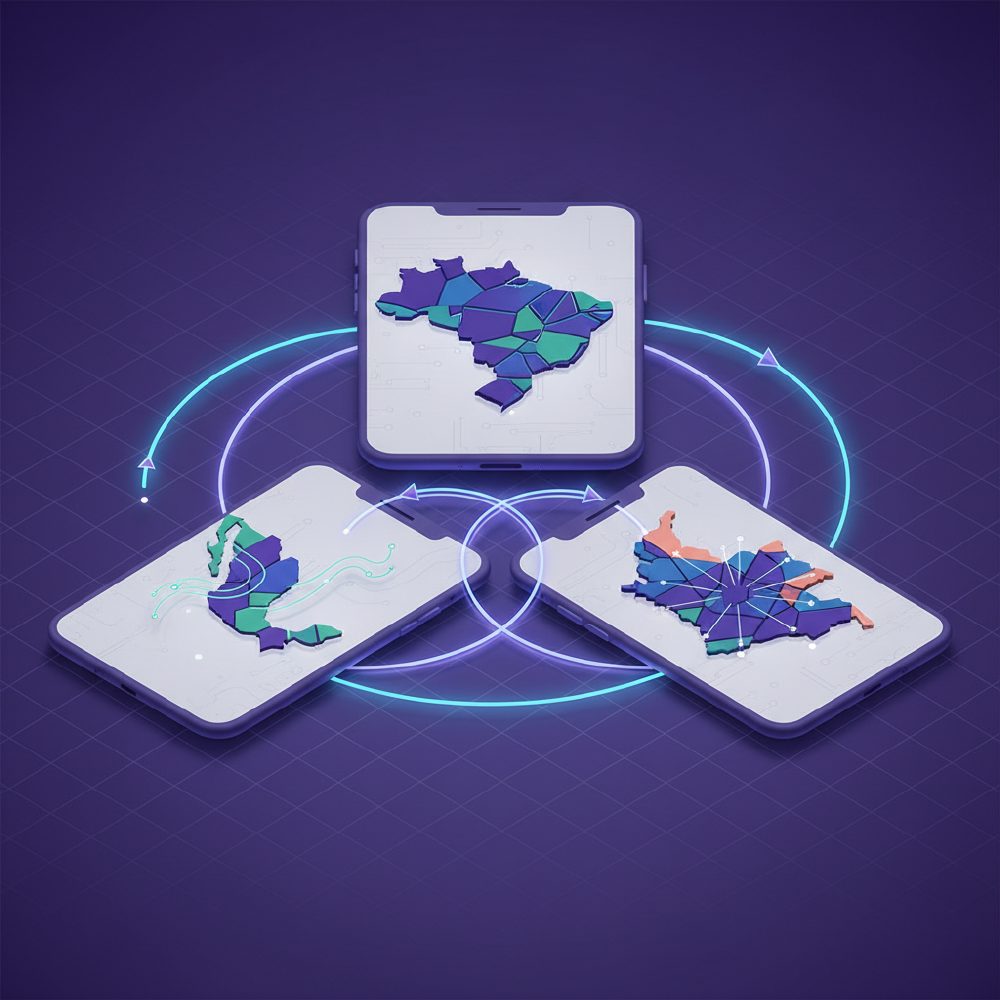
Why do LATAM operators need a dedicated iGaming alternative payment solution stack?
Card acceptance rates in LATAM iGaming consistently run 40–60% below global averages because local issuer banks decline gambling MCC codes at high rates. A dedicated iGaming alternative payment solution built around local real-time rails — PIX, SPEI, PSE — is the difference between a viable conversion funnel and a leaking bucket.
The core problem is structural. Visa and Mastercard work fine for e-commerce in Brazil or Mexico, but the moment a transaction hits a gambling MCC (7995), local issuing banks apply their own blocking rules — and in markets like Brazil, where no federal online gambling license existed until 2025, those declines were essentially systemic. Even now, with Brazil's licensing framework under Secretaria de Prêmios e Apostas (SPA) coming online, card acceptance for iGaming sits well below what operators see in Europe. The same pattern plays out in Colombia and Mexico.
The practical answer is to build your payment page around the dominant local real-time transfer rail first, then layer cards and e-wallets as secondary options. In Brazil that means PIX front and center. In Mexico it means SPEI plus OXXO for cash-preferred players. In Colombia it means PSE plus Efecty for the unbanked segment. Operators who reverse this priority — leading with Visa and treating local methods as an afterthought — routinely report deposit conversion rates under 30%. Operators who lead with local rails see 55–70% conversion, sometimes higher.
There's also a regulatory dimension that's easy to underestimate. Coljuegos in Colombia explicitly reviews your payment page during the licensing audit. Showing up with only card options signals to the regulator that you haven't done your homework on the local market. MINCETUR in Peru and SEGOB in Mexico carry similar expectations. Getting your payment stack right isn't just a conversion play — it's part of demonstrating operational readiness to the regulator.
How does PIX work for Brazilian iGaming operators and what does it actually cost?
PIX is Brazil's instant payment infrastructure operated by Banco Central do Brasil, running 24/7 with settlement in under 10 seconds. For iGaming, it functions as a push-payment rail where players initiate transfers directly from their banking app. Operator-side fees through a PSP intermediary typically run 0.5–2% per transaction, with minimums around R$0.50–R$1.50.
PIX launched in November 2020 and hit 5 billion monthly transactions by 2023 — that adoption curve is unprecedented for any payment system anywhere. For iGaming operators, the mechanics matter: players generate a PIX key or scan a QR code on your cashier, transfer funds from their bank app, and the deposit lands in your PSP account within seconds. The player never leaves their banking environment, which eliminates a huge drop-off point in the deposit funnel. Withdrawal via PIX is equally fast, and fast withdrawals are one of the strongest retention levers in LATAM markets.
The cost structure has two layers. At the Banco Central level, PIX transfers between individuals are free. The fees you pay are the PSP's margin for providing the merchant account, fraud monitoring, and reconciliation infrastructure. Expect 0.7–1.5% for deposits and a flat R$1–R$3 per withdrawal when working with established aggregators like Pagsmile, Pay4Fun, or Levpay. Some PSPs charge a monthly platform fee on top. If you're processing meaningful volume — say R$5M+ monthly — you can negotiate these rates down, but the floor is rarely below 0.5% because the PSP carries chargeback and fraud exposure on your behalf.
One operational detail that catches operators off guard: PIX for iGaming requires your PSP to hold a Brazilian payment institution license (Instituição de Pagamento) issued by Banco Central, or to work through a licensed sub-acquirer. You cannot simply open a Brazilian bank account and start accepting PIX deposits commercially — the regulatory structure doesn't allow it. Vetting your PSP's licensing status before go-live is non-negotiable. Several aggregators operating in the Brazilian iGaming space have faced Banco Central scrutiny, and operators caught using unlicensed intermediaries have had accounts frozen mid-operation.
With Brazil's new gambling licensing regime under SPA requiring licensed operators to demonstrate compliant payment flows, the days of running PIX through gray-area intermediaries are numbered. Budget for a licensed PSP relationship, factor in the 1–1.5% blended cost, and treat it as the cost of accessing a market of 215 million people with some of the highest sports betting engagement rates globally.
| Parameter | Detail |
|---|---|
| Operator by Banco Central do Brasil | Banco Central do Brasil |
| Settlement speed | Under 10 seconds, 24/7/365 |
| Typical PSP fee (deposits) | 0.7–1.5% per transaction |
| Typical PSP fee (withdrawals) | R$1.00–R$3.00 flat or 0.5–1% |
| Minimum viable monthly volume for negotiation | ~R$5M |
| Licensing requirement for PSP | Instituição de Pagamento (Banco Central) |
| Key aggregators serving iGaming | Pagsmile, Pay4Fun, Levpay, PayRetailers |
How does SPEI work for Mexican iGaming and why can't operators access it directly?
SPEI (Sistema de Pagos Electrónicos Interbancarios) is Mexico's interbank real-time transfer network operated by Banco de México. Transfers are instant and free between account holders, but iGaming operators cannot connect directly — they must route through a licensed PSP or fintech with CNBV authorization, which adds a processing layer and a fee of roughly 1–3%.
SPEI has been Mexico's dominant digital payment rail since 2004 and processes tens of millions of transactions daily. For iGaming deposits, the flow mirrors PIX: the player initiates a bank transfer to a CLABE (18-digit account number) provided by your PSP, and funds arrive within seconds. The key difference from PIX is that SPEI lacks a standardized QR code experience — players enter the CLABE manually or copy-paste it, which creates slightly more friction. Some PSPs have built wrappers that generate dynamic CLABEs per transaction to improve reconciliation and reduce fraud, and this is now best practice for any serious Mexico-facing operator.
The licensing situation in Mexico for iGaming payments is genuinely complex. SEGOB (Secretaría de Gobernación) licenses gambling operators, but the payment layer is regulated by CNBV (Comisión Nacional Bancaria y de Valores) and Banxico. PSPs serving iGaming need to be comfortable with the gambling vertical — many Mexican fintechs with CNBV authorization still refuse iGaming merchants due to reputational risk. This narrows your practical options to a handful of aggregators with explicit iGaming programs: PayRetailers, Conekta (for some use cases), OpenPay, and international aggregators like Trustly or Nuvei that have built Mexican PSP relationships.
OXXO cash vouchers deserve a mention here because Mexico still has a substantial cash-preferred population. OXXO Pay — where a player receives a barcode, pays cash at any of 20,000+ OXXO convenience stores, and the deposit credits within minutes — is a meaningful channel for operators targeting tier-2 Mexican cities. The fee is higher (typically 3–5%) and settlement can take 24 hours rather than seconds, but the addressable market that doesn't have a bank account or prefers cash is large enough to justify the integration.
What is PSE and why is it mandatory for Colombia-licensed iGaming operators?
PSE (Pagos Seguros en Línea) is Colombia's national online debit transfer system, operated by ACH Colombia and connected to virtually every Colombian bank. Coljuegos — Colombia's gambling regulator — requires licensed operators to offer PSE on their payment page. It's not optional infrastructure; it's a compliance checkpoint.
PSE works differently from PIX or SPEI. It's a redirect-based payment: the player selects their bank from a dropdown on your cashier, gets redirected to their bank's authentication portal, approves the transfer, and returns to your site. Settlement is typically same-day or next-business-day rather than instant, which is a meaningful UX downgrade compared to PIX. That said, in the Colombian market, players are accustomed to PSE — it has been the standard online payment method since the mid-2000s, and trust in the system is high.
The fee structure for PSE is set by ACH Colombia and passed through by your PSP. Expect transaction fees in the range of COP 3,500–6,500 per transaction (roughly $0.85–$1.60 USD at 2024 rates), plus any PSP margin on top. For small deposits, this flat fee structure can represent a high percentage cost — worth factoring into your minimum deposit limits. Most Colombia-facing operators set minimum deposits at COP 20,000–50,000 to keep the fee-to-deposit ratio manageable.
To integrate PSE, you need to work through an ACH Colombia-certified PSP or aggregator — you cannot connect to ACH Colombia directly as a foreign operator. PayU Colombia is the dominant local player and has the deepest PSE integration, but their iGaming appetite has varied over the years. International aggregators like Kushki (which has strong Colombia coverage) and PayRetailers also provide PSE access. Whichever route you take, confirm that your PSP's ACH Colombia agreement explicitly covers gambling transactions — some PSP contracts exclude gambling MCC codes even when the operator holds a valid Coljuegos license.
Efecty and Baloto are Colombia's cash payment networks and worth integrating alongside PSE to capture the unbanked segment. Together, PSE plus Efecty covers the vast majority of Colombian payment preferences for online gambling. Operators who skip Efecty because it's a cash voucher system with slower settlement typically see their Colombia conversion numbers plateau 15–20% below what the market can actually deliver.
| Feature | PIX (Brazil) | SPEI (Mexico) | PSE (Colombia) |
|---|---|---|---|
| Operator/Regulator | Banco Central do Brasil | Banco de México / CNBV | ACH Colombia / Coljuegos |
| Settlement speed | < 10 seconds | Seconds to minutes | Same-day / next-day |
| Payment UX | QR code or key | CLABE entry | Bank redirect |
| Typical PSP fee (deposits) | 0.7–1.5% | 1–3% | Flat COP 3,500–6,500 + PSP margin |
| Direct operator access? | No — PSP required | No — PSP required | No — ACH-certified PSP required |
| Cash alternative | None dominant | OXXO Pay | Efecty / Baloto |
| Regulatory mandate? | SPA licensing review | SEGOB licensing review | Coljuegos explicit requirement |
Which payment aggregators give the best multi-country LATAM coverage for iGaming?
For operators who need PIX, SPEI, and PSE under one integration, PayRetailers, Kushki, and Pagsmile are the three aggregators with the deepest iGaming-specific LATAM coverage in 2026. Each has different strengths by country and volume tier. No single aggregator is optimal for every market — the right answer depends on your primary country focus.
PayRetailers is probably the most cited name in LATAM iGaming payment conversations, and for good reason — they cover Brazil, Mexico, Colombia, Peru, Chile, and Argentina with explicit iGaming programs and dedicated account management for gambling operators. Their fee structure is typically 3–5% blended across methods, which is higher than what you'd pay with direct PSP relationships in individual countries, but the single integration and consolidated settlement is worth the premium at launch or when your volume doesn't yet justify country-by-country PSP negotiations.
Kushki is a strong alternative with particularly good Colombia and Ecuador coverage, and their technical integration is cleaner than some competitors — good documentation, sandbox environment that actually mirrors production, and a back-office that operators find usable. They've been actively courting iGaming clients since 2022. Pagsmile is the specialist for Brazil specifically — their PIX infrastructure is excellent and their fraud tooling is built for the iGaming vertical, but their coverage outside Brazil is thinner. If Brazil is your primary market, Pagsmile plus a separate aggregator for Mexico and Colombia is a reasonable stack.
A word of caution on aggregator selection: always ask for a reference from a live iGaming operator in your target market, not just a case study on their website. Aggregator sales decks routinely claim coverage in markets where their actual PSP relationships are thin or where they're relying on a sub-aggregator you've never heard of. The failure mode is discovering at go-live that your 'covered' market has a 40% payment failure rate because the underlying PSP relationship isn't solid. Vet the actual banking relationships, not the coverage map.
What does Peru's MINCETUR require from iGaming operators on the payment side?
MINCETUR (Peru's gambling regulator) requires licensed operators to demonstrate a compliant payment infrastructure using locally accepted methods. Peru's dominant local rails are Yape and Plin — both mobile wallet-based systems — alongside traditional bank transfers. Operators without Yape or Plin integration are at a significant conversion disadvantage in the Peruvian market.
Peru is an underrated LATAM market. It has a growing middle class, strong mobile penetration, and a licensing framework under MINCETUR that, while bureaucratic, is navigable for serious operators. The payment landscape is unusual compared to Brazil or Colombia: Peru never developed a dominant interbank transfer rail equivalent to PIX or SPEI. Instead, mobile wallets took over. Yape (owned by BCP, Peru's largest bank) and Plin (a consortium of other major banks) together account for a massive share of digital payments among the 18–45 demographic that overlaps heavily with sports betting and casino players.
The practical challenge for operators is that Yape and Plin integrations are not as straightforward as PIX. Both systems have restrictions on gambling-related transactions, and integrating them for iGaming requires working through a PSP that has a specific agreement permitting gambling use cases. This is a smaller pool of options than in Brazil. PayRetailers has Peru coverage; some operators also work with local Peruvian PSPs like Culqi (though Culqi's iGaming appetite has been inconsistent). Budget extra time for Peru payment integration — what looks like a 2-week integration on paper often takes 6–8 weeks when you factor in PSP due diligence, compliance documentation, and testing.
MINCETUR's licensing process also requires operators to submit their payment providers as part of the application. This means your PSP selection has regulatory consequences, not just commercial ones. Choosing a PSP that isn't familiar with the MINCETUR documentation requirements will slow your licensing timeline. Work with operators or consultants who have already been through a MINCETUR application — the documentation requirements are specific and the regulator does follow up on payment provider details.
How should operators handle withdrawals and what are the payout timing expectations in LATAM?
Fast withdrawals are a retention driver in LATAM, not a nice-to-have. Brazilian players expect PIX payouts within minutes. Mexican and Colombian players are more accustomed to same-day or next-day, but operators offering instant payouts gain a measurable loyalty advantage. The operational challenge is managing liquidity in local currency accounts to enable real-time payouts.
The withdrawal experience is where many operators stumble after nailing the deposit side. PIX withdrawals in Brazil are technically instant, but your PSP needs to hold a prefunded BRL float in a Brazilian payment institution account to execute them. If that float runs low — which happens at peak times like major football match days — withdrawals queue and players notice. The operational discipline required is pre-funding your PSP float based on expected withdrawal volume, which requires decent forecasting and a treasury function that understands iGaming seasonality. This is a real operational cost that doesn't appear in the PSP fee schedule.
In Mexico, SPEI withdrawals are also technically instant, but many operators still batch them daily to manage FX exposure and reconciliation overhead. This is a mistake from a retention perspective. Players who request a withdrawal and receive it within 30 minutes are significantly more likely to redeposit than players who wait 24 hours. The operational overhead of real-time SPEI payouts is manageable if your back-office is set up correctly — most modern platform providers like SoftSwiss or EveryMatrix have treasury management modules that can automate this.
Currency management is an underappreciated complexity in LATAM payments. BRL, MXN, COP, and PEN are all volatile against USD, and most offshore operators settle in USD or EUR. Your PSP will either give you a fixed FX rate (often with a 1.5–3% spread baked in) or a live rate with a smaller spread. At meaningful volume, the FX spread is a significant cost line — worth negotiating separately from transaction fees and worth modeling in your unit economics before launch.
What are the AML and KYC implications of using local payment rails in LATAM iGaming?
Local payment rails like PIX and SPEI create detailed transaction trails that regulators in Brazil, Mexico, and Colombia can and do audit. This is actually an AML advantage — push payments are tied to verified bank accounts, giving you stronger KYC signals than card payments. The risk is on the operational side: your AML program must be calibrated to local transaction patterns, not copy-pasted from a European template.
One of the underappreciated benefits of PIX for compliance is that every PIX transaction is linked to a CPF (Brazilian tax ID) or CNPJ. When a player deposits via PIX, you receive their bank-verified identity data as part of the transaction metadata. This is a stronger KYC signal than a card number. It also means that if you're operating under Brazil's new SPA licensing framework, your AML reporting has a cleaner audit trail than operators who relied on cards or crypto in the pre-regulation era.
The flip side is that COAF (Brazil's financial intelligence unit) and its equivalents in Mexico (UIF) and Colombia (UIAF) have direct relationships with the payment institutions processing your transactions. Suspicious transaction reports flow more efficiently in a real-time payment ecosystem. Operators who think they can run a loose AML program because they're offshore are increasingly wrong — the regulatory cooperation between LATAM financial intelligence units and gambling regulators has strengthened considerably since 2022.
Your AML transaction monitoring thresholds need to be calibrated to local market norms. A BRL 10,000 deposit in Brazil is not the same risk signal as a €10,000 deposit in Europe — the local context matters for setting your velocity limits, structuring alerts, and escalation thresholds. Copy-pasting a European AML policy into your LATAM operation is a compliance gap that both regulators and serious B2B compliance auditors will flag. Invest in a compliance consultant who knows the specific COAF, UIF, and UIAF reporting requirements — it's a few thousand dollars well spent versus the cost of a regulatory enforcement action.
How do platform providers like SoftSwiss and EveryMatrix handle LATAM payment integrations?
Both SoftSwiss and EveryMatrix offer pre-built payment integrations with major LATAM PSPs and aggregators through their platform's payment modules. This is one of the strongest arguments for using a white-label or turnkey platform for LATAM entry — you inherit existing PSP relationships rather than negotiating them from scratch, which can shave 3–6 months off your go-live timeline.
SoftSwiss's payment hub includes PIX via Pagsmile and other Brazilian PSPs, SPEI access through their Mexican payment partners, and PSE coverage for Colombia — all accessible through a single back-office configuration rather than separate API integrations. Their LATAM payment coverage has improved significantly since 2022, driven by operator demand. The practical benefit is that the PSP relationships, compliance documentation, and technical integrations are already done — you're configuring, not building. For an operator launching in Brazil or Colombia for the first time, this is genuinely valuable.
EveryMatrix's CashierEngine takes a similar approach with a marketplace of pre-integrated PSPs that operators can activate per market. Their LATAM coverage includes PayRetailers, Kushki, and several country-specific PSPs. The configuration layer is solid, and their payment analytics dashboard gives operators visibility into acceptance rates, failure reasons, and conversion by payment method — data that's essential for optimizing your cashier page post-launch.
The caveat with both platforms is that pre-integrated doesn't mean optimized. The default payment page configuration is generic. Operators who take the time to A/B test payment method ordering, button copy, and deposit flow steps on their specific player base consistently see 10–20% conversion improvements over the default setup. The platform gives you the infrastructure; the optimization is still your job. Also worth noting: platform PSP relationships may not include the best rates available — once you're at volume, renegotiating directly with PSPs while keeping the platform integration is a legitimate cost optimization strategy.
What does a realistic LATAM payment stack cost to set up and run?
Expect $15,000–$40,000 in one-time integration and setup costs for a multi-country LATAM payment stack built on an aggregator, plus ongoing transaction fees of 2–5% blended across methods. Direct PSP integrations per country are cheaper on a per-transaction basis but cost more upfront and take longer — typically 3–5 months per country versus 6–10 weeks for an aggregator.
The cost breakdown has several components that operators often underestimate. First, there's the PSP or aggregator setup fee — typically $5,000–$15,000 for an aggregator like PayRetailers or Kushki, covering onboarding, compliance review of your operation, and technical integration support. Some aggregators waive or reduce this for operators on major platforms like SoftSwiss or EveryMatrix who come through the platform's referral relationship. Second, there's the integration development cost if you're on a custom platform — expect 200–400 developer hours per PSP integration, which at typical outsourced rates translates to $10,000–$30,000 per integration.
Ongoing transaction costs are where the real money is. At a blended 3% rate on $1M monthly GGR with a 5:1 deposit-to-GGR ratio (meaning $5M in deposits), you're paying $150,000 monthly in payment processing fees. That's a material cost line. At $10M monthly deposits, even getting your blended rate from 3% to 2% saves $100,000 per month — which is why volume-based PSP negotiation deserves serious attention once you're past the launch phase.
Hidden costs operators discover late: FX spread on BRL/MXN/COP settlements (1.5–3% per conversion, often buried in the rate rather than itemized), chargeback handling fees ($15–$35 per chargeback plus potential PSP penalties if your ratio exceeds 1%), and float requirements for real-time withdrawals (you may need to maintain $50,000–$200,000 in prefunded PSP accounts per market to avoid payout delays). Model all of these in your unit economics before signing a PSP agreement, not after.
| Cost Item | Aggregator Route | Direct PSP Route (per country) |
|---|---|---|
| Setup / onboarding fee | $5,000–$15,000 | $2,000–$8,000 |
| Integration dev time | 6–10 weeks | 3–5 months |
| Blended transaction fee | 3–5% | 1–2.5% |
| FX spread (non-USD settlement) | 1.5–3% (often bundled) | 1–2% (negotiable) |
| Chargeback fee | $15–$35 per item | $10–$30 per item |
| Float requirement per market | $50K–$150K | $30K–$100K |
| Best for | Launch phase, multi-country | Scaled operation, single market |
What emerging LATAM payment methods should operators watch in 2026 and beyond?
Argentina's Transferencias 3.0 real-time rail, Chile's CuentaRUT digital wallet ecosystem, and the gradual expansion of open banking APIs across the region are the three developments most likely to reshape LATAM iGaming payments in the next 24 months. Operators entering these markets now should build payment infrastructure that can accommodate new methods without full re-integration.
Argentina is a complicated but high-potential market. The SPA (Secretaría de Premios y Apostas) framework is still evolving, and the payment landscape is distorted by currency controls and a parallel exchange rate market that creates compliance headaches for offshore operators. That said, Transferencias 3.0 — Argentina's instant payment system launched by Banco Central de la República Argentina — is gaining traction and will likely become the dominant digital payment rail as the regulatory environment stabilizes. Operators building Argentina payment infrastructure now should prioritize PSPs that have already integrated Transferencias 3.0 rather than relying on legacy bank transfer methods.
Chile's market is smaller but cleaner from a regulatory perspective. The dominant payment method for online services is WebPay (operated by Transbank), but CuentaRUT — a digital account available to every Chilean with a national ID — has dramatically expanded digital payment access. For iGaming, Chile represents a market where card acceptance rates are actually better than the LATAM average, but local operators still see conversion improvements when they add WebPay and CuentaRUT alongside cards. The Chilean gambling regulatory framework is also developing, with a formal online gambling bill having been discussed in Congress — worth tracking if you're planning a 2026–2027 Chile entry.
Open banking is the longer-term structural shift. Brazil's Open Finance framework (mandated by Banco Central) is already live and will eventually enable direct account-to-account payments without a PSP intermediary for operators who build the integrations. Mexico and Colombia are at earlier stages of open banking implementation. The operators who invest in understanding these frameworks now — and build payment infrastructure flexible enough to add new rails without rearchitecting the entire cashier — will have a meaningful cost and conversion advantage as the region's payment infrastructure matures over the next three to five years.



Comments
No comments yet, be the first.