White Label Crypto Casino Solutions: Real Costs, Providers and Trade-Offs for 2026
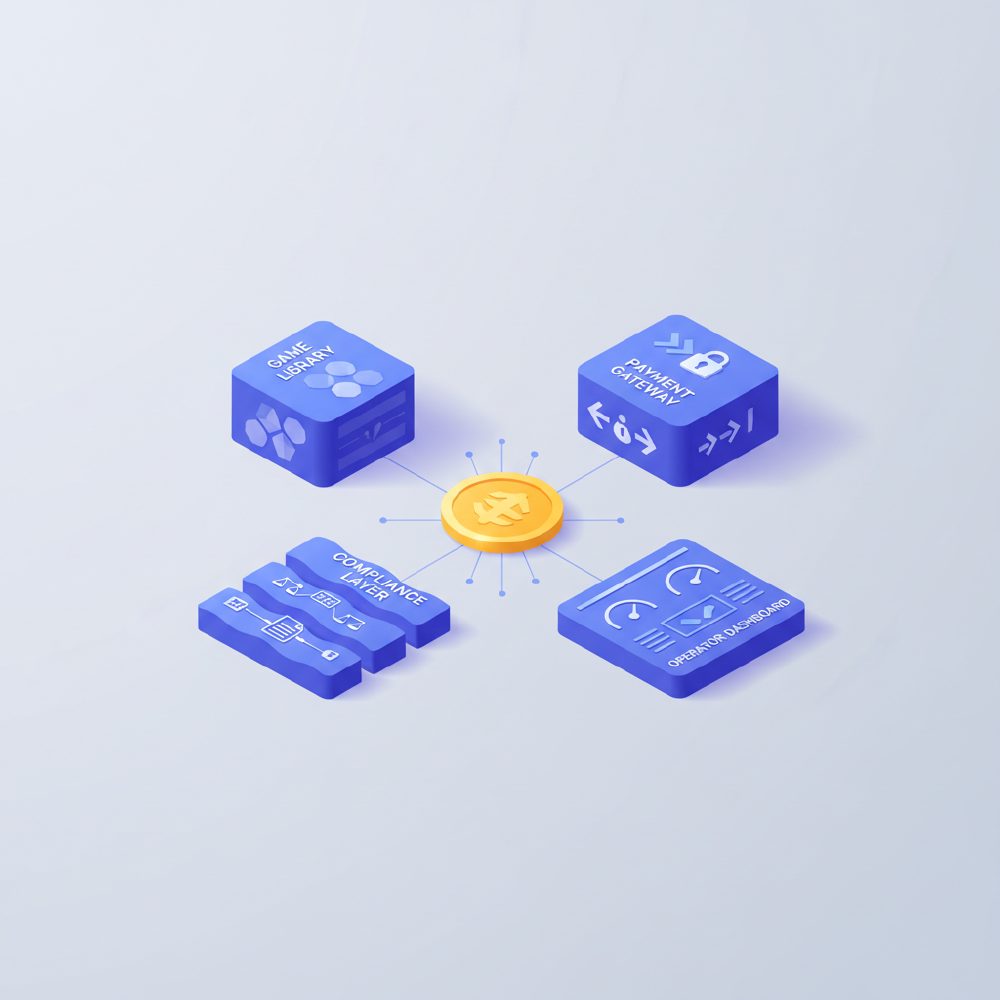
What exactly is a white label crypto casino and how does it differ from a turnkey build?
A white label crypto casino is a pre-built gambling platform you license from a B2B provider, re-skinned with your brand. You get the software, game content and often the sub-license under the provider's master license. A turnkey build is similar but typically involves more customization and you hold your own license. The practical line between the two blurs, but the licensing structure and rev-share model are what really separate them.
The terminology gets loose in vendor sales decks, so let me be precise. A true white label deal means the platform provider holds the master gambling license — Curaçao, Anjouan, or occasionally Isle of Man — and you operate as a sub-licensee under their umbrella. You get a branded front-end, access to their game aggregator integrations, a back-office, and usually a basic CRM. The provider takes a revenue share, typically 30–50% of GGR, in exchange for handling regulatory compliance, platform maintenance and payment processing. Your operational footprint is deliberately thin.
A turnkey crypto casino is structurally different: you're buying or licensing a fully built platform and then obtaining your own gambling license separately. SoftSwiss's turnkey product is the clearest industry example — they'll build and host your casino, integrate 10,000+ games via their aggregator, and wire up crypto payment rails, but the Curaçao or MGA license is yours to apply for. That means more upfront cost and a longer go-live timeline (typically 3–5 months versus 6–12 weeks for white label), but you keep 100% of GGR minus platform fees, which at scale is a dramatically better unit economics story.
For crypto-native operators, the distinction matters more than it does in fiat-only markets. If your whole value proposition is Bitcoin and stablecoin deposits with no KYC below certain thresholds, you need a provider whose payment infrastructure actually supports that — not one that bolted a crypto widget onto a fiat platform in 2021 and hasn't touched it since. Always ask the vendor: do you run your own crypto wallets, or are you routing through a third-party swap aggregator like Simplex or Banxa? The answer tells you a lot about latency, fees and counterparty risk.
What does a white label crypto casino actually cost in 2026?
Expect to pay $15,000–$60,000 as a setup fee, plus a monthly minimum (often $2,000–$5,000) and a rev-share of 30–50% of GGR. Crypto-specific infrastructure — wallet integration, on-chain transaction monitoring for AML, and fiat on-ramp fees — adds another layer of cost that most providers quote separately. Budget at least $80,000–$120,000 for your first year of operation including marketing.
The setup fee range is wide because providers bundle things differently. At the lower end ($15,000–$25,000), you're usually getting a templated front-end, a sub-license under the provider's Curaçao or Anjouan master license, and access to a game library of 3,000–5,000 titles. At the higher end ($40,000–$60,000), providers like SoftSwiss or white-label arms of EveryMatrix include a more customized design, dedicated account management, and a broader game portfolio with live dealer content from Evolution or Pragmatic Play Live. Neither end of that range includes your player acquisition budget — that's entirely separate and is where most new operators underinvest fatally.
The rev-share model is where the real cost accumulates. A 40% GGR share sounds manageable when you're doing $50,000 a month, but at $500,000 monthly GGR you're handing $200,000 to the platform provider every month. That's the ceiling problem. Most experienced operators start re-evaluating the white label structure somewhere between $300K and $700K monthly GGR, depending on their margin on bonusing and payment processing costs. The math on moving to a turnkey or proprietary platform usually works out within 12–18 months of hitting that range.
Crypto-specific costs that vendors routinely underquote: on-chain AML screening (Chainalysis or Elliptic integrations run $1,500–$4,000/month depending on transaction volume), fiat on-ramp fees from providers like MoonPay or Transak (typically 1.5–3% per transaction, passed to the player or absorbed by the operator depending on your product decision), and wallet custodianship if you're holding player balances in crypto rather than immediately converting to stablecoins. If your platform provider is handling all of this inside their rev-share, push them to itemize it — you'll often find the effective cost is higher than the headline percentage suggests.
| Factor | White Label | Turnkey (Own License) |
|---|---|---|
| Typical setup fee | $15,000–$60,000 | $50,000–$150,000+ |
| Go-live timeline | 6–12 weeks | 3–6 months |
| Revenue share / platform fee | 30–50% of GGR | 5–15% of GGR (or flat SaaS fee) |
| License held by | Platform provider (sub-license) | Operator |
| Customization depth | Low–Medium | Medium–High |
| Crypto wallet infrastructure | Provider-managed | Operator-configured (via provider APIs) |
| Compliance responsibility | Shared / provider-led | Operator-led |
| Realistic monthly GGR ceiling before model breaks | $300K–$700K | $1M+ |
Which licensing jurisdictions work best for a white label crypto casino?
Curaçao and Anjouan are the two practical choices for crypto-first operators in 2026. Curaçao's reformed Gaming Control Board framework (phased in since late 2023) now requires AML policies, responsible gambling tools and a local representative — it's stricter than it used to be but still operator-friendly. Anjouan (Comoros) is faster and cheaper but carries less payment processor recognition. MGA is the gold standard but prohibits anonymous crypto play.
Curaçao went through a genuine regulatory overhaul. The old system of master license holders sub-licensing to operators is being replaced by a direct licensing model under the Curaçao Gaming Control Board (GCB). New applications since 2023 go through the GCB directly; existing operators under master licenses had a transition window. For a white label setup, this matters because your provider needs to hold a valid GCB license — not a legacy master license from one of the old sublicensors. Ask any provider you're evaluating to show you their current GCB status. If they can't, walk away.
Anjouan (officially the Autonomous Island of Anjouan, part of the Comoros) emerged as a fast-track alternative around 2022–2023. License fees run roughly $15,000–$25,000 with a 4–8 week processing time, which is attractive. The trade-off is payment processor acceptance: many acquiring banks and PSPs that will work with a Curaçao-licensed operator won't touch an Anjouan license. For a crypto-native operation where you're not relying on Visa/Mastercard acquiring, this matters less — but the moment you want to add fiat payment options, Anjouan's limited recognition becomes a real constraint.
MGA (Malta Gaming Authority) is worth mentioning because some operators ask about it for crypto. MGA's framework technically permits crypto deposits, but the AML and KYC requirements are essentially equivalent to fiat — full identity verification, source of funds checks, no anonymous play. That's incompatible with most crypto casino positioning. MGA makes sense if you're building a hybrid operation with a strong EU fiat player base and crypto is a secondary deposit method. For a crypto-first white label, it's overkill and the application timeline (6–12 months) kills your go-to-market speed.
| Jurisdiction | Approx. License Cost | Processing Time | Crypto-Friendly | PSP/Bank Acceptance | Suitable For |
|---|---|---|---|---|---|
| Curaçao (GCB) | $15,000–$30,000/yr | 8–16 weeks | Yes | Moderate | Most crypto white label operators |
| Anjouan (Comoros) | $15,000–$25,000/yr | 4–8 weeks | Yes | Low (crypto-only stacks OK) | Fast launch, crypto-native only |
| Isle of Man | $25,000–$50,000/yr | 3–6 months | Partial | Good | Established operators, hybrid fiat/crypto |
| MGA (Malta) | $25,000–$35,000/yr | 6–12 months | Partial (full KYC required) | Excellent | EU-facing hybrid operations |
| Kahnawake | $15,000–$30,000/yr | 8–12 weeks | Yes | Moderate | North America-facing operators |
Which white label crypto casino providers are worth evaluating in 2026?
SoftSwiss, EveryMatrix and Betsoft's turnkey arm are the most operationally proven options with genuine crypto infrastructure. Slotegrator and Softgamings serve operators at lower budget thresholds. Each has different minimum volume requirements, exclusivity clauses and crypto wallet architectures. None of them are perfect — the right choice depends on your target market, budget and how much operational control you want.
SoftSwiss is the most cited name in crypto casino infrastructure for good reason. They built their platform natively around Bitcoin and crypto payments starting around 2012–2013, which means their wallet architecture, transaction processing and back-office reporting were designed for crypto rather than retrofitted. Their Casino Platform product includes game aggregation (9,000+ titles), a sportsbook option, CRM, and crypto payment processing. Pricing is not publicly listed — you're looking at a negotiated deal, but industry estimates for their white label/turnkey product typically start around $50,000 setup and a platform fee structure rather than a pure rev-share. They work with Curaçao-licensed operators and will help with license applications through their network.
EveryMatrix is a strong alternative, particularly if you want a more modular approach. Their CasinoEngine aggregator, WalletEngine and RGS (Spearhead Studios) can be assembled into a white label stack with varying degrees of crypto support. They're MGA-licensed themselves and have a more conservative compliance posture, which can be an advantage if you're planning a hybrid fiat/crypto product. Their crypto support is solid but less native than SoftSwiss — they've added crypto payment modules rather than building around them. Minimum deal sizes tend to be higher; EveryMatrix is less interested in operators under a certain projected GGR threshold.
Slotegrator and Softgamings serve the lower end of the market — operators with $20,000–$40,000 budgets who need to get live quickly. Both offer white label packages with Curaçao sub-licenses and crypto payment integrations. The trade-off is less customization, smaller game libraries (though still 3,000–6,000 titles), and less sophisticated back-office tooling. For a first-time operator testing a market before committing to a larger investment, these platforms are reasonable starting points. Just read the exclusivity clauses — some of these providers restrict you from launching competing brands or switching platforms for 12–24 months.
A few names that come up in vendor pitches but warrant skepticism: any provider offering a fully operational white label crypto casino for under $10,000 setup. At that price point, you're almost certainly getting a reskinned template on shared infrastructure with a game library of 500–1,000 titles and payment processing that routes through a single crypto aggregator with no fallback. That's a product that will struggle to retain players and will hit technical ceilings fast. The $15,000–$25,000 floor for a credible operation exists for real reasons.
How do crypto payments actually work inside a white label casino platform?
Most white label platforms handle crypto payments through one of three models: a native multi-currency wallet built into the platform, a third-party crypto payment gateway (like CoinsPaid or NOWPayments), or a swap-to-stablecoin model where player deposits are instantly converted to USDT or USDC. Each model has different fee structures, settlement speeds and AML implications that operators need to understand before signing.
CoinsPaid is the dominant crypto payment processor in the iGaming space and is directly integrated into SoftSwiss's platform — they're sister companies under the same ownership group, which matters for your due diligence. CoinsPaid supports 30+ cryptocurrencies, processes transactions in minutes, and handles the AML screening layer. Their fee structure is typically 0.8–1.5% per transaction depending on volume, which is competitive. The integration is seamless on SoftSwiss but requires API work on other platforms. If your provider isn't using CoinsPaid or a comparable specialist (NOWPayments, Coinspaid alternatives like BitPay for iGaming), ask specifically how they handle chain confirmations, wallet reconciliation and on-chain AML flagging.
The swap-to-stablecoin model has gained traction because it eliminates crypto price volatility from your GGR accounting. When a player deposits 0.1 BTC, the platform immediately converts it to USDT at market rate, the player's balance is denominated in USDT, and payouts go back to BTC at the time of withdrawal. This simplifies your treasury management enormously but introduces a conversion fee (typically 0.5–1.5%) that either you or the player absorbs. Some operators pass it to the player transparently; others build it into their hold percentage. Be explicit about this in your product design — players who notice an unexplained conversion spread become churners.
On-chain AML is not optional in 2026, even in Curaçao. The GCB's updated framework explicitly requires transaction monitoring for crypto deposits. Chainalysis and Elliptic are the two main tools; both offer iGaming-specific risk scoring that flags wallets associated with mixers, darknet markets or sanctioned entities. Chainalysis KYT (Know Your Transaction) starts around $1,500–$2,500/month for lower volumes and scales up. Some white label providers bundle a basic version of this screening into their platform fee; others treat it as an add-on. If your provider isn't doing this at all, you're operating with genuine regulatory and reputational risk.
What games can you offer on a white label crypto casino platform?
Most white label crypto casino providers give access to 3,000–12,000 titles through aggregator integrations covering slots, live dealer, table games and crash games. The crypto-native game formats — provably fair games, crash, dice and mines — are what differentiate a crypto casino product from a standard white label. Make sure your provider has these, not just a standard slot library with a Bitcoin deposit option.
The game aggregator model means you're typically accessing content from 50–150+ studios through a single integration. Softswiss's aggregator covers Pragmatic Play, Play'n GO, Evolution, Hacksaw, Nolimit City and hundreds of others. EveryMatrix's CasinoEngine has comparable breadth. For slots and live dealer, the library depth between major aggregators is roughly equivalent — the differentiation is in the commercial terms, specifically whether you're paying a flat aggregation fee or a per-studio rev-share on top of the platform fee. Some providers charge both, which compresses your margin further.
What actually differentiates a crypto casino product is the provably fair and crypto-native game category. Crash games (like Aviator from Spribe, or BGaming's Aviator clones), dice games, mines, and plinko are disproportionately popular with crypto-native players. BGaming has built an entire portfolio around provably fair mechanics and is the studio most associated with the crypto casino segment. Spribe's Aviator is the dominant crash game globally. If your white label provider doesn't have direct deals with BGaming and Spribe, or can't access them through their aggregator, your product is going to feel generic to the audience you're targeting.
Live dealer is a separate conversation for crypto casinos. Evolution Gaming is the market leader and their content is available through most aggregators, but their minimum revenue guarantees can be significant — Evolution's direct deals historically required $10,000–$25,000/month minimums, though aggregator access reduces this threshold. For a new crypto casino, starting with aggregator-accessed Evolution content rather than a direct deal makes sense. Just verify that your white label provider's aggregator agreement actually includes Evolution; not all of them do.
How long does it take to launch a white label crypto casino?
Realistically, 8–14 weeks from contract signing to soft launch, assuming your provider has a Curaçao sub-license ready to extend to you and your brand assets are prepared. The timeline killers are KYC documentation delays on the license application, payment processor onboarding, and design revision cycles. Operators who try to rush below 8 weeks typically launch with broken payment flows or incomplete compliance tooling.
The fastest white label launches I've seen were around 5–6 weeks, but those were operators who had previously launched with the same provider, had their compliance documentation pre-prepared, and were essentially relaunching a brand rather than starting from scratch. For a genuinely new operator, 8 weeks is the floor for a responsible launch. The technical setup — domain, SSL, game integration, payment gateway connection, back-office configuration — can be done in 2–3 weeks on a well-oiled white label platform. The time is consumed by legal and compliance steps.
If you're operating under the provider's sub-license, you still need to submit a beneficial ownership structure, AML policy documentation and responsible gambling procedures to satisfy the master license holder's compliance requirements. Under the new Curaçao GCB framework, this process has become more formal than it was under the old master license system. Budget 3–4 weeks for this step alone. Your provider should have a compliance checklist; if they don't, that's a red flag about how seriously they take their own license obligations.
Payment processor onboarding is the other timeline wildcard. If you're going crypto-only, CoinsPaid or NOWPayments can be live in days once your account is approved. If you want any fiat on-ramp capability — credit card deposits, bank transfer, e-wallets — you're looking at PSP onboarding timelines of 2–6 weeks, and many PSPs will want to see your license documentation before approving you. Plan for this in parallel with your platform setup, not sequentially. Operators who treat payment setup as an afterthought regularly push their launch by 4–6 weeks.
What are the biggest risks and hidden costs operators discover after launch?
The three costs that blindside operators most often are bonus abuse from crypto-native players exploiting thin KYC requirements, payment processing fees that compound across conversion, aggregator and AML layers, and the platform rev-share ceiling that makes the white label model uneconomical once you hit meaningful scale. None of these appear clearly in a vendor sales deck.
Bonus abuse is structurally worse on crypto casinos than fiat ones. When KYC is light or absent below certain thresholds — which is part of the product appeal — it's easier for sophisticated players to create multiple accounts and exploit welcome bonuses. This is especially acute with deposit match bonuses on Bitcoin, where the player can deposit from multiple wallets. Operators who don't build aggressive bonus terms (high wagering requirements, game restrictions, velocity limits) into their launch product often see their first month's GGR wiped out by bonus cost. Your white label provider's CRM and bonus engine need fraud detection built in; ask specifically about multi-account detection on crypto deposits before you sign.
The payment fee stack is genuinely underappreciated. Take a player who deposits $500 in Bitcoin: the transaction hits a crypto payment gateway (0.8–1.5% fee), the platform may convert to stablecoin (0.5–1% conversion spread), the AML screening service processes the transaction (cost allocated per transaction), and if the player withdraws, the same fees apply in reverse. On a $500 deposit/withdrawal cycle, total payment processing costs can run $15–$30. At scale, this matters — and it's largely invisible in the headline rev-share percentage your provider quotes.
The rev-share ceiling is the structural problem with white label that every operator eventually confronts. At $100K monthly GGR, giving up 40% ($40K) feels acceptable for the infrastructure and compliance support you're getting. At $500K monthly GGR, you're paying $200K/month for a platform that a turnkey solution would provide for $25,000–$50,000/month in SaaS fees. The math on migrating to a turnkey or proprietary platform typically becomes compelling somewhere in the $300K–$600K GGR range. The problem is that migration is painful — player data portability, game library continuity, and payment processor relationships all need to be rebuilt. Starting with a provider whose contract allows you to eventually migrate without punitive exit clauses is worth paying a slightly higher setup fee for.
Can a white label crypto casino legally accept US players?
No licensed white label crypto casino provider will knowingly facilitate US player accounts, and you shouldn't want them to. The US market is regulated state by state — New Jersey, Pennsylvania, Michigan, and others have licensed online casino frameworks, but none of them permit crypto gambling under current regulations. Operating offshore and accepting US players without a state license is a federal Wire Act and UIGEA exposure that no Curaçao sub-license protects you from.
This question comes up constantly from North American founders who see the crypto casino market and assume that because Bitcoin is decentralized, the regulatory exposure is somehow different. It isn't. The Wire Act and UIGEA apply to the business accepting the bets, not the payment method. A Curaçao-licensed crypto casino accepting US players is in the same legal position as a Curaçao-licensed fiat casino doing the same — which is to say, operating in a grey area that the DOJ has historically treated as prosecutable for operators who actively market to US residents.
The licensed US states — New Jersey (regulated by the NJDGE), Pennsylvania (PGCB), Michigan (MGCB), Connecticut, West Virginia and Delaware — have online casino frameworks, but crypto deposits are not currently approved in any of them as of 2026. There are legislative efforts in several states to create crypto gambling frameworks, but none have passed. If you want to build a US-facing operation legitimately, you're looking at a state license application, a US-based corporate structure, and fiat payment processing — a fundamentally different project from a white label crypto casino.
The practical implication for white label operators: your platform provider's terms of service will require you to geo-block the US (and typically also UK, France, Netherlands, and other regulated markets). Your Curaçao license compliance requires it too. Build geo-blocking into your launch checklist and verify it's working before you go live. A provider who is casual about US geo-blocking is a provider who is casual about compliance generally — that tells you something about the quality of their operation.
How do you evaluate and compare white label crypto casino providers before signing?
Request a live demo of the back-office, a sample contract with all fee schedules itemized, references from two current operators on the platform, and a technical spec sheet for their crypto payment infrastructure. Any provider who won't provide all four of these before contract signing is hiding something. The contract review is where deals go wrong — specifically around rev-share definitions, exclusivity clauses and exit terms.
The back-office demo matters more than the front-end demo. Every white label provider has a polished front-end demo environment. What you actually need to see is the operator dashboard: how do you pull GGR reports broken down by game, player segment and payment method? How do you set bonus rules and wagering requirements? How do you manually review and approve withdrawals above a certain threshold? How does the AML alert queue work? If the back-office is clunky, poorly documented or the account manager can't navigate it fluently during the demo, that's your daily operational reality for the next 12–24 months.
The contract review should focus on three specific clauses that operators routinely overlook. First, the GGR definition — specifically whether chargebacks, voided bets and bonus costs are deducted before the rev-share is calculated (net GGR) or after (gross GGR). The difference can be 5–15 percentage points of effective rev-share. Second, the exclusivity clause — some providers prohibit you from operating a competing brand on a different platform for the duration of the contract. If you're planning to build a portfolio of brands, this is a dealbreaker. Third, the exit terms — what happens to your player data, wallet balances and game history if you want to migrate off the platform? Providers who claim player data is proprietary to them (rather than to you) are not partners you want to be locked into.
Operator references are the most underused due diligence tool. Ask the provider for two or three operators currently live on their platform and actually call them. Specifically ask about: platform uptime and incident response time, how quickly support resolves payment processing issues, and whether the provider's compliance team is helpful or obstructive when regulatory questions arise. You'll learn more in a 20-minute call with a current operator than in three hours of vendor presentations.



Comments
No comments yet, be the first.