Casino Affiliate Program CPA vs RevShare vs Hybrid: The 2026 Operator's Decision Guide
What exactly is a casino affiliate program CPA deal and how does it work?
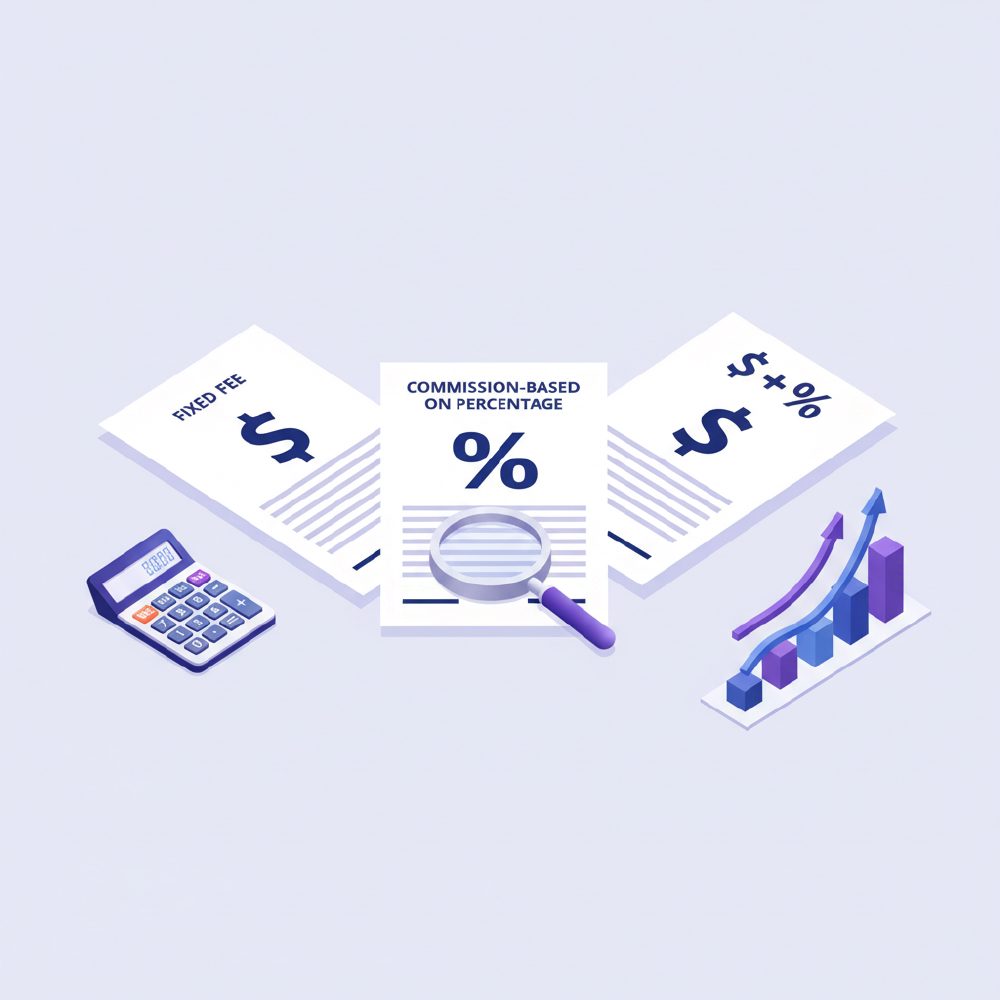
A CPA (Cost Per Acquisition) deal pays the affiliate a fixed fee, typically $50-$400 per qualifying first-time depositor, depending on the market and traffic source. The operator pays once, owns the player relationship forever, and carries all downstream risk. The affiliate gets paid fast and moves on.
In practice, a CPA is triggered when a referred player completes a defined action, usually a first deposit above a minimum threshold (commonly $10-$25), sometimes combined with a wagering requirement to filter out bonus hunters. The exact trigger definition is the single most negotiated clause in any CPA addendum, and operators who leave it vague get burned. I've seen affiliates drive hundreds of 'qualifying' deposits from players who never returned after clearing a welcome bonus, all technically compliant with a poorly written CPA definition.
CPA rates vary enormously by geography and vertical. In competitive European markets like the UK or Germany, serious affiliates won't move for less than €150-€200 per FTD. In LATAM markets like Peru (regulated under MINCETUR) or Colombia (Coljuegos), rates are lower, often $40-$80, because player LTV benchmarks are still being established. US-regulated states like New Jersey or Pennsylvania command the highest CPAs globally, sometimes north of $300-$400 per player, reflecting both the regulatory overhead and the relative scarcity of licensed operators allowed to advertise there.
The structural appeal of CPA for operators is cash-flow predictability. You know your customer acquisition cost before you know whether the player is profitable. That's useful when you're early-stage and your CFO needs a clean cost line. The downside is that once the CPA clears, the affiliate has zero incentive to send you quality traffic next month. Some affiliates, particularly smaller ones running thin-margin SEO sites, will deliberately send low-quality traffic in bursts to collect CPAs, then disappear. Platform providers like Income Access (now part of Paysafe) and MyAffiliates both offer fraud scoring tools to catch this, but you need to be actively using them.
How does RevShare work in casino affiliate programs, and what are the real risks?
RevShare pays the affiliate a percentage of net gaming revenue (NGR) generated by their referred players, typically 20-45%, for the lifetime of those players. It aligns incentives beautifully in theory, the affiliate only earns when you earn. In practice, negative carryover clauses, bonus costs, and payment processing fees can make NGR calculations contentious and expensive.
NGR is usually defined as gross gaming revenue minus bonuses, minus payment processing fees, sometimes minus a platform fee if you're on a white-label like SoftSwiss or EveryMatrix. That last deduction is a quiet gotcha: if you're paying 3-4% of GGR to your platform provider and then paying 35% RevShare on top of an NGR that already absorbed those costs, your effective affiliate cost is higher than the headline percentage suggests. Always model this with real numbers before signing a RevShare agreement.
The negative carryover debate is where operator-affiliate relationships get genuinely adversarial. Negative carryover means that if an affiliate's player cohort has a bad month, say, a high roller wins big, that deficit carries into the next month before the affiliate earns again. Most operators insist on it; most serious affiliates hate it and will walk if you enforce it aggressively. The compromise I've seen work is capping negative carryover at one month and resetting balances quarterly. It's not perfect but it keeps relationships intact.
RevShare is also where chargeback and bonus abuse risk concentrates. If a player deposits $500, triggers a 100% bonus, loses $1,000 gross, then successfully charges back their deposit, your NGR calculation can go negative, and depending on your affiliate agreement, you may still owe the affiliate a percentage of the gross loss before the chargeback. Operators running on Curaçao licenses (where player dispute resolution is looser) see this more than MGA-licensed operators. Build explicit chargeback and fraud deduction clauses into every RevShare contract from day one.
Despite the risks, RevShare is the model that serious, long-term affiliates prefer, and serious affiliates are the ones who actually move the needle. A top-tier SEO affiliate like Catena Media or Better Collective running a high-ranking casino comparison site will deliver players with 12-24 month LTVs. Paying them 35% RevShare on those players is a better deal for the operator than paying a $200 CPA for a player who churns in week two.
| Factor | CPA | RevShare |
|---|---|---|
| Operator cash-flow predictability | High, fixed cost per player | Low, variable, depends on player activity |
| Affiliate motivation longevity | Low, incentive ends at payment | High, affiliate earns as long as player plays |
| Chargeback / fraud exposure | Low, operator absorbs post-CPA | High, disputed deposits affect NGR |
| Best for high-LTV player markets | Suboptimal, undervalues good traffic | Strong, rewards quality traffic over time |
| Typical rate range (EU/UK) | $150-$400 per FTD | 25-45% of NGR |
| Audit complexity | Low, binary trigger | High, NGR formula disputes common |
What is a hybrid affiliate deal and why are most serious affiliates pushing for it in 2026?
A hybrid deal combines a reduced CPA (often 30-50% below the standalone CPA rate) with a lower RevShare percentage (typically 10-20% instead of 25-45%). The affiliate gets immediate cash flow plus long-term upside. The operator gets motivated traffic and a lower upfront cost than a pure CPA. It's become the default negotiating position for mid-to-large affiliates.
The mechanics are straightforward: an affiliate might accept $75 CPA plus 15% RevShare instead of $200 CPA or 35% RevShare. For the operator, the math only works if the player LTV is strong enough to make the ongoing RevShare tolerable. For the affiliate, it only makes sense if they trust the operator to track and pay accurately over months or years. That trust question is why hybrid deals are disproportionately signed with established operators, or with new operators who can demonstrate platform credibility, usually by being on a recognized white-label infrastructure with auditable reporting.
Affiliates who negotiate hybrid deals are effectively making a bet on operator longevity. I've watched affiliates get burned when a Curaçao-licensed operator folded 18 months into a hybrid agreement, the RevShare tail they were counting on evaporated overnight. This is why serious affiliates increasingly ask for platform references and check whether the operator's affiliate software (Income Access, MyAffiliates, Affilka by SoftSwiss, Cellxpert) has independent reporting that the affiliate can verify. Affilka in particular has gained traction precisely because affiliates trust its reporting transparency.
From the operator side, hybrid deals make most sense once you have six-plus months of player LTV data. Before that, you're guessing at what the RevShare tail will cost you. Operators who launch on hybrid deals without LTV benchmarks often discover, painfully, that their player cohort churns faster than expected, making the RevShare component nearly worthless to affiliates and the reduced CPA insufficient to attract quality partners. Get your cohort data first.
How should operators compare CPA, RevShare and hybrid deals in terms of total acquisition cost?
Total acquisition cost (TAC) is the right metric, not the headline rate. A $200 CPA looks cheap until you calculate it against a 30-day player LTV of $180. A 35% RevShare looks expensive until you realize the affiliate's players average 14-month retention. Model TAC at 3, 6, and 12 months before committing to any structure.
Here's a simplified model I use with operators. Take a cohort of 100 players referred by an affiliate. Assume average first-month NGR of $150 per player. Under a $200 CPA, your acquisition cost is $20,000 for the cohort regardless of what happens next. Under 35% RevShare, month-one payout is $5,250 (35% × $150 × 100). By month three, if 40 players are still active at $120 NGR average, the RevShare payout is $1,680/month ongoing. By month eight, the cumulative RevShare cost exceeds the CPA cost, but only if retention holds. This is why operators with strong retention mechanics (loyalty programs, live dealer product depth, personalized CRM) genuinely benefit from RevShare. Operators with weak retention pay more under RevShare than they would have under CPA.
The variables that shift this calculation most dramatically are bonus cost treatment, payment processing fees, and jackpot contributions, all of which reduce NGR before the RevShare percentage applies. On a platform like EveryMatrix, bonus costs are typically deducted from NGR at face value. On some white-label setups, there's a platform margin baked in that further compresses NGR. I've seen operators present affiliates with RevShare agreements where the effective payout on gross revenue was closer to 15% once all deductions were applied, affiliates who did the math walked away.
| Model | Month 1 Cost | Month 6 Cumulative | Month 12 Cumulative | Break-even vs CPA |
|---|---|---|---|---|
| CPA @ $200/player | $20,000 | $20,000 | $20,000 | N/A, fixed |
| RevShare @ 35% NGR | $5,250 | $13,800* | $22,400* | ~Month 9-10 |
| Hybrid: $75 CPA + 15% NGR | $7,500 + $2,250 | $7,500 + $9,900* | $7,500 + $16,200* | ~Month 11-12 |
What are the benefits of a casino and iGaming affiliate program for operators beyond player acquisition?
Beyond raw player acquisition, a well-run affiliate program builds brand credibility in markets where paid media is restricted, generates SEO backlink equity, and creates a distributed sales force that operates on pure performance, you only pay for results. In regulated markets where Google and Meta restrict gambling ads, affiliates are often the primary scalable channel.
In markets like the UK (regulated by the UKGC), Germany (GlüStV 2021), and Ontario (iGO), paid search and social advertising for gambling is heavily restricted or requires explicit licensing. Affiliates operating review and comparison sites fill that gap, they rank organically for high-intent queries and funnel players who are already in decision mode. An operator without a strong affiliate program in these markets is effectively invisible to a significant portion of their addressable audience. The SEO backlink value from a single placement on a high-DA affiliate site can be worth thousands in equivalent link-building spend.
Affiliate programs also function as a market intelligence network. Affiliates who work across multiple operators will tell you, sometimes explicitly, sometimes through their traffic behavior, which competitors are converting better, which welcome bonus structures are resonating, and which payment methods are causing friction. I've had affiliate managers flag payment processing issues to me before our own internal monitoring caught them, simply because the affiliate noticed their referred players were abandoning at the cashier. That real-time feedback loop has genuine operational value.
For operators entering new markets, say, a Curaçao-licensed operator targeting Brazil ahead of formal regulation, or a new entrant in Mexico under SEGOB, local affiliates with established audiences are often the fastest path to initial player volume. Building that affiliate network from scratch takes time, but platforms like Affilka and Income Access provide the infrastructure to manage hundreds of affiliate relationships from a single dashboard, with automated reporting and payment processing that doesn't require a dedicated affiliate team until you're at meaningful scale.
Which affiliate commission model should a new operator default to at launch?
New operators without player LTV data should default to RevShare-only or hybrid deals with established affiliates, and avoid committing to high CPAs until they have at least 90 days of cohort retention data. The temptation to offer aggressive CPAs to attract affiliates quickly is real, and it's how operators blow their acquisition budget on churning players.
The logic is simple: you don't know your player LTV yet. If you offer $200 CPA and your players average $80 NGR in their first 60 days before churning, you've paid $200 to acquire an $80 player. RevShare at 35% on that same player costs you $28, dramatically better. The risk is that affiliates, especially smaller ones, prefer CPA because it pays immediately and doesn't require trusting a new operator's long-term tracking integrity. So you may attract lower-tier affiliates initially.
The practical compromise for launch is a tiered structure: offer RevShare (25-30%) to all affiliates as the default, with a hybrid option available to affiliates who can demonstrate traffic quality upfront, verified through a trial period of 30-60 days. After 90 days, review cohort data and introduce CPA as an option for affiliates whose player LTV justifies it. This protects your budget while giving motivated affiliates a path to better terms.
One thing operators consistently underestimate at launch is the affiliate agreement itself. The commission model is just the headline; the real risk is in the sub-clauses around negative carryover, brand bidding restrictions, sub-affiliate arrangements, and termination rights. Get a gaming lawyer to review your standard affiliate agreement before you publish it, not after you've signed 50 affiliates to terms you later want to change. Jurisdictions like Malta (MGA) and the UK (UKGC) have specific requirements around affiliate marketing disclosures that need to be reflected in your T&Cs.
How do different markets and regulators affect which affiliate model operators can offer?
Regulatory environment directly constrains affiliate deal structures. UKGC-licensed operators face strict affiliate conduct requirements and cannot pay CPAs that incentivize affiliates to target vulnerable players. MGA operators have more flexibility but must ensure affiliate marketing materials are approved. US-regulated states often restrict affiliate marketing entirely or require affiliate registration.
In the UK, the UKGC's 2022 affiliate marketing guidance tightened requirements significantly. Operators are now responsible for all marketing content published by their affiliates, including SEO content on third-party sites. This has made some operators cautious about CPA structures that incentivize affiliates to maximize player acquisition volume without regard for responsible gambling. The practical effect is that UK-facing operators increasingly prefer RevShare or hybrid models where the affiliate's long-term earnings depend on player retention rather than pure acquisition volume.
In US-regulated states, the picture is more fragmented. New Jersey, Pennsylvania, and Michigan all permit affiliate marketing but require affiliates to register with the state gaming authority in some form. The registration requirements vary: New Jersey's DGE has a relatively streamlined process; Pennsylvania's PGCB is more demanding. Some states effectively prohibit third-party affiliate marketing for licensed operators, which is why several major US operators have built in-house performance marketing teams instead of relying on external affiliates. If you're targeting the US market, get specific legal advice per state, do not assume that a model that works in NJ will work in CO or IL.
Offshore jurisdictions like Curaçao (operating under the new Curaçao Gaming Authority framework as of 2023) and Anjouan have minimal affiliate marketing restrictions, which is why the offshore market has historically been where aggressive CPA deals flourished. The trade-off is that the player protections are weaker, chargeback rates tend to be higher, and the affiliate traffic quality is more variable. Operators targeting offshore markets with CPA deals need robust fraud detection, tools like SEON or Sardine integrated at the registration layer, to avoid paying CPAs for synthetic or bot-driven accounts.
What affiliate software and tracking platforms do operators actually use, and does the choice affect deal structure?
Affiliate tracking platform choice directly affects which deal structures are operationally feasible. Platforms like Affilka (SoftSwiss), Income Access, MyAffiliates, and Cellxpert each have different NGR calculation capabilities, reporting granularity, and integration depth. Affiliates with experience across platforms have strong preferences, and will push back on operators using less transparent systems.
Affilka, built by SoftSwiss and tightly integrated with their casino platform, is the most common choice for operators on the SoftSwiss white-label or turnkey stack. Its NGR reporting is granular and auditable, which matters for RevShare deals, affiliates can drill into player-level data (anonymized) to verify their commission calculations. That transparency is a genuine selling point when recruiting serious affiliates who've been burned by opaque reporting elsewhere. The downside is that Affilka's flexibility for complex hybrid deal structures has historically lagged behind MyAffiliates.
MyAffiliates is the most configurable platform on the market, you can model almost any commission structure imaginable, including tiered CPAs, sub-affiliate overrides, and complex NGR definitions with multiple deduction layers. That flexibility is also its complexity: setting it up correctly requires either an experienced affiliate manager or a paid onboarding engagement with the MyAffiliates team. Operators who rush the setup end up with misconfigured commission rules that either overpay or underpay affiliates, both outcomes damage trust.
Income Access (Paysafe) sits in the middle: solid reporting, good integration with major casino platforms, and a large existing affiliate network that operators can tap into at launch. The network effect is real, affiliates already registered on Income Access can onboard to your program faster. For operators who want to move quickly and don't need highly customized deal structures, it's a reasonable default. Cellxpert is newer and has gained traction with operators who want a cleaner UI and better API flexibility for custom integrations, though its affiliate network is smaller than Income Access.
The practical advice: choose your affiliate platform before you finalize your commission model. If you want to run complex hybrid deals with tiered RevShare based on player volume, you need a platform that can execute that without manual reconciliation. Manual commission calculations at scale are an operational liability, they generate disputes, delay payments, and cost you affiliate relationships.
| Platform | Best For | RevShare Flexibility | CPA Flexibility | Affiliate Network | Typical Integration |
|---|---|---|---|---|---|
| Affilka (SoftSwiss) | SoftSwiss platform operators | High, granular NGR | Standard | Medium | Native SoftSwiss |
| MyAffiliates | Complex deal structures | Very High, fully configurable | Very High | Large | API / custom |
| Income Access (Paysafe) | Fast launch, network access | Medium | Standard | Very Large | Broad platform support |
| Cellxpert | Modern UI, API-first ops | High | High | Small-Medium | API / custom |
What are the most common mistakes operators make when structuring their first affiliate program?
The three most expensive mistakes are: offering CPA rates before having LTV data, writing vague NGR definitions that affiliates can dispute later, and failing to include brand bidding restrictions that let affiliates cannibalize your direct traffic. Each one costs real money and some cost affiliate relationships that take years to rebuild.
Brand bidding, where affiliates buy your brand name as a paid search keyword and intercept players who were already coming to you directly, is endemic in iGaming. An affiliate who ranks for 'YourCasino review' or bids on 'YourCasino bonus' and collects a CPA for every player they intercept is effectively charging you an acquisition fee for players you would have acquired anyway. Every affiliate agreement needs an explicit brand bidding prohibition with defined consequences. Enforce it. Platforms like BrandVerity can monitor for brand bidding violations automatically, it's worth the cost.
Vague NGR definitions are the second major failure mode. If your affiliate agreement says 'RevShare is calculated on net gaming revenue' without defining what deductions apply, you will have disputes. Define it precisely: gross gaming revenue, minus bonuses at face value, minus payment processing fees (specify the cap or percentage), minus chargebacks, minus jackpot contributions if applicable. The more specific, the fewer disputes. Have your affiliate agreement reviewed by someone who has actually managed RevShare programs at scale, not just a gaming lawyer who knows the regulatory side.
The third mistake is failing to segment affiliates by traffic quality before assigning commission tiers. Not all affiliates are equal, a high-DA SEO site sending organic traffic from a Tier 1 market is worth dramatically more than a coupon site sending bonus hunters. Operators who apply the same CPA or RevShare rate across all affiliates are either overpaying for low-quality traffic or undervaluing their best partners. Build a tiered structure from the start: standard terms for new affiliates, premium terms for affiliates who demonstrate quality over a trial period. Your affiliate software should make this easy to administer.
How do operators negotiate better affiliate deals as they scale?
Leverage in affiliate negotiations comes from two things: player LTV data you can show, and traffic volume the affiliate wants access to. Once you have 6-12 months of cohort data showing strong retention, you can negotiate RevShare rates down or CPA rates up from a position of proof rather than promises. Before that, you're negotiating on faith.
The most effective negotiating tool I've seen operators use is a transparent LTV report shared with prospective affiliates, showing average player value at 30, 90, and 180 days by traffic source. Affiliates who see that your platform retains players well will accept lower CPA rates because they trust the RevShare tail will pay. Affiliates who don't trust your retention will demand high CPAs as insurance. Your retention data is your credibility.
At scale, operators can also negotiate exclusivity windows, a period where a top affiliate commits to featuring your brand prominently in exchange for better commission terms or a guaranteed minimum payout. These arrangements work well for operators with strong brand equity and product differentiation. They're harder to execute if you're running a generic white-label with no distinctive product features, because the affiliate has no reason to prioritize you over a competitor offering the same product at better rates.
One underused tactic: sub-affiliate programs. If you allow your top affiliates to recruit sub-affiliates and earn an override on their sub-affiliates' commissions, you create a distributed recruitment network at no additional cost to you. The top affiliate becomes invested in the program's success and actively recruits on your behalf. MyAffiliates handles sub-affiliate structures natively; Affilka has added this capability more recently. It's worth enabling from launch even if you don't actively promote it, serious affiliates will ask for it.


Comments
No comments yet, be the first.