Turnkey Online Casino in 2026: The Complete Cost, ROI & Launch Analysis for Founders
Launching a turnkey online casino in 2026 means committing $80,000–$300,000 before your first player deposits — this analysis breaks down every cost layer, the revenue share math that determines your margin, and the realistic timeline to ROI so you can make the decision with your eyes open.
A turnkey online casino is a fully configured, branded gambling platform delivered by a B2B provider — games, back-office, payments and compliance tools included — where the operator owns the master license or obtains their own sub-license. White-label sits one layer above that: you rent a brand slot on someone else's license and platform, sacrificing control for lower entry cost.
What exactly is a turnkey online casino and how does it differ from white-label?
A turnkey online casino is a fully configured, branded gambling platform delivered by a B2B provider — games, back-office, payments and compliance tools included — where the operator owns the master license or obtains their own sub-license. White-label sits one layer above that: you rent a brand slot on someone else's license and platform, sacrificing control for lower entry cost.
The distinction matters enormously for your P&L. With a white-label arrangement from providers like Income Access or Jumpman Gaming, you're essentially a revenue-share tenant. The platform owner takes 40–60% of net gaming revenue (NGR) in exchange for handling compliance, hosting and often payment processing. Your ceiling is low, but so is your floor — you can be live in 4–8 weeks for under $30,000 in some cases.
A turnkey solution — think SoftSwiss Casino Platform, EveryMatrix's CasinoEngine, or Pronet Gaming's iGaming Suite — gives you a licensed or licensable platform that you operate under your own brand and, critically, your own operator license. You pay a setup fee, a monthly platform fee or GGR share, and you own the player relationships. That ownership is worth real money: your player database is an asset you can sell, merge or leverage for a second brand.
The third option, a custom build, is what operators graduate to at scale — think $500,000+ in development before a single bet. For a first or second launch, turnkey hits the right balance of speed, cost and control. The key question isn't white-label versus turnkey in the abstract; it's whether your projected GGR justifies the higher upfront cost of turnkey over the lower ongoing share of white-label. I'll put numbers to that later in this piece.
| Dimension | White-Label | Turnkey | Custom Build |
|---|---|---|---|
| Time to launch | 4–8 weeks | 3–6 months | 12–24 months |
| Setup cost (est.) | $5,000–$30,000 | $20,000–$80,000 | $300,000–$1M+ |
| Monthly platform cost | 40–60% NGR share | 15–35% GGR share + flat fee | Hosting + staff only |
| License required | Operator sub-license or none | Own operator license | Own operator license |
| Player data ownership | No | Yes | Yes |
| Customization depth | Limited | Medium–High | Full |
| Best for | MVP / market test | Serious launch with exit potential | Established operator scaling |
What does a turnkey online casino actually cost to set up in 2026?
Budget $80,000–$300,000 for a complete turnkey casino launch including platform setup, licensing, initial game content deals, payment integration and 90 days of operating costs. The spread is wide because jurisdiction and game content scope drive costs more than platform choice. Offshore launches sit at the low end; regulated EU markets push you to the top.
Breaking it down: platform setup fees with providers like SoftSwiss or EveryMatrix run $20,000–$80,000 depending on scope and negotiation leverage. That covers platform configuration, back-office setup, basic CRM and the initial game aggregator integration. What it does not cover — and vendors bury this — is the cost of individual payment provider integrations, which can run $2,000–$10,000 per PSP, and responsible gambling tool licensing (think Neccton/mentor or similar), which adds $1,000–$3,000 per month.
Licensing is the second major cost center. A Curaçao Gaming Authority (CGA) license under the new 2023 framework costs roughly $30,000–$50,000 all-in for year one including legal fees, AML policy drafting and the application itself. Anjouan (Comoros) is cheaper — around $15,000–$25,000 — but carries less market credibility and some payment processors won't touch it. MGA (Malta) is the gold standard for European credibility at $25,000+ in regulatory fees alone, plus $50,000–$150,000 in compliance infrastructure (AML officer, technical audits, RNG certification). Budget 6–12 months just for the MGA process.
Then there's the game content layer. A turnkey platform typically bundles access to aggregated content from providers like Relax Gaming, Pragmatic Play or Evolution via the platform's existing agreements — but you'll often pay a content fee of 3–5% of GGR on top of your platform share. If you want direct deals with studios (better rates at volume, exclusive content), add $10,000–$30,000 per studio in minimum guarantees. For a new operator, aggregator-first is the right call; direct deals make sense once you're doing $500,000+ GGR monthly.
Working capital is the budget item operators consistently underestimate. You need a player liability reserve (typically 100% of player balances held in a segregated account), a chargeback buffer (credit card processors often require 3–6 months of projected chargebacks in escrow), and 3–6 months of marketing spend to reach any meaningful player volume. Realistically, that's another $50,000–$150,000 sitting idle before you've earned a dollar.
| Cost Item | Offshore (e.g., Curaçao) | Regulated EU (e.g., MGA) | Notes |
|---|---|---|---|
| Platform setup fee | $20,000–$50,000 | $40,000–$80,000 | Negotiable; varies by provider |
| Licensing (Year 1) | $30,000–$50,000 | $75,000–$200,000 | MGA includes audit + compliance infra |
| Payment integrations | $5,000–$20,000 | $10,000–$30,000 | Per-PSP fees + local acquiring setup |
| Game content (aggregator) | Included or 3–5% GGR | Included or 3–5% GGR | Direct deals add minimums |
| KYC/AML tooling | $1,000–$3,000/mo | $3,000–$8,000/mo | Sumsub, Onfido, ComplyAdvantage etc. |
| Working capital reserve | $50,000–$100,000 | $100,000–$200,000 | Player funds + chargeback buffer |
| Marketing (first 3 months) | $30,000–$100,000 | $50,000–$150,000 | Affiliates + paid acquisition |
| Total estimated Year 1 | $150,000–$350,000 | $300,000–$700,000 | Excludes ongoing platform share |
How does turnkey casino revenue share work and what margin should you model?
Most turnkey platform providers charge 15–35% of GGR as their ongoing fee, often with a minimum monthly guarantee of $3,000–$10,000. After paying the platform, game content fees, payment processing (3–8%), affiliate commissions (25–45% NGR) and operational overhead, realistic operator EBITDA margins land at 10–25% of GGR — assuming competent acquisition.
The revenue share waterfall is where most operator financial models fall apart. Start with Gross Gaming Revenue (GGR = total bets minus total wins). From that, subtract: platform share (say 20%), game content fees (4%), payment processing (5% blended), and affiliate commissions (35% of NGR, where NGR = GGR minus bonuses). On a $100 GGR unit, you might keep $36 before staff, hosting, compliance tools and customer support costs. Add those and you're at $20–$25 EBITDA — if everything is working well.
The affiliate commission line deserves special attention. Affiliate networks like Income Access, MyAffiliates or Affilka (SoftSwiss's own tool) are the primary acquisition channel for most turnkey operators, and the deals range from 25% revenue share to 45% NGR plus a CPA component. Operators who launch without a clear affiliate strategy and just accept whatever terms affiliates demand often end up with negative unit economics on their first cohort of players. Negotiate CPA deals where possible — they're more predictable and cap your downside on bonus abusers.
One structural advantage of owning your own turnkey license versus white-label: you can negotiate your platform share down as your GGR grows. SoftSwiss and EveryMatrix both have tiered structures where operators doing $1M+ GGR monthly can renegotiate to 12–18% shares. On a white-label, you're stuck at whatever the master license holder charges, forever. That delta — say 10 percentage points of GGR — becomes enormous at scale. At $2M monthly GGR, 10 points is $200,000 per month in margin.
Explore the launch guides

How to Start an Online Casino in 2026: The Operator's Honest Blueprint
A step-by-step operator blueprint covering every major decision in launching an online casino in 2026 — from jurisdiction and platform model to payment integration and go-to-market — with real cost ranges and the pitfalls vendors rarely mention.
White Label vs Turnkey Casino
Compare white label, turnkey and custom casino solutions: control, cost, speed and when each model wins.
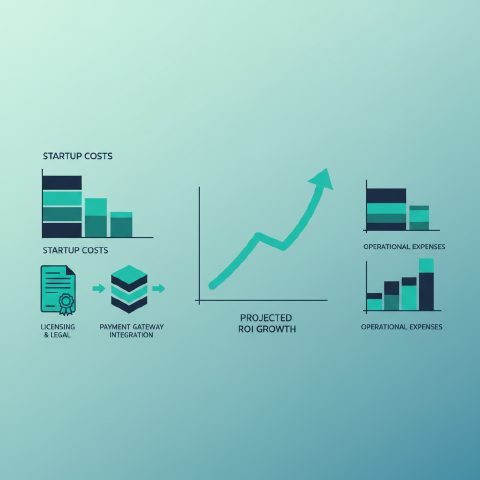
How Much Does It Cost to Start an Online Casino in 2026: Real Numbers, Hidden Fees & ROI Timelines
Starting an online casino in 2026 costs anywhere from $30,000 for a lean white-label to well over $2 million for a fully licensed, custom-built operation — and the gap between those numbers comes down to jurisdiction, platform choice, and how many vendor fees you didn't see coming.

iGaming Software & Platform: How to Choose the Right igaming Software Provider in 2026
Choosing the wrong iGaming software provider is the single most expensive mistake a new operator can make. This guide breaks down every platform model, major vendor, licensing dependency and hidden cost — so you can make the decision with your eyes open.

iGaming Payments: How to Choose the Right Online Casino Payment Gateway in 2026
Picking the wrong payment gateway is one of the fastest ways to kill an online casino launch. This guide breaks down how to evaluate providers, structure your payment stack, and avoid the compliance traps that operators discover only after go-live.
Casino Game Content & Aggregators
Game aggregators, live dealer providers, slot suppliers and casino game APIs for operators.

Gambling License Guide 2026: Every Jurisdiction, Cost, and Trade-Off Operators Need to Know Before You Apply
A jurisdiction-by-jurisdiction breakdown of gambling license costs, timelines, compliance requirements and strategic trade-offs for operators launching or expanding in 2026 — written for founders, not players.
Which jurisdictions make financial sense for a turnkey casino launch in 2026?
For most first-time operators, Curaçao offers the best cost-to-credibility ratio in 2026: $30,000–$50,000 all-in, 3–4 month timeline, and payment processors that actually work with it. MGA is worth the premium if you're targeting EU players who demand it. US state licenses are a different category entirely — multi-year, multi-million-dollar commitments.
Curaçao went through a major regulatory overhaul in 2023 with the new National Ordinance on Offshore Games of Hazard (NOOGH), replacing the old sub-license system with direct operator licenses from the Curaçao Gaming Authority. The new framework is stricter — you need a local representative, AML policies, technical standards compliance — but the license is more defensible than the old B2C sub-licenses were. Cost is roughly $15,000–$20,000 in government fees plus $10,000–$20,000 in legal and setup costs. Annual renewal runs $10,000–$15,000. It's the right starting point for operators targeting gray markets in LATAM, Asia or Africa.
MGA (Malta Gaming Authority) is the credibility play for European markets. Payment processors are more willing to work with MGA-licensed operators, and players in Germany, Scandinavia and southern Europe trust the brand. But the compliance burden is real: you need a designated AML officer (salary or outsourced at $3,000–$8,000/month), quarterly reporting, technical audits and RNG certifications from approved labs like BMM or GLI. Budget 9–15 months and $150,000–$250,000 for year one. Do not attempt MGA without a specialized gaming lawyer — the application process alone will eat you alive.
UKGC (UK Gambling Commission) is the most restrictive and expensive regulated market. Operator license fees scale with GGR, compliance requirements are exhaustive, and the Gambling Act review has added further obligations around affordability checks and marketing restrictions. I don't recommend it as a first market unless you have a specific UK acquisition strategy and deep pockets. Similarly, US state iGaming licenses (New Jersey, Pennsylvania, Michigan) require $500,000+ in application fees, background investigations, local partnerships and 12–36 month timelines. They're worth pursuing if you have the capital and a long-term US strategy, but they're not a turnkey play.
For LATAM specifically: Colombia (Coljuegos) and Peru (MINCETUR) are the two regulated markets with realistic entry paths for foreign operators. Colombia requires a local entity and a license fee of approximately $1,300/month plus 15.5% tax on GGR. Peru's process is newer and still evolving. Mexico (SEGOB) technically requires a local partner with an existing permit, making it complex for pure-play online operators. Brazil's regulated market launched in 2025 and is worth watching — early licensing costs and tax rates (12% GGR federal tax) are now clearer, though compliance infrastructure is still maturing.
What are the realistic break-even and ROI timelines for a turnkey casino?
Most well-funded turnkey casino operators reach operational break-even (monthly revenues covering monthly costs) at 12–18 months post-launch. Full ROI on initial capital — recovering the $150,000–$300,000 setup investment — typically takes 24–36 months. Operators who underfund player acquisition or choose the wrong jurisdiction rarely break even at all.
The math is straightforward once you model it honestly. Assume a Curaçao-licensed turnkey casino with $200,000 total launch investment, a platform share of 20% GGR, and an affiliate-heavy acquisition model. To cover $30,000/month in fixed costs (platform minimum, compliance tools, staff, hosting), you need roughly $150,000 in monthly GGR — which requires an active player base of 500–1,000 depositing players depending on your game mix and average bet size. Getting to that player volume typically takes 6–12 months of active affiliate recruitment and paid acquisition.
The inflection point most operators miss: months 3–9 are cash-negative and psychologically brutal. You're spending on acquisition, your affiliate pipeline is still thin, and your platform minimum guarantees are due regardless of revenue. Operators who don't model this cash trough and reserve for it end up making desperate decisions — accepting bad affiliate deals, loosening bonus terms, or cutting compliance corners. None of those end well.
On the upside, a turnkey casino that reaches $500,000 monthly GGR with a seasoned affiliate program and a 20% EBITDA margin is generating $100,000/month — a $1.2M annual return on a $250,000 investment. That's a 4.8x return, achieved in 3–4 years from launch. The business also has exit value: iGaming M&A typically values active casinos at 2–4x annual EBITDA, so a $1.2M EBITDA business could exit at $2.4M–$4.8M. That's the upside case, and it requires disciplined execution on acquisition, retention and compliance.
Which turnkey casino platform providers should operators evaluate in 2026?
SoftSwiss, EveryMatrix and Pronet Gaming are the three platforms I'd put in front of any serious operator evaluating a turnkey launch in 2026. Each has meaningful differences in GGR share structure, game content depth, payment tooling and regulatory support. The right choice depends on your target market and whether you value speed or long-term margin.
SoftSwiss Casino Platform is the most operator-friendly option for Curaçao-licensed offshore launches. Their turnkey package includes the Affilka affiliate platform, Midesk KYC tooling and access to 13,000+ games via their aggregator. Setup fees are in the $30,000–$60,000 range (they don't publish pricing, but this is the realistic market range based on operator conversations). Their GGR share is typically 20–25% for new operators. The platform is genuinely mature — they've shipped hundreds of operator launches — and their back-office is one of the cleaner ones I've used. Downside: they're Belarus-headquartered, which creates some banking friction for EU-facing operators post-2022.
EveryMatrix runs CasinoEngine for game aggregation and OddsMatrix for sportsbook, with the full suite branded as GamMatrix. It's the stronger choice for EU-regulated markets — they have deep MGA and UKGC experience, and their compliance tooling is built for regulated environments. Their content library is comparable to SoftSwiss (10,000+ titles), and their payment hub (PaymentIQ) is genuinely one of the best in the industry for conversion optimization. Setup costs are similar, but their platform share can be negotiated lower for operators committing to volume guarantees.
Pronet Gaming positions itself as a more flexible, white-glove option for operators entering emerging markets — LATAM, Africa, CEE. Their sportsbook product is strong, and they'll work with operators on custom commercial terms more readily than the larger providers. For a pure casino launch, they're a reasonable choice; for a casino-plus-sports product, they're worth a serious look. Other providers worth evaluating depending on your niche: Softgamings (faster/cheaper setup, good for MVP launches), BetConstruct (strong in LATAM/CIS), and NuxGame (budget-friendly, simpler back-office).
What hidden costs do turnkey casino operators discover too late?
The costs that kill operator margins post-launch are payment processing fees, chargeback management, bonus abuse losses, compliance tooling upgrades and the real cost of customer support at scale. These routinely add 20–40% to the budget operators originally model — and most vendor proposals don't mention them.
Payment processing is the biggest surprise. Credit card acquiring for gambling merchants runs 3.5–6% per transaction on a good day, and many acquiring banks require rolling reserves of 5–10% of monthly volume held for 180 days. Add crypto payment gateway fees (1–2%), e-wallet fees (Skrill, Neteller at 2.5–3.5%), and bank transfer processing, and your blended payment cost easily hits 4–5% of deposits. On $300,000 in monthly deposits, that's $12,000–$15,000/month in processing costs alone — a line item that often doesn't appear in vendor pitch decks.
Chargeback management is a related cost that compounds. Gambling chargebacks run higher than most industries — 0.5–1.5% of transaction volume is common, and if you exceed processor thresholds (typically 1%), you risk losing your acquiring relationship entirely. Chargeback representment services, fraud screening tools (Kount, Sardine, etc.) and the staff time to manage disputes add $2,000–$8,000/month depending on your transaction volume. Operators who launch with weak fraud controls get hit hard in months 3–6 when bonus abusers and card fraudsters find them.
Bonus abuse is undermodeled in almost every operator financial plan I review. Turnkey platforms give you the tools to set wagering requirements and game contribution weights, but the economics of your welcome bonus offer determine whether you're acquiring real players or professional bonus hunters. A 100% match up to $200 with 30x wagering sounds reasonable, but if your game mix has high-RTP slots that bonus hunters target, your effective bonus cost can run 60–80% of the bonus amount. Tighten your bonus terms before launch, not after you've burned $50,000 finding out the hard way.
Regulatory compliance costs also grow over time, not shrink. When Curaçao tightened its framework in 2023, existing operators had to retrofit AML policies, appoint local representatives and upgrade their technical standards — costs that weren't in their original budgets. MGA introduced enhanced source-of-funds requirements in 2022 that added KYC friction and customer support overhead. Budget for compliance evolution, not just compliance at launch. I'd set aside 10–15% of your annual operating budget as a compliance contingency.
How long does it take to launch a turnkey online casino from contract to live?
A realistic turnkey casino launch timeline is 3–6 months from signing a platform contract to going live — assuming your license is already in hand or running in parallel. Licensing itself adds 3–12 months depending on jurisdiction. Operators who try to compress this timeline by skipping compliance steps pay for it later, usually in payment processor terminations.
The critical path is almost always licensing, not platform configuration. SoftSwiss can have a configured platform ready in 6–8 weeks. EveryMatrix's onboarding runs 8–12 weeks for a full setup. The platform work is parallelizable with your license application — you should be doing both simultaneously. What you cannot do is go live without a license and a compliant payment setup. Operators who launch on a 'stealth' basis without proper licensing find that acquiring banks, payment processors and major game studios won't work with them, which effectively means no real business.
For Curaçao, the new CGA process under NOOGH takes 3–5 months realistically, assuming clean beneficial ownership documentation and a complete application. For MGA, budget 9–15 months and do not start the clock until you have a Maltese entity established, a compliance officer appointed and your technical documentation ready. US state applications are 12–36 months and require local partnerships in most states — treat them as a separate multi-year project, not a launch timeline.
The go-live checklist that platforms often underspecify: payment provider integration testing (4–6 weeks minimum for each PSP), responsible gambling tool certification (varies by jurisdiction), game content certification in regulated markets (GLI or BMM audits take 4–8 weeks), and AML policy approval. Operators who rush these steps get their accounts frozen by processors or face regulatory action within the first year. I've seen it happen more than once — a rushed launch that looked like it saved 6 weeks ended up costing 6 months of downtime and $100,000 in remediation costs.
What payment infrastructure does a turnkey casino need to actually convert players?
A functional turnkey casino payment stack needs at minimum one card acquirer, one or two e-wallets (Skrill and Neteller remain dominant in Europe), a crypto gateway, and a local payment method relevant to your target market. Conversion rates drop 30–50% when players can't use their preferred payment method — this is not an area to cut corners.
The hardest part of casino payment infrastructure isn't the technology — it's getting approved by acquiring banks. Gambling is a restricted category for most card processors, and new operators without a track record face significant friction. Expect to provide 6–12 months of projected transaction volumes, a detailed AML policy, proof of licensing, and often a personal guarantee from the beneficial owner. Processing rates for new operators start high (4–6%) and can be renegotiated down after 6–12 months of clean transaction history. PaymentIQ (EveryMatrix) and SoftSwiss's built-in payment hub both have pre-negotiated relationships with acquiring banks, which is a genuine advantage of using an established turnkey provider over building your own payment stack.
Crypto is increasingly important, not just for offshore operators. Bitcoin, Ethereum and stablecoins (USDT in particular) now represent 20–40% of deposits on some offshore platforms, and crypto payment processors like CoinsPaid or B2BinPay integrate cleanly with major turnkey platforms. Crypto also solves some of the acquiring friction — transactions are irreversible, chargebacks don't exist, and processing fees are lower (0.5–2%). The trade-off is AML complexity: you need blockchain analytics tooling (Chainalysis, Elliptic or similar) to screen incoming crypto for illicit origins, which adds $1,000–$5,000/month to your compliance stack.
Local payment methods are the conversion multiplier that operators undervalue. In Brazil, Pix is now the dominant payment method and casino operators without it are invisible to a huge player segment. In Mexico, OXXO cash vouchers matter. In Germany, Sofort and Giropay are expected. In the Nordics, Trustly's Open Banking product is standard. Each local method requires a separate integration and commercial agreement. Budget $3,000–$8,000 per local method for integration and expect 2–4 weeks per integration on a well-configured turnkey platform.
What tax obligations do turnkey casino operators face and how do they affect ROI?
Tax treatment varies dramatically by jurisdiction and is one of the most consequential decisions in your business model. Curaçao operators pay 2% of net profit under the island's offshore regime. MGA-licensed operators in Malta pay 5% GGR tax. EU market-facing operators may owe consumption taxes in player countries regardless of where they're licensed — this is the 'point of consumption' issue that catches operators off guard.
The Curaçao offshore model looks tax-efficient on paper: 2% profit tax, no VAT on gambling, and Curaçao itself doesn't tax GGR. But if you're acquiring players in Germany, Sweden or the Netherlands, those countries assert the right to tax gambling revenue generated from their residents regardless of where your license is. Germany's new GlüStV 2021 framework imposes a 5.3% turnover tax (on stakes, not GGR — which is brutal for low-margin games) on any operator accepting German players. Sweden's Spelinspektionen requires a local license for Swedish players, with an 18% GGR tax. Operators who ignore point-of-consumption frameworks and get caught face back taxes plus penalties that can exceed their total revenue from those markets.
Malta-based operators benefit from EU treaty networks and a relatively low 5% GGR tax, but the effective tax burden rises once you factor in corporate income tax (Malta's effective rate for gaming companies is around 5% after refunds, though this is complex and requires specialist tax advice) and VAT on B2B services. The MGA framework is well-understood by investors and acquirers, which improves your exit multiple — a Curaçao-licensed casino typically trades at a lower multiple than an equivalent MGA-licensed business because of regulatory risk perception.
US state-level iGaming taxes are the most punishing: New Jersey taxes online casino GGR at 15%, Pennsylvania at 36% (one of the highest in the world for online slots), and Michigan at 20–28% depending on game type. These rates fundamentally reshape the unit economics compared to offshore operations. At 36% GGR tax in Pennsylvania, your margin model needs to be built on high-value player acquisition and strong retention — volume-based affiliate strategies that work offshore become unprofitable at those tax rates.
Latest guides
 spoke
spoke
Online Casino Games API Integration Explained
Integrating a casino games API is the single most consequential technical decision you'll make at launch. This guide cuts through the vendor pitch decks and explains exactly how aggregator APIs, direct studio connections, and hybrid stacks compare — with real costs, timelines, and the compliance traps most operators hit too late.
 listicle
Best Casino Game Aggregators 2026 Reviewed
Choosing a casino games aggregator is one of the highest-leverage decisions in your launch stack — it determines which studios you can offer, what you pay per GGR point, and how fast you can add content. This guide reviews the leading platforms for 2026 with real operator context.
 glossary
What Is a Casino Aggregator
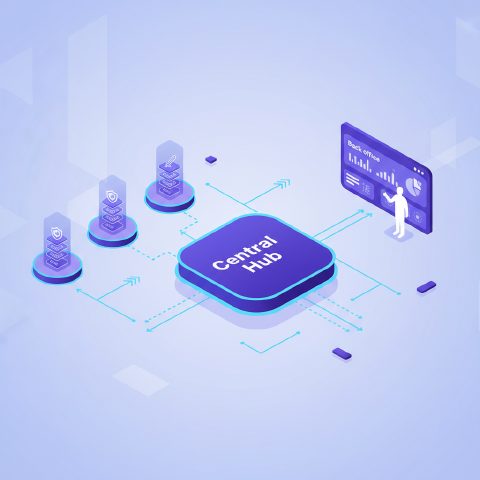
A casino aggregator is a B2B middleware layer that connects an operator's platform to hundreds of game studios through a single API integration — cutting months of direct deal-making down to weeks. Understanding how aggregators work, what they actually cost, and where they fall short is one of the most consequential decisions you'll make before launch.
 pillar
Casino Games Aggregator Complete Guide 2026
A casino games aggregator connects your platform to hundreds of game studios through a single integration — but the commercial terms, certification overhead, and revenue-share stacking can quietly kill your margins. Here's what to know before you sign.
 spoke
spoke
Telegram Casino Software Development Guide
Telegram Mini Apps have opened a genuine new distribution channel for casino operators, but the development path is more complex than vendors make it sound. This guide breaks down the real architecture, costs, and compliance decisions behind a production-ready Telegram casino in 2026.
 spoke
spoke
iGaming Fraud Detection and Prevention Solutions
Fraud detection is the most under-scoped line item in a casino launch budget. This guide breaks down how iGaming fraud prevention solutions actually work, what they cost, and which platforms are worth the contract.
 spoke
spoke
iGaming CRM Software for Player Retention
Choosing the right iGaming CRM platform is one of the highest-leverage decisions an operator makes before launch — and one of the most misunderstood. This guide cuts through vendor marketing to show you what retention software actually costs, how it integrates, and where most operators leave money on the table.
 spoke
spoke
Casino API Integration Guide for Operators
Casino API integration is the technical backbone of every online casino launch — and the decisions you make here determine your game library, payment conversion rates, and compliance posture for years. This guide cuts through vendor sales decks to give operators the real picture.
 spoke
spoke
Multilingual iGaming Platform Why It Matters
Operators routinely treat multilingual support as a late-stage UI polish task. It isn't — it's a core architecture decision that determines which markets you can enter, how fast you can localize, and whether your payment stack actually converts.
 spoke
spoke
Custom Casino Software Development When to Build
Custom casino software development gives operators full control over product, margins and data — but it's a multi-year, seven-figure commitment most early-stage operators shouldn't make. This guide covers exactly when a bespoke build pays off and when it doesn't.
 glossary
What Is PAM Software in iGaming
PAM software is the operational backbone of any online casino — it manages player accounts, KYC, bonuses, payments, and compliance in one system. Here's what operators need to understand before signing a contract.
 glossary
Casino Management System for Online Casinos Explained
A casino management system (CMS) is the back-office engine that controls player accounts, bonuses, reporting, compliance, and payments in a single platform. This guide breaks down every core module, real provider options, and the trade-offs operators discover after signing.
 spoke
spoke
How to Choose an iGaming Software Provider
Choosing the wrong iGaming software provider is the single most expensive mistake a new operator can make. This guide cuts through vendor marketing to give you a practical, experience-backed framework for evaluating platforms, aggregators and turnkey solutions before you sign anything.
 spoke
spoke
iGaming Software Development Cost and Process
iGaming software development ranges from a $15K white-label setup to a $2M+ custom platform build — and the path you choose locks in your margins, your compliance posture and your flexibility for years. Here's how to make that call with your eyes open.
 listicle
Best iGaming Software Providers 2026 Compared
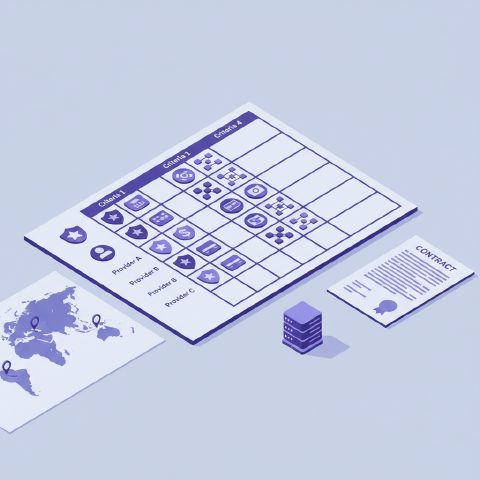
Choosing the wrong iGaming software provider in 2026 can cost you six figures and six months. This guide ranks the top platforms by what actually matters to operators: integration depth, licensing fit, payment coverage, and total cost of ownership.
 pillar
iGaming Software Providers Ultimate Guide 2026
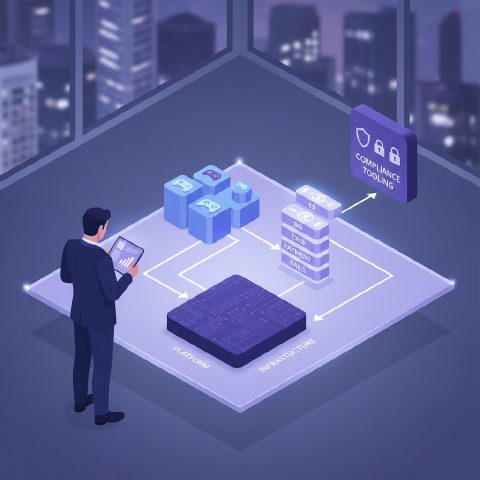
Choosing the wrong iGaming software provider is the single most expensive mistake a new operator can make. This guide breaks down every layer of the stack — platform, aggregator, payments, RNG, back-office — so you buy with your eyes open.
 spoke
spoke
Hidden Costs of Starting an Online Casino
Most online casino launch budgets blow up not on the obvious line items but on the costs buried in platform contracts, payment integrations, and compliance obligations. This breakdown exposes what vendors don't put in their pitch decks.
 spoke
spoke
Online Casino Software Price What You Really Pay
Online casino software pricing looks simple on a vendor slide deck and brutal on your actual invoice. This breakdown covers every cost layer — platform, games, payments, compliance and infrastructure — so you can build a realistic launch budget before signing anything.
 spoke
spoke
White Label Casino Cost Full Pricing Breakdown
White label casino cost runs far deeper than the headline setup fee. This breakdown covers every layer — platform, licensing, games, payments, and the ongoing charges that quietly erode your margin.
 pillar
How Much Does It Cost to Start an Online Casino 2026
Starting an online casino in 2026 costs anywhere from $30,000 for a lean offshore white-label to well over $2 million for a licensed, regulated build in a tier-1 market. This breakdown covers every line item operators routinely underestimate.
 spoke
spoke
How to Start a White Label Casino in 7 Steps
Starting a white label casino in 2026 is faster and cheaper than building from scratch, but only if you pick the right jurisdiction, platform and payment stack from day one. This step-by-step guide covers every decision that actually matters.
 spoke
spoke
Cheapest and Free White Label Casino Options Debunked
Every vendor promises an affordable white label casino launch. This article cuts through the sales deck and shows operators what the cheapest options actually deliver — and what they silently cost you later.
 spoke
spoke
White Label Casino App Build vs Buy
Choosing between a custom-built mobile casino and a white label casino app is one of the highest-stakes decisions a new operator makes. This guide breaks down the real costs, hidden risks, and when each path actually makes sense.
 listicle
White Label Casino Providers List 2026 Reviewed
A candid, operator-side review of the leading white label casino providers in 2026 — covering platform capabilities, licensing support, revenue share structures and the hidden costs vendors rarely put in their sales decks.
 comparison
White Label vs Turnkey vs Custom Casino Compared
Choosing between a white label, turnkey, or custom casino build is the single biggest structural decision you'll make before launch. This guide cuts through vendor pitch decks to give you the real cost ranges, timelines, and trade-offs for each model in 2026.
 glossary
What Is a White Label Casino Definition and How It Works
A white label casino lets you launch a branded gambling site on a platform, license, and game library that someone else built and maintains — cutting time-to-market from years to weeks, but trading control for speed. Here's what that trade-off actually looks like in practice.
 pillar
White Label Casino Solutions Full Guide 2026
White label casino solutions let operators launch a branded online casino in weeks rather than years by licensing a pre-built platform. This guide cuts through vendor marketing to show you the real costs, timelines, licensing paths and platform trade-offs you'll face in 2026.
 geo
geo
How to Start an Online Casino in the US 2026
Launching an online casino in the US in 2026 is legally possible in a growing number of states, but the regulatory complexity, capital requirements and timeline will surprise most first-time operators. This guide cuts through the vendor pitch decks to give you a realistic picture.
 comparison
How to Start an Online Casino Like Bet365
Bet365 took two decades and hundreds of millions in capital to become what it is today. This guide strips away the mythology and maps the realistic path for operators who want to build a serious, scalable online casino in 2026 — from licensing and platform choice to payment stack and game content.
 spoke
spoke
Best Countries to Open an Online Casino in 2026
Choosing the right jurisdiction is the single highest-leverage decision you'll make before launch. This guide cuts through the sales pitches and compares the real costs, timelines, and trade-offs across the jurisdictions operators are actually choosing in 2026.
 spoke
spoke
Start Your Own Online Casino for Free Myth vs Reality
The idea of launching an online casino for free sounds appealing — but the reality involves licensing fees, platform costs, and payment integrations that add up fast. Here's an honest breakdown of what you can get for nothing and what will cost you regardless.
 spoke
spoke
Online Casino Business Plan Template and Model
A cost-and-ROI-first online casino business plan framework built for founders and investors who need real budget ranges, licensing costs, revenue share structures and break-even timelines — not a generic template downloaded from a content farm.
 spoke
spoke
How to Open an Online Casino The Complete Guide
Opening an online casino in 2026 means committing $50,000–$500,000+ before you take a single bet — this cost-and-ROI-first guide breaks down every budget line, from licensing to payment processing, so founders know exactly what they're buying.
 pillar
How to Start an Online Casino in 2026 Step-by-Step
Starting an online casino in 2026 costs between $30,000 and $1.5M+ depending on jurisdiction, platform model and market — this step-by-step breakdown gives founders the actual numbers, hidden fees and ROI benchmarks vendors won't put in their sales decks.
 listicle
Best iGaming Software Providers 2026
Choosing the wrong iGaming software provider can quietly cost you six figures before your first player deposits. This cost-and-ROI analysis ranks the top platforms and aggregators by what actually matters: setup fees, monthly burn, revenue share, and realistic break-even timelines.
 pillar
How Much Does It Cost to Start an Online Casino
Starting an online casino in 2026 costs anywhere from $30,000 for a bare-bones white-label to well over $2 million for a licensed, custom-built operation — and the gap between those numbers is where most founders get burned. This breakdown gives you the real budget, not the vendor sales deck.
 geo
geo
US Online Casino Legal States 2026
Six US states have fully regulated online casino markets in 2026, each with radically different licensing costs, tax structures and revenue ceilings. This is the financial map operators need before committing capital.
 spoke
spoke
iGaming Payment Processing
iGaming payment processing is the single largest operational cost most founders underestimate at launch. This analysis breaks down every fee layer — from high-risk merchant accounts to crypto settlement — so you can model your real margin before you sign a PSP contract.
 pillar
How to Start an Online Casino
Starting an online casino in 2026 requires $50K–$500K+ in upfront capital depending on your licensing jurisdiction and platform model — this cost-and-ROI analysis breaks down every line item so you can build a realistic business case before you sign a single contract.
What operators say
Finally a no-fluff walkthrough of what it actually costs and how long licensing really takes.
The platform comparisons cut weeks off our vendor selection.
Honest about the trade-offs vendors hide. The resource I wish I had at launch.